Brazil moved a step closer to approving a controversial law that would grant land title to 300,000 properties illegally established across some 600,000 square kilometers (230,000 square miles) of protected Amazon forest, reports AFP. The move may improve governance in otherwise lawless areas, but could carry a steep environmental cost without safeguards.
Under the bill, which passed Brazil's Chamber of Deputies Thursday and is now headed to the Senate, a claimant could gain title for properties up to 1,500 hectares (3,700 acres) provided the land was occupied before December 2004. Environmentalists fear the legislation could spark deforestation if it fails to include environmental provisions.
"Without environmental guarantees, the message we would be sending the world is that we are giving land titles away with one hand and a chainsaw with the other," Environment Minister Carlos Minc was quoted as saying by AFP. "It would be a license to deforest."
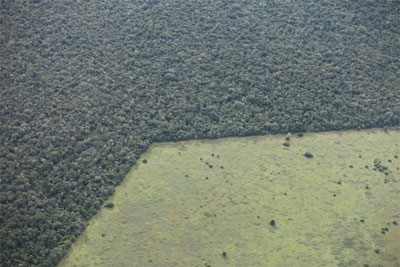 Over the past decade more than 10 million hectares – an area about the size of Iceland - was cleared for cattle ranching as Brazil rose to become the world's largest exporter of beef. Now the government aims to double the country's share of the beef export market to 60% by 2018 through low interest loans, infrastructure expansion, and other incentives for producers. Most of this expansion is expected to occur in the Amazon were land is cheap and available. 70 percent of the country's herd expansion between 2002 and 2006 occurred in the region. |
"When there are 300,000 people occupying land irregularly, there is no one to fine and make responsible if they don't respect environmental legislation."
Land-grabbing has been a major source of social conflict in the so-called Arc of Deforestation, the frontier where most forest clearing is occurring in the Amazon. Typically land invasions are financed by developers seeking to expand holdings, convert forest for cattle pasture, or capitalize on fast-appreciating land prices (cleared land is worth substantially more than forest). Squatters — often transmigrants from the poor northeastern part of the country — are paid to occupy the land until it can be developed by well-capitalized entities registered in under another name. Private (legal forest reserves) and public lands are targeted.