Saturday, May 30, 2009

O dia da decisão Manaus

Hoje é um dia diferente dos outros.  Todos os dias somos indivíduos; hoje somos cidade.  Todos os dias vivemos na cidade; hoje nos orgulhamos dela.  Todos os dias avançamos passo a passo; hoje saltamos.  Todos os dias nossa cidade é nossa companheira; hoje é nossa filha.  

Às 1430 horário Manaus a FIFA fará uma coletiva de imprensa na qual serão anunciadas as 12 cidades sede da Copa de 2014.  Torcemos para que sejamos declarados anfitriões do maior evento do mundo.  

Nunca foi tão justo declarar tremendo orgulho de ser amazonense e manauara.  Olhemos um instante ao passado.  Construímos uma cidade que, com todas as imperfeições, está dentre as principais do Brasil.  Quem diria, nos idos de 1930, em meio ao colapso da borracha, que um dia nos recuperaríamos.  Quem diria, nos idos de 1990, em meio a um pólo industrial ferido, que nos recomporíamos.  O fizemos, avançamos com as escolhas positivas de cada cidadão: a cada amazonense buscando a universidade, a cada ato de gentileza, justiça e caridade, com cada pai e mãe sentando para educar seus filhos, com cada dia de trabalho.  É triste mas importante lembrar que também retrocedemos com cada roubo, propina e ato de injustiça e grosseria.  Demos as boas vindas a todos, incluindo cearenses, paraenses, japoneses, americanos, ingleses, paulistas, chineses, sírio-libaneses, portugueses, judeus, peruanos, coreanos e paranaenses, dentre muitos outros que se juntaram aos habitantes originais indígenas. 

No presente, nos reunimos para possivelmente extravasar por um instante.  Estaremos em vigília no estacionamento do Vivaldão, você convidado.  A candidatura de Manaus, é importante lembrar, contou com o apoio de todos, sem excessões: sociedade civil e governos, situação e oposição, capital e trabalho.  Neste momento estático de nosso destino, estamos juntos.

A partir de agora é natural e desejável que haja mais divergência (no caso de sermos selecionados cidade-sede), dado que as decisões afetarão a todos e vivemos em democracia.  Temos muitas decisões importantes a serem tomadas: como revitalizar o centro histórico, como melhorar a mobilidade urbana, como planejar o outro lado do rio, são perguntas que figuram entre as 26 frentes de trabalho exigidas pela FIFA para uma cidade sede.  Apenas para conhecimento, listo os 26 requisitos: estádio, entorno, transporte público, centros de treinamento, parque de eventos FIFA, infra-estrutura de suporte, tecnologia de informação, acomodações, turismo, marketing, embelezamento, saúde publica, gerenciamento de riscos, eventos FIFA, segurança, legislação, voluntariado, sustentabilidade, gerenciamento de custos, eventos de negócios, portos e aeroportos, suprimentos, cultura, legados, coordenação local e financiamento.  

Ao mesmo tempo em que decidimos democraticamente nosso futuro coletivo nestas 26 frentes, há frentes de trabalho pessoal.  Talvez não sejam tão numerosas, mas definitivamente são mais importantes.  Desde o lixo nos igarapés e roubos residenciais ao pagamento de propinas e não-exigência de nota fiscal, a responsabilidade é tanto do Governo quanto dos cidadãos.  Destaco entretanto um requisito principal para que sejamos em 2014 e no futuro além, a cidade que queremos ser: o caráter de nossas crianças.  Pais se preocupam muito (e corretamente) com a formação acadêmica e profissional de seus filhos, sempre na busca de que os filhos sejam mais que os pais.  É confortante escutar de alunos na UEA ou outras universidades que eles são o primeiro da família a ter curso superior; certamente não serão o último.  Entretanto, ética e bondade não estão só ligadas com o volume de educação acadêmica que uma pessoa recebe; valores são muito mais profundos e em geral transmitidos por pais.  Temos então perguntas: quanto tempo você gasta com seus filhos lhes transmitindo bons valores éticos?  Você repreende seus filhos por um ato de egoísmo com a mesma severidade que trata uma nota baixa na escola?  De respostas corretas depende nosso futuro como cidade.

Queremos uma Manaus nova para receber a Copa.  É justo que você participe da concepção e execução desta nova cidade.  Mas você tem deveres hoje também, alem de não conduzir bêbado de alegria.

---------
Denis Minev 

Friday, May 29, 2009

Nutritional Supplement Developer AmeriSciences has Pledged to Plant a Tree in the Amazon Rainforest Through Project 10 for Every Case of its Super Fruit Nutritional Beverage, AS10 Sold.

Houston, TX (PRWEB) May 29, 2009 -- Nutritional supplement development and marketing company AmeriSciences has pledged a portion of the proceeds from its "Super Fruit" nutritional beverage, AS10, to the charitable organization Project 10 to fund the reforestation of deforested areas of the Amazon.

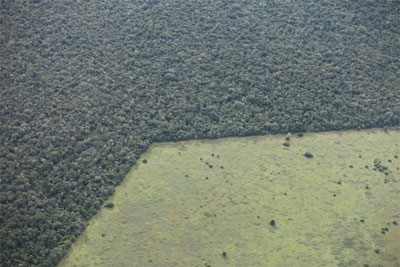
South America is home to one of the most diverse and important ecosystems in the world . . . the Amazon Rainforest. This ecosystem has been reduced to 7% of its original size as the result of local populations clearing and burning hundreds of millions of acres of rainforest to provide land for agriculture or timber for sale. The result is a catastrophic change to the landscape and potentially the delicate balance of the world's natural recycling systems.

Project 10 is a charitable organization that will tackle deforestation head on with reforestation and education programs to redirect the mindset of local populations towards conservation. By planting trees that local populations can utilize without destroying (such as those that produce the Cupuacu and Acai fruit) projects like Project 10 can reforest the region with an assurance of sustainability.

This project is already reforesting the Amazon with the aid of AmeriSciences. AmeriSciences has pledged a portion of the proceeds from every sale of its nutritional beverage, AS10. This "A tree for every case" program will provide Project 10 the resources to reforest large tracts of deforested land and bring hope to the local population.

"The issue of deforestation affects us in so many ways whether we realize it or not. Through Project 10 and AS10 we will change people's lives and the environment. Please join us in this cause - it is never too late to make a difference." Lou Gallardo, Chairman of AmeriSciences.

For more information on Project 10 and to learn how you can help, please visit www.as-10.com.

AmeriSciences, LP is a privately held company headquartered in Houston, Texas specializing in premium quality nutritional products. AmeriSciences current domestic and international products are built on the philosophy of exceeding industry standards in quality, safety and effectiveness. AmeriSciences provides products in the areas of men's health, women's health, weight management, sports performance and preventative nutrition.

Could Deforestation in Brazil Wreak Havoc in the US?

—Image courtesy of Wikimedia Commons

The weather in the Amazon is going crazy—and the sudden climate changes could affect not only Brazil and its neighboring countries, but areas as far from the rainforest as the Mexican gulf and maybe even the southern US. That’s what Paulo Moutinho, research coordinator for the Amazon Environmental Research Institute (IPAM), warns might happen if the world doesn’t cut its carbon emissions significantly over the next two years.

After two severe drought periods in 1998 and 2005, the Amazon is now in the midst of heavy flooding—the river has reached a record water level of 28 feet. The drought hurt the economy and caused healthcare costs to skyrocket, but Moutinho believes an overflow could cause equal damage by ruining plantations and causing outbreaks of sewage-related diseases.

And the Amazon is not the only region in Brazil suffering. After a hurricane in 2004—the first ever in the South Atlantic—and floods that killed more than a hundred people last year, the southern state of Santa Catarina is now going through a drought that has put hundreds of cities into state of emergency. Meanwhile, in the northern and northeastern areas of the country, floods have been leaving people homeless.

These problems could extend far beyond Brazil, since the rainforest plays a central role in rain distribution throughout Latin America. Moutinho believes that if the Brazilian trend of turning rainforest into pastures goes on unchecked, most countries in the Americas can prepare for a drastic change in rainfall.

Fuel burning is the main source of greenhouse gases in most major developing countries. But in Brazil, deforestation accounts for roughly three quarters of overall carbon emissions. “Reducing the deforestation in Brazil can be an example to other tropical areas and would give Brazil a leadership role in emission reduction,” says Moutinho. Guarany Osorio, coordinator of the Climate Campaign of the Brazilian arm of Greenpeace, notes that 20 percent of world emissions come from deforestation and fires. “That’s quite significant on a global level,” he says. Osorio hopes that a December conference in Copenhagen will bring funding to the United Nations Collaborative Program on Reducing Emissions from Deforestation and Forest Degradation in Developing Countries (UN-REDD Program).

Only the next few years will tell whether weird weather in Brazil is really related to global warming. But Osorio believes it almost certainly is. “Droughts and floods have always existed,” he says. “But global warming makes them more extreme and more frequent.”

Guest contributor Gabriela Lessa is a journalist and blogger spending the summer in her native Brazil. Watch for her regular environmental dispatches over the next few months on The Blue Marble.

Letter - Protecting Amazon rainforest

Protecting rainforests

Anyone who saw the film about the people of the Amazon at the recent film festival must applaud their determination to protect their homeland. It looks like it’s about to get a lot harder.

According to a Washington Post article from Oct. 14, 2008, “Construction began late last month on one of two massive hydroelectric dams that are to span the Madeira River, a main tributary of the Amazon River and a major waterway that runs from the Andes across the rainforests of South America. But the prospect of damming the Madeira has been widely criticized by social and environmental groups for its potential damage to the environment, river residents and nearby indigenous tribes . . . .”

ROGER BRUNT,

Salt Spring

Amazon villagers get Conservative party windfall for saving rainforest

A REMOTE community in the Amazon stands to be given millions of pounds to stop cutting down its rainforest after being chosen by both the Conservative party and one of the world’s biggest hotel groups to offset their carbon emissions.

A total of 322 families living in the Juma reserve in the Brazilian state of Amazonas will each receive a monthly allowance in return for pledging zero deforestation.

The Tories decided to support the project after a visit in December by Greg Barker, shadow environment minister, on a fact-finding mission. “Nothing we can do to fight climate change will succeed unless we can reverse the alarming deforestation across the world,” he said.

It will be announced this week as part of a Conservative climate change campaign.

The American hotel chain Marriott International will announce its support for the project, asking all guests to contribute $1 (70p) a night. If every guest agrees, $450,000 (£310,000) a day could be raised. The company has donated $2m as seed money.

The Juma project is the brainchild of Professor Virgilio Viana, who was appointed the first environment secretary ever for Amazonas in 2003, a dramatic turnaround for a state whose previous administration handed out chainsaws.

During his five years in office he managed to slash deforestation from 600 to 200 square miles per year and create a number of reserves in the state, which is the largest in the Amazon.

According to Viana, creating protected areas is not enough, because people will always encroach. “You’ve got to look at why people deforest,” he explains. “It’s not because they are stupid, irrational or hate forest. Most forest-dwellers are very poor. If I was living in a shack like theirs, I’d sell a mahogany tree for 10 bucks to get milk for my children.”

He set up the pilot scheme in Juma reserve, an area the size of Devon yet home to just 1,200 people.

“We chose Juma because we wanted to go to the battlefront,” he said. The reserve lies along one main highway and is crossed by another, which attracts much illegal logging.

The first community to sign up was Boa Frente, a cluster of 17 families living in a row of wooden shacks on a bluff overlooking a muddy river.

Each family had to attend a workshop on climate change and commit to zero deforestation and to send their children to school. They were then given a forest cash-card credited with 50 reais (£15) per month.

The community has been provided with a solar panel and a computer and 4,000 reais (£1,200) a year to spend on anything that doesn’t cause deforestation. They received a further 4,000 reais to invest in a social programme of their choosing, such as a school or clinic.

Satellite images are used to ensure compliance. If any forest has gone from a family’s area at the end of a year they will be expelled from the scheme and will put their community’s involvement in jeopardy.

Domestic fight over Amazon rainforest

29/05/2009

Brazil's Environment Minister Carlos Minc accuses other government ministries of disregarding environmental laws in pursuit of Amazon development projects.

Brazil's environment minister said he blasted other government ministries during a meeting with the nation's president on Thursday, accusing them of disregarding environmental laws in pursuit of Amazon development projects.

Environment Minister Carlos Minc has been at odds with other ministers since taking his post a year ago, and similar infighting forced out his predecessor, Sen. Marina Silva.

After his meeting with President Luiz Inacio Lula da Silva in Brasilia, Minc said other unnamed government ministers are going behind his back to Congress, "each with their little hatchets, pushing amendments that tear to pieces and disfigure environmental legislation."

His meeting with Silva was "a conversation just between us, tete-a-tete, eye to eye. And I told the president that the environment is being attacked by Congress and society."

Minc voiced special concern about the paving of a two-lane road that runs through the heart of the Amazon between the jungle cities of Manaus and Porto Velho. Minc and other environmentalists say paving the road will accelerate deforestation. Soy farmers and ranchers say it is vital for getting their products to market.

Minc said state companies involved in paving the 500-mile (800-kilometer) BR-319 highway were not following environmental laws, and that he was "ethically and morally" bound to no longer approve construction contracts for work on the highway, which he labeled an "environmental disaster."

"BR-319 crosses the heart of the best preserved parts of the Amazon, and with the announcement of its reconstruction, deforestation accelerated," he said.

At issue is the balance between preservation and economic development in the Amazon, whose survival is crucial in the struggle against global climate change, according to many climate scientists.

They say the cutting or burning of Amazon trees releases an estimated 400 million tons of carbon dioxide into the atmosphere every year.

Environmentalists have long accused Stephanes and Silva of leaning too far toward the expansion of farms that lead to deforestation.

Minc said that the president promised not to allow weakening of environmental legislation, though he didn't go into details.

Amazon deforestation accelerates

Saturday, 29 November 2008


A deforested area in northern Brazil (file pic)
High soy and cattle prices may have contributed to the rise in illegal logging

The destruction of the Amazon rainforest in Brazil has accelerated for the first time in four years, Brazilian officials say.

Satellite images show 11,968 sq km of land was cleared in the year to July, nearly 4% higher than the year before.

The government said the figure was unsatisfactory but could have been a lot worse if it had not taken action against illegal logging.

High commodity prices had allegedly tempted farmers to clear more land.

In recent years the Brazilian government has been able to celebrate three successive falls in deforestation.

But the latest estimate from the National Institute for Space Research, known as INPE, shows that this trend has come to a halt.

'Could be worse'

Gilberto Camara of the Space Research Institute, said they would have liked better news.

"We believe it is a setback, but we believe it is also positive in the sense that the expected levels were much higher," Mr Camara said.

"There was a lot of burning on the ground in the second half of 2007, which could have led to a much greater increase in deforestation."

In late 2007 and early 2008 there were signs that deforestation was on the rise again - with land said to be in demand for cattle and soya at a time when commodity prices were high, says the BBC's Garry Duffy in Sao Paulo.


In response the government announced a series of measures to clamp down on illegal logging, including a major operation involving police and environmental inspectors known as the "Arc of Fire".

Brazil's Environment Minister, Carlos Minc, said that without actions like this, the figures could have been much higher.

"Many had expected an increase of 30-40% and we managed to stabilise it," Mr Minc told a news conference.

But he said that the government was still not satisfied.

"We want to lower numbers even more. We want zero deforestation."

Environmental groups will be watching the situation carefully to see if the resolve and the resources they say are needed to protect the Amazon region are in place, our correspondent says.

Amazon Rainforest Under Threat

Saturday, May 10, 2008

British Climate scientists along with their counterparts from Brazil have sounded an alert of an impending threat to the Amazon Rainforest, thought as an unhealthy prgnosis for the Earth's climate system.

The study, which led scientists to come up with the new theory, identifies a link between reducing sulphur dioxide emissions from burning coal and increasing sea surface temperatures in the tropical north Atlantic, resulting in a heightened risk of drought in the Amazon rainforest.

The Amazon rainforest contains about one tenth of the total carbon stored in land ecosystems and recycles a large fraction of the rainfall that falls upon it. So any major change to its vegetation, brought about by events like deforestation or drought, has an impact on the global climate system.

A team from the University of Exeter, Centre for Ecology and Hydrology, Met Office Hadley Centre and Brazilian National Institute for Space Studies used the Met Office Hadley Centre climate-carbon model to simulate the impacts of twenty-first century climate change on the Amazon rainforest.

They compared the model to data from the 2005 drought, which caused widespread devastation across the Amazon basin.

The researchers estimate that by 2025, a drought on this scale could happen every other year and by 2060, a drought could occur in nine out of every ten years.

Sulphate aerosol particles arising from the burning of coal in power stations in the 1970s and 1980s have partially reduced global warming by reflecting sunlight and making clouds brighter.

Woodbury’s Annual Scholarship Gala Goes Green

5/5/2009

More than 650 people attended Woodbury University’s annual scholarship benefit gala at the Beverly Hilton this weekend, with the theme ¡Viva Verde! What’s Green, What’s New, What’s Green with You?

The event is a vital source of scholarship dollars for Woodbury, where 86 percent of the students require financial aid and where over 70 percent are the first in their family to attend college.

The black tie affair featured a silent auction and a fashion show presented by the Department of Fashion Design, where 18 senior students showcased their lines of “green” couture using sustainable or recycled materials.

From feathered skirts and pink mini dresses inspired by Japanese Kimonos, to a white silk straight jacket dress with wrapped sleeves, the students let their imaginations soar, finding inspiration in everything from the Amazon Rainforest to the movie Silence of the Lambs.

Five students, whose work was judged by fashion industry professionals, received achievement awards at the event. Colleen Ann Patterson won a Technical Award for her line “Eco-Organism” inspired by the human body; Efi Green won the Creative Award for a line inspired by 1920’s silhouettes called “Alley Cat”; Debbie Vilchez won an Eco-Friendliness Award for her line “Eclectic Elements”; Jade Yee-Gorn won the Concept and Presentation Award for a line inspired by Silence of the Lambs; and Carla Moran won the Best of Couture Award with a line titled “Yellow Bird”.

With meteorologist and reporter Josh Rubenstein of CBS 2 and KCAL 9 as the master of ceremonies, the event also honored two individuals and one corporation for being socially responsible in their fields, in line with the evening’s “green” theme.

Architect Thom Mayne received the Leadership in Architecture Award for his work developing energy efficient buildings. Through his Los Angeles based architecture firm Morphosis, Mayne has completed projects such as the San Francisco Federal Building, which was designed to be a 'green' building consuming less than half the power of a standard office tower. It is the first naturally ventilated office building on the west coast since the advent of air conditioning. The building also features elevators which stop on every third floor to promote employee interaction and health.

Ray Anderson was presented with the Leadership in Design Award for leading his company to pursue its “Mission Zero” promise to eliminate any negative impact it may have on the environment by 2020. His company, Interface, the world’s largest producer of commercial floor coverings, plans to do this through the redesign of processes and products, new technologies and reducing or eliminating waste and harmful emissions.

The company Johnson Controls, which provides innovative automotive interiors, offers products and services that optimize energy use for buildings, and also provides batteries for automobiles and hybrid-electric vehicles, received the Leadership in Business Award.

Climate and people first

01 April 2009

Rio de Janeiro, Brazil — We've got a message for the leaders of the richest nations in the world who are gathering in London for the G20 meeting to discuss the global economic crisis.

Fifteen activists unfurled this 50 meter (164 feet) x 30 meter (98 feet) banner from the bridge at the Guanabara bay in Rio de Janeiro, Brazil.

We decided to send this message from the birthplace of two of the most important UN Conventions of modern times, addressing climate change and biodiversity.

The huge wave of hope created by the World Summit ECO-92 (better known as the Earth Summit) in Rio -- that all countries would work together to save life on Earth -- has vanished. After 17 years without serious action by the world's leaders to change the pattern of carbon-based development, the planet is close to reaching the point where runaway climate change cannot be averted unless we act now.

Wasted opportunity

But will the G20 tackle the economic and climate crises at the same time by greening their economies? Unlikely.

Wealthy G20 nations need to commit at least 1 percent of their GDP to green measures, and the remaining countries should do all they can to leapfrog dirty carbon-based development and shift to a renewable energy future.

The G20 leaders represent three-quarters of global GDP, three-quarters of energy consumption and three-quarters of carbon emissions. So far, they appear not to have grasped that their continuing prosperity is not in conflict with preserving the environment, but dependant upon it.

Crisis? You call THIS a crisis?

In the long term, we don’t face a choice of green jobs or dirty jobs, but green jobs or ecological and social collapse. Until climate change is at the top of the G20 communiqué and at the centre of their thinking, they aren’t just scientifically illiterate, but economically illiterate.

Science shows climate change is accelerating. A full-blown climate crisis raises the prospect of mass migration, mass starvation and mass extinctions. It will make poverty permanent in the developing world and strangle growth in the developed.

The decisions the G20 leaders take will affect the 172 countries not represented at this meeting, many of which are both the poorest and most vulnerable to the economic crisis and climate change.

The likely cost of climate change impacts is up to 20 percent of global output; more than the Great Depression and both World Wars combined – in addition to the human deaths and species extinctions, according to former World Bank chief economist Nicholas Stern.

Save forests to help stop climate change


Developing countries must also take responsibility to fight global warming, and in particular those which host tropical rainforests. Brazil and Indonesia are the world’s fourth and third largest greenhouse gas emitters due to forest destruction in their countries.

According to the Brazilian Institute of Space Research, which monitors deforestation, close to 29 million hectares of the Amazon rainforest have been destroyed since the creation of the UN Climate convention in Rio 92. This has added some 8 gigatons of carbon dioxide to the atmosphere.

Ending Amazon deforestation is the major contribution Brazil can make to help the world to tackle climate change. Still, Brazil must take the leadership by supporting the establishment of a funding mechanism to stop forest clearance and associated emissions, acknowledging the value of the standing forests.

In Bonn, Germany, 129 countries representatives are meeting to initiate a series of negotiations culminating with the Copenhagen Climate Summit in December, where a global deal to save the climate must be agreed.

Governor’s plan for zero deforestation

21/04/2009

Eduardo Braga, Governor of the state of Amazonas, Brazil: If the UN conference in Copenhagen succeeds in creating economic incentives for forest preservation, a stop to Amazonian deforestation by 2020 is realistic.


A Brazilian scheme has managed to slow down the rate of deforestation in the vast forests of Amazonas. Inspired by the progress, Eduardo Braga, Governor of the state of Amazonas, encourages the participants at the UN conference on climate change in Copenhagen by the end of this year to create financial incentives for projects that will reduce emissions from deforestation and degradation (known as REDD).

“Copenhagen has to move ahead from Kyoto, and the only way to do so is through REDD funding. I think we can achieve zero deforestation in Amazonas by around 2020, if we start the REDD system, stimulate it and motivate it,” Mr. Braga tells Reuters.

The state of Amazonas has adopted a scheme that compensates local communities that refrain from logging and encourage their citizens to engage in activities such as rubber tapping and fishing instead. The scheme is co-funded by various large companies.

According to the Governor, a further 460 million USD is needed by 2013 to expand the program into new areas and create buffer zones around existing projects. According to a study by consultants McKinsey, it will cost about 7.8 billion USD to bring down Brazilian deforestation to zero.

The current official target of Brazil is to halve the Amazonian deforestation rate over the next ten years.

Prince Charles to visit the Amazon

14 Mar 2009

The Prince of Wales is to travel into the Amazon rainforest on Saturday as the highlight of his five-day visit to Brazil.


Prince Charles will travel into the Amazon rainforest during his five day visit to Brazil
Prince Charles is to travel into the Amazon rainforest during his five day visit to Brazil

The heir to the throne, who is a passionate environmental campaigner, is keen to see at first hand the problems facing the world largest and most diverse rainforest.

Prince Charles wants to observed the impact of deforestation, and to meet the local community and political leaders.

The Amazon rainforest is home to more than 300,000 Indians, some of whom have never been in contact with the outside world and who speak more than 200 different languages.

Yet some 15 per cent of the Brazilian rainforest has been subject to deforestation.

This means that not just some of the rainforest – home to a fifth of the world's fresh water – is damaged for ever, but this destruction has contributed significantly to climate change.

On Thursday, the Prince warned in a keynote speech in Rio de Janeiro that the world has "less than 100 months" to act if it is to save the planet from irreversible damage from escalating global warming.

The Amazon rainforest covers more than half of Brazil, a country which, in turn, is larger than the United States of America, provided one does not include Alaska. The Amazon rainforest is shared by nine countries.

The largest part of the rainforest – some 60 per cent – is located in Brazil and covers almost half of the country. The entire space covered with the forest is 3.4 million square miles.

The Prince of Wales and the Duchess of Cornwall are on a ten-day visit to South America. Tomorrow [sun] they will fly on to Ecuador, where they will visit the Galapagos Islands for the first time.

On Saturday, the Duchess, who does not like humid heat, will carry out a series of alternative engagements in Manaus.

The Prince has been carrying out an elevated role this week as an international statesman, promoting Britain's interests oversees.

The Foreign and Commonwealth Office wants to use his talents more abroad, particularly his knowledge of climate change.

World Bank OKs $1.3 billion environmental loan to Brazil

06/03/2009

The World Bank will lend Brazil $1.3 billion to help the country protect its Amazon jungle and other fragile ecosystems and deal with climate change.


In a statement, the bank said environmental protection is important particularly in Brazil, which is home to one-third of existing tropical rain forest, as well as the world's largest reservoir of fresh water and most biodiverse savanna.

The money aims to help Brazil curb deforestation in the Amazon; conserve the remaining Atlantic forest; protect the quality and availability of water; and accommodate increased energy demands that are straining the country's "clean energy matrix," which comprises mostly hydroelectric power.

It also will deal with sustainability problems of a country whose ecosystem is particularly "crucial to development and people's welfare," the statement said.

"The social and economic cost of environmental destruction is high" in Brazil, the bank's Brazil director, Makhtar Diop, was quoted as saying.

"Smooth coordination of policies and procedures within the Brazilian environmental management system, combined with an increased commitment from the financial sector to long-term sustainability, is key to ... ensuring growth that is environmentally sustainable and socially inclusive."

Tuesday, May 26, 2009

Amazonian Indigenous Protest Provokes Peruvian Government Reprisals

By David Dudenhoefer

LIMA, Peru, May 26, 2009 (ENS) - After more than six weeks of protests by Peru's Amazonian indigenous groups that have included blockades of major roads and waterways and the shutting down an oil pipeline pumping station, the Peruvian government has begun to crack down.

During the past two weeks, the administration of President Alan Garcia has declared a state of emergency in the country's Amazon provinces, issued a decree allowing the military to help the national police maintain order there, and charged the protest's leaders with crimes against the state.

The protests, which have involved more than 10,000 men, many of them in war paint and armed with bows and arrows, are being coordinated by the Peruvian Rainforest Inter-Ethnic Development Association, AIDESEP, an umbrella group that represents most of the country's approximately 50 Amazonian indigenous ethnicities.

Ashanika Indians protest in Atalaya, Peru (Photo © David Dudenhoefer)

AIDESEP's leaders are demanding the repeal of nine legislative decrees issued last year that they claim will facilitate the deforestation and privatization of their traditional lands and natural resources.

"This is a struggle to defend our rainforest, to defend our natural resources, to defend the territory we live in," said Daysi Zapata, vice president of AIDESEP.

The laws that AIDESEP objects to were part of a package of more than 100 decrees that President García signed last year in order to get Peru into compliance with a Free Trade Agreement that the country made with the United States. During the past week, various of the country's ministers have warned that repealing those decrees could endanger the Free Trade Agreement, which went into effect early this year.

But according to Congressman Roger Najar, the president of the Congressional Commission of Andean and Amazonian Peoples, the decrees in question have nothing to do with the Free Trade Agreement. He claims that they are simply part of the Garcia administration's agenda to open the country's Amazon region up to large-scale foreign investment.

Following indigenous protests in August 2008, Peru's Congress repealed two decrees and formed a commission to study AIDESEP's other demands.

Najar noted that the commission's report, issued in December, recommends that the remaining decrees be repealed, but the Congress only began to move on those recommendations last week, when its Constitutional Commission declared one of the nine decrees unconstitutional. The Congress is scheduled to vote on the repeal of that decree this week.

The current conflict seemed headed for resolution a month ago, after just two weeks of indigenous protests,when AIDESEP's leaders gained promises of cooperation from the President of the Congress and Garcia's Chief of Staff Yehude Simon (ENS April 23, 2009), but those negotiations soon broke down.

Only last week did the government establish an inter-ministerial commission for dialogue with AIDESEP, just two days after charging Pizango with conspiring against the state.

Ashanika warriors take over an oil company boat near Atalaya, Peru. (Photo © David Dudenhoefer)

Najar, a member of the minority Bloque Popular party, blamed Garcia's majority APRA party of blocking moves in congress to address the indigenous demands. He said that the offending decrees eliminate indigenous communities' rights to be consulted about oil and forestry concessions and other development in their traditional lands, as well as their right to negotiate directly with with oil companies.

Najar noted that the Peruvian government has assigned dozens of oil and gas concession in the Amazon Basin that overlap the territories of hundreds of indigenous communities.

"The President is only interested in getting major investment in the Amazon region. He is facilitating deforestation and the sacking of its natural resources by a handful of transnational companies," said Najar.

President Garcia has largely ignored the protesters, leaving it to his chief of staff and ministers to defend the decrees. However, in a public event on May 16, he lamented the position of AIDESEP's leaders and reminded the audience that, "The Amazonian lands belong to the entire nation, not to a small group that lives there."

Eastern Peru comprises about 16 percent of the Amazon rainforest – one of its most biologically diverse regions – and is home to more than 350,000 indigenous people from some 50 ethnic groups.

Protesters from the Ashanika tribe who occupied an airstrip and took over oil company boats near the Amazonian town of Atalaya claimed that Garcia neither understands, nor is interested in their views. They complained about logging concessions near their villages and water pollution caused by oil companies, citing a major fish kill on the Urubamba River in December of 2007.

One of those protesters, Luis Cushi, a farmer from the town of Unini on the Urubamba River, said he was protesting to defend the region's forests and the rivers.

"We are fighting for our children," he said. "We want peace. We don't want to fight. But we all have the right to defend our territory, where we live."

A Night at the Opera in the Middle of the World’s Largest Rain Forest

May 26, 2009


With French opera and world-class Spanish mezzo-soprano singer Nancy Fabiola-Herrera as one of the highlights, the restored Amazonas Theater has recreated Manaus’ glory days as a thriving cultural center in the Amazon forest.

Organizers say that scheduling works by French composers at the 13th Opera Festival at the theater recaptures the spirit of Manaus when the city in northern Brazil was known as the Paris of the jungle.

It earned that reputation more than 100 years ago, thanks to bounteous wealth from the rubber industry that allowed Manaus residents to imitate what went on in major European cities and splurge on architecture and the arts.

Manaus also had a Parisian air thanks to the French style of some of its buildings and squares.

In the early part of the 20th century, the small city, buoyed by its rubber production feeding into the booming US automobile industry, decided to build a magnificent opera house to host the world’s finest opera singers.

The seemingly extravagant endeavour that would take 12 years inspired German film director Werner Herzog’s 1982 movie “Fitzcarraldo.”

With its opera house, Manaus, which then had barely 100,000 residents, became an artistic hub in the middle of the Amazonian rainforest.

Later on, when Asia became a competing rubber producer and the industry dried up, the imposing Amazonas Theater fell into decay and was virtually abandoned for 90 years until the Brazilian authorities decided to restore it.

After restoration was completed in 1997, annual opera festivals with top international performers were established. They have become a tradition in the city much changed since 1894, when construction on the Teatro Amazonas first began.

The opera festival, set to run through May 31, has become one of Brazil’s most important. This year the festival tuned into a nationwide tribute to France called “The Year of France in Brazil.”

Programing focused on French opera and included works such as “Samson et Dalila” (“Samson and Delilah”) by Camille Saint Saens, “Les Troyens” (“The Trojans”) by Hector Berlioz, and Claude Debussy’s “Pelleas et Melisande” (“Pelleas and Melisande”).

The top attraction early in the festival was Spanish opera star Nancy Fabiola-Herrera, who gave her debut performance in the main female role in “Samson et Dalila.”

Mirrors covered the entire set of the daringly staged opera directed by internationally renowned Spanish director Emilio Sagi.

Fabiola-Herrera performed alongside US tenor Michael Hendrick and two big names in French opera: baritone singer Jean Philippe Lafont and bass singer Jerome Varnier.

Antonio Costa, an artistic producer at the festival, said that foreign opera singers were “thrilled” at the opportunity to perform in the Amazonas Theater.

They were also stunned when they saw the opera house. “They all think the Amazonas Theater is in the middle of the jungle,” Costa says.

“They’re surprised when they learn that Manaus today is a city with 1.2 million inhabitants that is growing rapidly and has an intense cultural scene.”

As in previous years, the 13th Opera Festival has been a hit with audiences. The 700-seat opera house has nearly sold out at every event, and some 15,000 people are expected at the final event on May 31.

According to Costa, that renovation of the Amazonas opera house not only helped to create a public arena for opera in Manaus but also encouraged local musicians and opera singers.

The success of past opera festivals has made organizers branch out into jazz, theater and film, in July, October and November, respectively.

In the early 20th century Manaus was so important on the economic front that it was the first Brazilian city to receive an electricity grid, ahead of the nation’s capital.

The buying power of the Manaus elite was so great that they ordered granite to be imported from Portugal to build the Amazonas Theater.

The 36,000 glass plates covering the dome tinted in the colors of the Brazilian flag were acquired from the famous French Koch-Freres house based in Alsace.

The Amazonas Theater welcomed major opera and theater companies from all over the world that made the long trip to the remote Amazon rainforest. Performers included Italians Giovanni Emanuel and Rafael Tomba and musicians such as Thomaz Del-Negro from Portugal.

However, from 1912 onward, Brazil’s “rubber barons” were routed out by Asian competitors who offered much lower prices. The collapse of the Manaus rubber industry meant the end of the Amazonas Opera House dream.

Over the following 90 years, the theater would only open its doors for fashion shows, beauty contests and parties thrown by politicians. It was not until 1997 that a new life began for this icon of Brazilian cultural history. DPA

Amazon giveaway draws outrage

May 22, 2009

A law expected to be approved by Brazil's Congress granting 1.2 million people and numerous companies titles to a huge chunk of the Amazon rainforest could provoke a new wave of land-grabbing and deforestation, conservationists warn.

Over three decades, settlers, farmers and speculators have occupied, stolen and sold state land they did not legally own, fuelling the destruction of about a fifth of the world's largest rainforest. Land titles are often non-existent or fake.

The government says the new bill will benefit impoverished peasants who were encouraged to settle the Amazon during the 1964-85 military dictatorship but were never provided with legal support, public security or financial aid.

Peru: Oil exploration sparks protests against government

May 16, 2009

Indigenous groups declared an "insurgency against the government" of President Alan Garcia on Friday, escalating a tense five-week-old struggle with Lima over land, oil and mineral rights in Peru's Amazon rainforest. Protests have erupted in response to government moves to open the region to oil exploration and development by foreign companies.

Monday, May 25, 2009

Brazil moves closer to legitimizing illegal land-grab in the Amazon

May 17, 2009

Brazil moved a step closer to approving a controversial law that would grant land title to 300,000 properties illegally established across some 600,000 square kilometers (230,000 square miles) of protected Amazon forest, reports AFP. The move may improve governance in otherwise lawless areas, but could carry a steep environmental cost without safeguards.

Under the bill, which passed Brazil's Chamber of Deputies Thursday and is now headed to the Senate, a claimant could gain title for properties up to 1,500 hectares (3,700 acres) provided the land was occupied before December 2004. Environmentalists fear the legislation could spark deforestation if it fails to include environmental provisions.

"Without environmental guarantees, the message we would be sending the world is that we are giving land titles away with one hand and a chainsaw with the other," Environment Minister Carlos Minc was quoted as saying by AFP. "It would be a license to deforest."


soybean expansion in the legal amazon of brazil, 1990-2005
Over the past decade more than 10 million hectares – an area about the size of Iceland - was cleared for cattle ranching as Brazil rose to become the world's largest exporter of beef. Now the government aims to double the country's share of the beef export market to 60% by 2018 through low interest loans, infrastructure expansion, and other incentives for producers. Most of this expansion is expected to occur in the Amazon were land is cheap and available. 70 percent of the country's herd expansion between 2002 and 2006 occurred in the region.
Development interests have lobbied intensely to strip environmental protections from the current version of the bill, but a coalition of green groups is pressuring lawmakers to include some provisions — including a reforestation requirement — in the version that goes to the Senate. While regularization would effectively legitimize land-grabbing prior to 2004, Minc said the move would help improve enforcement of environmental laws.

"When there are 300,000 people occupying land irregularly, there is no one to fine and make responsible if they don't respect environmental legislation."

Land-grabbing has been a major source of social conflict in the so-called Arc of Deforestation, the frontier where most forest clearing is occurring in the Amazon. Typically land invasions are financed by developers seeking to expand holdings, convert forest for cattle pasture, or capitalize on fast-appreciating land prices (cleared land is worth substantially more than forest). Squatters — often transmigrants from the poor northeastern part of the country — are paid to occupy the land until it can be developed by well-capitalized entities registered in under another name. Private (legal forest reserves) and public lands are targeted.

Have You Ever Taken Ayahuasca in the Peruvian Amazon?

May 25, 2009

Ever since I first began playing with psychedelics as a teenager, I have wanted to do them in the jungle. It took only one or two bad trips in the city before I started imagining the experience away from the car alarms and ambulance sirens, and closer to its millennia-deep origins in ceremony and sacrament.

If this sounds like a familiar story, it is. Amazonian psychedelic tourism predates today's better-known trends in eco and cultural immersion tourism.

Through word of mouth, High Times features, Discovery Channel specials, the books of Terrance McKenna and the "Yage Letters" of Burroughs and Ginsberg, northern-hemispheric drug culture has over the last half-century become steadily more hip to and enthralled by the living Amazonian tradition of ingesting Ayahuasca, a potent psychedelic brew used throughout the region as a healing tool and portal through which to communicate with the jungle spirits and the dead.

The magic molecule animating Ayahuasca is the fearsome and revered tryptamine known as DMT. Aside from its strength, DMT in both its natural and synthetic forms is unique for the similar sensations and visions shared by its supplicants. Unlike other man-made psychedelics like LSD, synthetic DMT takes many users to the same "place," where they report meeting elfish, clown-like, and insectoid beings who frequently extend the same warm and welcoming message: "We've been expecting you." This phenomenon is documented in Dr. Rick Strassman's book, DMT: The Spirit Molecule, which describes his remarkable findings over the course of the first FDA-approved psychedelic study in more than 20 years, conducted at the University of New Mexico Medical School in the mid- '90s.

The natural DMT experience of Ayahuasca is likewise known for taking users to a common destination, where they are greeted by the dead, as well as assorted vine goddesses and jungle spirits, chief among them the serpentine "Ayahuasca madre."

I finally got my chance to meet the Madre in March, when an English rainforest preservation non-profit called Cool Earth invited me to join a press trip to the Peruvian Amazon. The last-minute invite allowed just a few days to round up jungle gear and malaria pills, but there was never any question of accepting the offer. It was the juiciest of junkets: starting in coastal Lima, we would venture deep into primary rainforest, roughly midway between the Andes and the Brazilian border. Our final destination was the Ashaninka village of Tinkerini, a place so remote that the locals have seen only a small handful of whites in their lives, including the anthropologist who would be our guide. Tinkerini was no forest-edge Potemkin village full of trinket-hawking nativos. It was the real thing. Not far from Tinkerini dwell some of the world's last uncontacted tribes, the kind who want nothing to do with the modern world, shoot arrows at passing helicopters, and have zero immunity to foreign germs.

The group consisted of myself, a few journalists from the States and the UK, a Cool Earth rep, and a Welsh anthropologist named Dilwyn Jenkins, who has been studying the Ashaninka since his undergraduate years at Cambridge in the late 1970s. It was a good-humored crew, and on the bus out of Lima we even managed to laugh at the fact that not one of us had a snake bite kit, despite the fact that the Peruvian Amazon hosts the world's densest and most varied collection of poisonous snakes. More than 200 killer breeds live in the area where we were headed. The tarantulas, while not as lethal, are the diameter of microwave pizzas.

The trip got off to a rocky start, literally. Our first attempt to cross the Andes by bus was stymied by a rockslide on the sole cliff-hugging road that winds east out of Lima. After losing a day of travel, we backtracked and chartered a small prop plane over the mountains to the jungle frontier city of Satipo, where we landed on a military airstrip built during the government's war with the Shining Path guerillas. From Satipo, we crawled into a battered six-seat Cessna and flew further east over endless broccoli bunches of Amazon canopy. An hour later, we made a bumpy landing on a riverside airstrip of pressed grass, cheered on by Ashaninka children in face paint and traditional robes. From there, we hiked several hours further northeast into the jungle, fording two rivers along the way.

We arrived at the village of Tinkerini at dusk. Surveying the scene of straw huts and shy Indians huddled around small fires, my first thought was of the Ewok village in Return of the Jedi. My second thought was Ayahuasca. During that night's meal of rice and chicken, held under the thickest band of Milky Way I have ever seen, I approached Dilwyn about my interest in the Vine of Souls. To my delight, he agreed to speak to the village shaman the following morning. "She's like my second mother," he said. "It shouldn't be a problem to arrange a ceremony."

The shaman, Noemi Vagus, was like no octogenarian I had ever met. Her jet black hair, nimble barefoot stride, and straight-backed squat reminded me more of a teenage gymnast than her elderly counterparts in American cities, with their four-legged walkers, slouching postures, and debilitating arthritis. Then there is the fact that she habitually consumes more elite psychedelics than every parking lot 'shroom dealer at Burning Man put together.

Noemi's health and vigor are not uncommon among the elders of the Ashaninka tribe, whose population of 45,000 sprawls across the national borders of Peru, Colombia, Bolivia, and Brazil. When asked about this vitality, the Ashaninka will point to Ayahuasca, known as "Kamarampi" in the tribal language. As do most Amazon tribes, the Ashaninka consider the vine to be the ultimate healing plant. For millennia it has been imbibed and smoked as a way to cure a range of mental and physical illnesses. Since it often induces violent vomiting and diarrhea, it is also used to purge vicious jungle parasites. Judging by the fit state of Ashaninka tribal elders, regular use is also something like drinking from a fountain of youth, or chewing on the branch of immortality.

Like most psychedelic aficionados I have known, Noemi did not need to be pressed very hard before agreeing to hold a ceremony that night. She immediately led us into the jungle and over to a thick-barked vine the width of a baseball bat. "Here," she said, touching it reverently. Then she led us a little deeper into the forest and pointed to the nondescript green leaves of a plant known as Chakruna, which contains natural DMT. When boiled together with the Ayahuasca vine, which contains a class of alkaloids known as beta-carbolines, the Chakruna leaves' DMT is activated for oral ingestion. Botanists have estimated that the chances of randomly mixing the two plants together is around one in five billion. When I asked Noemi how the Ashaninka knew to mix the two plants in such a way as to unlock their power, she pointed to the sky. "The thunder and the lightning told us," she said, matter-of-factly.

The process of making the Ayahuasca brew began that afternoon, after Noemi had hacked down a vine and collected the leaves. The cooking is simple but takes all day: First the vine is stripped of its bark and hacked into strips. It is then soaked and bundled together with Chakruna and placed in a pot, where it is tended to and stirred for several hours. Slowly, the water becomes dark as it absorbs the divine plant matter. The resultant broth is left to cool and strained into another pot.

At sundown we gathered at Noemi's hut, where she had placed a thin black blanket on the packed earth. She instructed us to lie down and wait, then disappeared. She returned half an hour later carrying the pot in both hands. By then the stars were out and the jungle's nightlife was in full swing. Nobody spoke. One by one, she called the four of us participating in the ceremony up to the pot, where she ladled out the psychedelic soup into a grapefruit-sized gourd. The lukewarm liquid was bitter, but I didn't gag on it, as I sometimes do when chewing psilocybin fungi. North American magic mushrooms taste like sour sh*t; this tasted like moist soil, like drinking the forest itself. I wiped my chin, mumbled thank you, and returned to the blanket.

We lay quiet for some time, listening to the rushing river to our left and the teeming jungle to our right. Then, gently but swiftly, the Madre spirit announced her arrival and mine. She did this with a sound as natural to the jungle as the taste of the vine. The noise of the river rushing over rocks began to merge with that of the buzzing rainforest to form a warm insectoid hum. It was as if waves of bugs as big as rodents were swarming from every direction; as if the river was full of prehistoric flying insects. Yet somehow this wasn't frightening or even creepy. The enveloping sound did not threaten us; the forest and its many creatures were our protectors.

Climate Change Doom Looms for 85% of Amazon

Mar 12, 2009

(Newser) – Climate change may be a bigger threat to the Amazon rainforest than all the chainsaws in the world, the Guardian reports. New research predicts a global temperature rise of 3.6 degrees Fahrenheit—widely believed to be the best-case scenario even if carbon emissions are slashed—would kill off up to 40% of the forest within a century, while a 7.2-degree increase would wipe out 85% of the rainforest.

Researchers believe the change will be irreversible, and warn that the effects—likely including more severe weather and an acceleration of global warming—would be felt around the world. "The tropics are drivers of the world's weather systems, and killing the Amazon is likely to change them forever," warned a climate professor.

Brazil. Biofuels' booming is destroying Amazon rainforest

Monday, 16 February 2009

canna_zuccheroFor the first time in Brazil's history, in 2008 sales of ethanol as fuel for motor vehicles surpassed those of petrol - according to the National Fuel Authority (Agência Nacional de Petróleo ANP).

In Brazil ecofuels' exchanges have increased in one year by 45%, reaching 16 billion liters sold in gas pumps.

Ethanol is cheaper than petrol, it is derived from sugar canes through an alcoholic fermentation process of the plant's sugars.

Brazil is the second largest producer of ecofuels worldwide behind the United States, which derive them from maize, though.

At the same time environmental associations are more and more worried about the overwhelming development of this market. Ecofuels have become the vanguard of the green technological revolution, the US increased by 5 times ethanol production, in Brazil almost all pumps have been converted.

Investments on ecofuels' production are expected to reach 100 billion dollars in 2010. However the impact on the environment is serious, as destroying the Amazon Rainforest so to create new areas destined to cultivation may lead to an acceleration of global warming: on the one hand huge quantities of CO2 are generated by the forest's burning, on the other hand its capacity to produce oxygen is reduced as well.

The Amazon Rainforest and Prince Charles

by Denis Minev, State Secretary of Planning and Economic Development, Amazonas, Brazil

The Amazon rainforest is a globally recognized brand to which many people have tried to associate their images.  Saving the Amazon is a battle cry for many different segments across society.  However, very few initiative have the legitimacy of working closely with local populations and governments in the Amazon before defending such a cause to the world.  The usual result is an empty argument that often does more damage by increasing the level of misunderstanding about the region.  I would like to point out, amid such confusion, one initiative that stands out: Prince Charles Rainforest Initiative.  Prince Charles and his advisors visited the Amazon, listened to local leaders and populations and design their position based on understanding the region, not on romantic views.  I would like to recommend visiting his website and finding out more about how you can help.Youtube video 

Por que tudo é ilegal na Amazônia?

por Denis Minev, Secretário de Planejamento do Estado do Amazonas

Acostumamo-nos a um profundo nível de ilegalidade em nossas vidas e arredores.  Olhe em torno de si e tente identificar o que é legal.  A construção na qual você se encontra talvez não tenha o habite-se.  O restaurante onde você almoça talvez não tenha licença sanitária e não dê nota fiscal.  Será que o peixe que você comeu foi capturado de forma legal?  O funcionário da mercearia que você frequenta tem carteira assinada?  Recebe um extra por fora?  

Se formos ao interior do Amazonas, a situação é ainda mais complicada.  Desde as prefeituras com dívidas frente ao INSS até os mercados e lojas sem CNPJ e cidadãos sem certidão de nascimento ou CPF.  Os aeroportos e portos em muitos casos não atendem às normas nacionais.   Vive-se uma situação de fantasmagórica inexistência.  Há dois motivos principais para esta situação: 1) leis que foram escritas muitas vezes em gabinetes em Brasília de forma incompatível com a realidade e 2) a aceitação por parte de amazonenses de ilegalidades como práticas normais, mesmo quando as leis são adequadas.

Há avanços em alguns destes quesitos.  Por exemplo, o deficit de certidões de nascimento se reduziu nos últimos anos, assim como matrimônios comunitários tornaram casais legais perante a lei.  Um forte motivo tem sido o incentivo gerado pelas possibilidades de recepção do Bolsa Família e aposentadorias rurais.  Melhorias na fiscalização ambiental têm permitido o crescimento de uma economia formal de produtos florestais (madeireiros ou não) e algumas obras têm possibilitado a melhoria e legalização de aeroportos e portos.  A frente mais crucial desta batalha, entretanto, está sendo travada agora, com a regularização fundiária, na forma da Medida Provisória 458.  A despeito de muitos esforços com regularização e distribuição de títulos de propriedade, ainda temos um enorme volume de terras com ocupação irregular; é exatamente este o alvo da MP.

Os benefícios de regularização fundiária são inúmeros: 1) acúmulo de riqueza: só se investe com segurança jurídica de que sua propriedade está protegida; 2) responsabilidade: não há como se responsabilizar um mero ocupante da terra por crimes ambientais ou mesmo tributários, ocupante que muitas vezes não tem nenhum bem nem riqueza, 3) crédito: não há como se contrair crédito sem a propriedade da terra, eliminando-se assim uma das mais importantes alavancas do crescimento.  Não é possível chegar na sociedade que sonhamos sem estes três avanços.

A regularização fundiária proposta na MP 458 visa legalizar a ocupação de grande parte da Amazônia.  A oposição a esta proposta, principalmente de entidades ambientais, vê a concessão de terra a ocupantes ilegais como a legitimação de um crime passado.  Esta é uma visão simplista e de curto prazo; a pergunta verdadeira é "Qual o trajeto mais curto do presente a uma Amazônia conservada e próspera?".  A resposta definitivamente passa pela redução da informalidade em todas as suas formas, inclusive a territorial; a alternativa é criminalizar ainda mais todas as atividades amazônicas, nos aproximando do cenário de santuário despido de ocupação.  Não o queremos.

A formalização de uma economia é um processo lento.  Todo o cuidado deve ser tomado para evitar injustiças, sabendo que mesmo assim algumas ocorrerão.  No caso da regularização fundiária, é necessário um processo de transição que permita aos ocupantes atuais se legalizarem e se tornarem cidadãos, proprietários e responsáveis perante a lei.  A MP458 é uma lei imperfeita (como todas) que ao menos foi desenhada com as complexidades da Amazônia em mente; difere das tradicionais leis que igualam São Paulo de Olivença à homônima do sudeste.  Ela é um passo rumo à construção da economia amazônica que é nosso destino, que permitirá novas fontes de geração de renda, maiores e mais sustentáveis que as atuais.

O que não se pode permitir é que leis tornem povos inteiros criminosos, simplesmente para aplacar consciências culpadas de outrem.  

Sunday, May 24, 2009

I give up, says Brazilian minister who fought to save the rainforest

 By Daniel Howden, Deputy Foreign Editor

Thursday, 15 May 2008


null

Reuters

Marina Silva: departure greeted with dismay

Brazil has been accused of turning its back on its duty to protect the Amazon after the resignation of its award-winning Environment Minister fuelled fresh fears over the fate of the forest. The departure of Marina Silva, who admitted she was losing the battle to get green voices heard amidst the rush for economic development, has been greeted with dismay by conservationists.

"She was the environment's guardian angel," said Frank Guggenheim, executive director for Greenpeace in Brazil. "Now Brazil's environment is orphaned."

In a letter to President Luiz Inacio Lula da Silva, Ms Silva said that her efforts to protect the rainforest acknowledged as the "lungs of the planet" were being thwarted by powerful business lobbies. "Your Excellency was a witness to the growing resistance found by our team in important sectors of the government and society," she wrote.

The decision by Ms Silva to walk away five years on from her triumphant unveiling as a minister in President Lula's first term has underlined just how far the former trade union hero's administration has drifted from the promises made in its green heyday.

"Her resignation is a disaster for the Lula administration," said Jose Maria Cardoso da Silva, of Conservation International. "If the government had any global credibility in environmental issues, it was because of minister Marina."

The Latin American giant's supposed progress on environmental protection has unravelled in the past year as revelations of record levels of deforestation, violent land disputes and runaway forest fires have followed in quick succession. The worldwide boom in agricultural commodities has created an unparalleled thirst for land and energy in Brazil, and the result has been a potentially catastrophic land grab into the world's largest remaining rainforest. The Amazon basin is home to one in 10 of the world's mammals and 15 per cent of its land-based plant species. It holds more than half of the world's fresh water and its vast forests act as the largest carbon sink on the planet, providing a vital check on the greenhouse effect.

Since President Lula won a second term Ms Silva found herself a lone voice in a government acutely aware that its own political future depended on the vast agribusiness interests she was trying to rein in. The final breakdown in her relationship with the President came after he gave the green light to massive road and dam-building projects in the Amazon basin, and a plan she drafted for the sustainable management of the region was taken from her and handed to a business-friendly fellow minister.

Marcelo Furtado, the campaign director for Greenpeace Brazil, said the resignation was "disastrous" and blamed it on the government's Amazon policy and pressure to ease environmental regulations on factories.

"Although Lula has adopted the environmental talk, the practice is development at whatever cost," he said. Next week, the Amazonian city of Alta Mira will host the largest ever gathering of indigenous leaders in a bid to stop a massive hydroelectric dam being built on the Xingu river, a tributary of the Amazon. Although the government claims no decision has been made on the Bel Monte project it's believed to have already committed itself to the construction despite experts warning of potentially dire environmental consequences.

The resignation brings a sad close to Ms Silva's relationship with President Lula, whose personal story closely mirrors her own remarkable journey as the daughter of an impoverished rubber tapper who rose to be a government minister and internationally recognised environmental champion. Ms Silva spent her childhood drawing rubber sap from trees and hunting and fishing to help support her large family in the Amazonian state of Acre. It was only heavy metal poisoning from polluted water and the contraction of tropical diseases that brought her to the city as an illiterate 16-year-old. Working as a maid, she taught herself to read and put herself through university, emerging as a vocal figure in the rubber tappers' union and a close ally to Chico Mendes, the movement's inspirational leader whose brutal murder would cause an international outcry.

Together the pair led a campaign to halt the disastrous deforestation and rampant eviction of forest-dwelling communities to make way for the logging and ranching that still threaten the Amazon.

The tappers' idea of creating sustainable reserves where forest people can make a livelihood from extractive industries has become a global model for managing forests and Acre now has a two-million-hectare reserve.

Health problems Ms Silva inherited from her youth have led to long periods in hospital but in 1994 she became the first rubber tapper elected to Brazil's senate. The winner of inter-national awards, including the Goldman prize, she has also provided credibility on environmental issues for her former boss.

Roberto Smeraldi, head of Friends of the Earth Brazil, said her greatest legacy may be her decision to walk away. "The emperor is naked now: Lula no longer has a smokescreen to show a policy and implement the opposite of it. He will have a problem, since Marina was perfect for him: she accepted anything he imposed and at the same time acted as a green seal for the Brazilian government."

Andrew Mitchell, a leading forests expert and director of the Global Canopy Programme, said: "The Amazon provides the vital rainfall on which Brazil's crops and hydropower depend, as well as regulating the global climate for the rest of us; losing all that is too big a price to pay."

Enemies of the Amazon rainforest

RANCHING

The explosion of cattle ranching exactly mirrors the dramatic increase in deforestation. The world's leading beef exporter has ignored the link and pumped more money into slaughter houses with the help of the World Bank.

MINING

The soaring price of gold and minerals has revived old mines and spurred the creation of hundreds of new ones. Major mining projects not only require large clearings in the forest, they also leave a toxic legacy of pollution.

DAMS AND ROADS

Every study shows that more roads bring more people and destroy more forest. But the cycle continues. There is noevidence that massive hydroelectric dams deliver benefits to communities or cheap electricity.

SOYA

The worldwide boom in agricultural commodities has bitten enormous chunks out of the rainforest. Vast soy plantations supply the demand for livestock feed and bio-fuels, and make a fortune for agribusiness giants. 

Will dams on Amazon tributary wreak global havoc?

April 5th, 2009 By Tyler Bridges

The Xingu River, the largest tributary of the Amazon, runs wide and swift this time of year. Its turquoise waters are home to some 600 species of fish, including several not found anywhere else on the planet. A thick emerald canopy of trees hugs its banks, except in places where man has carved out pastures for cattle.

 Now man, in the form of the Brazilian state power company, wants to harness a section of the Xingu by building the world's third-biggest dam.

Called the Belo Monte, the dam would drown 200 square miles of tropical rainforest -- an area equivalent to the sprawling city of Tucson, Ariz. -- and would flood the homes of 19,000 people. It would be only one of more than a dozen dams that the Brazilian government is planning to construct on tributaries of the Amazon, the world's mightiest river.

Belo Monte would be only the latest assault on the Amazon tropical rainforest, which is home to one in 10 of the world's known species and covers an area as large as the United States west of the .

Stephan Schwartzman, the director of tropical forest policy at the Environmental Defense Fund, said that 18 percent of the Amazon, an area nearly two times the size of California, had been cleared since the mid-1960s.

He added that deforestation peaked in 2004 and has since declined because of falling beef and soybean prices and because the government has stepped up enforcement of protected areas.

What happens to the Amazon rainforest has wide consequences, because a shrinking rainforest hampers the planet's ability to rid the atmosphere of carbon dioxide, a that trees and other green plants absorb.

Brazilian government officials, however, say that Belo Monte and the other dams are necessary to switch on more living room lights, power expanding companies in the world's ninth-largest economy and create jobs as Brazil begins to slide into recession.

The impact of Belo Monte on the Indians who would be displaced is central to the dam's opponents. Under Brazil's Constitution, Indians must "be heard" when dams would affect their land, which potentially gives them veto power over new dams.

Environmentalists are organizing riverside dwellers to rise up against Belo Monte by describing how it would submerge their homes and land. They organized a meeting March 21 in the community that locals call Volta Grande, which in Portuguese refers to a curve in the Xingu known as the Big Bend.

 It took place in a barnlike house on the banks of the Xingu, about an hour downriver by motorboat from Altamira, the closest city.

Euclides de Oliveira listened quietly in a portion of the home that had been converted into a makeshift classroom with a dirt floor.

De Oliveira, a wiry 32-year-old fisherman with a dark mustache, sat on a bench with his back to a wall on which schoolwork covered the wooden planks. He wore a T-shirt and flip-flops, like most everyone else there.

The heat was stifling, and everyone swatted at the mosquitoes as activists described an unhappy future.

"What you say makes me afraid," de Oliveira said when he finally spoke up. "It will end our way of life."

Environmentalists emphasize the bigger picture, that Belo Monte would increase global greenhouse gases by devastating the rainforest and by releasing the methane gas stored in river vegetation. They add that the Xingu's low level during the dry season would force the government to build five more dams to regulate the water flow.

Some critics even say that dams such as Belo Monte could become white elephants if global warming dries up parts of the Amazon, as some computer models suggest.

Instead of building dams, a World Wildlife Fund-Brazil analysis found, the government could meet the country's energy needs by upgrading existing energy systems and pushing for the rapid development of wind, solar and biomass. In one example, the study reported that Brazil loses 16 percent of the power it generates through an old and faulty distribution system, compared with an international rate of about 6 percent.

Brazilian President Luiz Inacio Lula da Silva has won plaudits worldwide for his role in pushing for Brazilian cars to switch from gasoline to cleaner ethanol produced from sugarcane.

However, Lula has continued to champion big energy projects that create jobs, devastate the rainforest and produce campaign contributions to his Workers Party from big construction companies.

He also has said pointedly: "The Amazon belongs to Brazilians."

Lula provided crucial support for two controversial dams that are under construction on the Madeira River, in the western Amazon.

Belo Monte would be built in the heart of Para, a state that's home to an explosive mix of poor settlers, cattle ranchers, loggers and scammers who fake land titles.

The latter are known as "grileiros." They draw up backdated land deeds and put them in a drawer full of crickets, "grilos" in Portuguese. The crickets secrete acids that yellow the deeds and allow the scammers to pass them off as years older.

In 2005, a gunman in Para hired by a wealthy rancher shot and killed Dorothy Stang, an American nun who'd fought the powerful on behalf of the landless.

A sign of the tension over Belo Monte came at a public meeting in Altamira last May.

There, Indians in feathers and war paint clubbed and slashed an electric company executive. After the bloody executive was led away, the Indians danced in celebration, waving their machetes.

"It was a shocking and regrettable act," said Glenn Switkes, the Brazil-based representative of International Rivers, a California-based nonprofit group. "But it defines what's at stake and shows that the determination and resistance by indigenous people is likely to be strong."

Bishop Erwin Kraulter has 24-hour police protection because of death threats for opposing the dam and butting heads with the powerful ranchers association.

"The dam will have an irreversible impact," Kraulter said in his residence in Altamira.

He has some hope that the government won't advance the dam after he met with Lula on March 19 and got the president to agree to meet with opponents in late April.

Business and political leaders in Altamira support Belo Monte because of the development it will bring.

"With the dam, we'd have more income to improve infrastructure," said Altamira's mayor, Odileida Sampaio. She hopes that the dam will produce money to pave 600 miles of the Transamazon highway and connect Altamira to the city of Maraba to the east.

Altamira's streets were paved only five years ago. Its population has doubled in the past 20 years to 62,000, but it retains a small-town feel. It has two stoplights, and all its telephone numbers have the same prefix.

Sampaio and others in Altamira fear that the expected influx of job seekers would overwhelm the city's ability to handle them.

"The population of Altamira will double in three or four years," said Silverio Fernandez, Altamira's deputy mayor.

Sampaio said the company that wins the project to build the dam must pay for new roads, schools, health clinics and houses.

She said she'd heard that an avalanche of unemployed workers flooded Tucurui when a massive dam was built on the Tocantins River, east of Altamira, during the 1970s.

The debate over whether to build dams in the Amazon isn't new. Opponents stopped one massive dam planned for the Amazon in 1989.

It was an earlier version of Belo Monte. A coalition of U.S.-based environmentalists, Brazil's Kayapo Indians and the star wattage of Sting, who shone an international spotlight, prompted the World Bank to withdraw needed loans.

Jose Antonio Muniz remembers that episode.

Now the president of Eletrobras, the gigantic state power company, Muniz showed a 1989 magazine article to a visitor to his Rio de Janeiro office. The article featured a photo of a Kayapo Indian placing a hunting knife against Muniz's left cheek in Altamira. It was a friendly warning not to mess with the indigenous people.

Belo Monte now is a kinder and gentler dam, Muniz said.

"It's the best site in the world for a dam," he said during an hourlong interview. "It will produce a lot of energy and have a minimal impact on people and the environment."

Eletrobras submitted its environmental impact statement on Feb. 27 to Brazil's environmental agency. It has yet to be made public.

Muniz said he expected to win approval to let construction bids in October and begin work on Belo Monte next year. The dam would cost $10 billion and wouldn't open until 2014 at the earliest.

Muniz said the government had learned from its mistakes and was taking many steps to protect the environment and minimize the impact on indigenous peoples. He promised to compensate those affected, even those without land titles.

"Brazil needs dams if it wants to become a developed country," Muniz said. "It is a clean form of energy."

Opponents, who've already won several court orders halting the project temporarily, hope that the courts will reject it because of the damage it will do to indigenous people and the rainforest.

At the meeting March 21, about 70 people gathered at one of the riverside dwellings in Volta Grande. It was the home of Fernando Florencio de Sousa, who grows cacao, coffee, rice, corn and yucca on 600 acres that abut the Xingu River.

Officials from the electric company have visited the area four or five times.

"They promise us that we'll have a much better life," de Sousa said, "that we'll have electricity, running water and live in a nice house. I don't believe it."

Antonia Melo, an activist for a nonprofit group called Xingu Lives, which organized the meeting, showed an hourlong documentary on the destruction and failed promises of the Tucurui and Madeira River dams. Afterward, she and Ignez Wenzel, a nun from Altamira, taught the group a chant against Belo Monte.

A stout man in a red baseball cap named Liro Moraes, who'd been silent for most of the meeting, recalled a recent meeting with electric company officials.

"They only talk about the good things," said Moraes, 51, his voice rising. "We shouldn't let them into our communities anymore!"

Everyone burst into applause and began chanting, "Down with Belo Monte." 
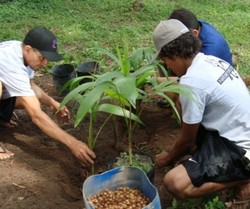
Acai Berry - What it is, how it works, its reported benefits

May 23, 2009

Some have called this a superfood and as a result the Acai berry has gained worldwide identification. It is claimed that within this small berry is the power to increase energy and promote antioxidants within the body and as a result is has been under the spotlight from scientific research, which has looked into the fruits properties; the findings of which have been quite substantial.

There is only one place in the world that produces the Acai berry; this is the rainforests of the Amazon and like other fruits and vegetables the faster they are processed for shipping the higher the health benefits are for you. Within the Amazon rainforest this berry is found growing wild on top of many palm trees that are native to the rainforests. It is the local farmers of the area who harvest the fruit from the trees and use it to make a fruit pulp, which is then frozen as a means of preserving the nutrient value.

When it comes to the nutrient value of the Acai berry you can get an idea of the health benefits of them from the fact they are considered to be amongst the most nutritious foods within the Amazon. They are rich in B vitamins, minerals, and fiber, protein and omega-3 fatty acids. They have also been found to be a rich source of anthocyanins and other phenolics and phyto-nutrients. On top of all these properties these berries have also been proven to contain oleic acid (omega-9), which is a beneficial fatty acid, it isn’t however essential as it is often incorrectly referred to as.

The Acai berry has become so popular that there are now a number of products on the market; you are able to get them in drink form, powders and capsules but what exactly are these berries suppose to do to aspects of our health? Well research has been carried out into the health benefits that are associated with them and scientists have suggested that the berries aid in the following:

  • Better digestion
  • Better sleep
  • More energy
  • Clearer skin
  • Detoxification

This is how the Acai berries have been reported to work; they are used as a means of improving certain aspects of our health. As well as the above the Acai berry is also considered to be an aid when it comes to preventing heart disease. The reason for this is down to the fact the berry contains a very high concentration of compounds known as anthocyanins. Scientists are interested in this fact for the reason these compounds are found within red wine, which is already known for its health benefits. The Acai berry however has up to 30 times more anthocyanins than red wine does.

One point that should be noted about this superfood is the fact you shouldn’t eat it raw, in order for it to be safe for consumption it has to be processed, which some people may argue takes away part of its nutrients but a point that contradicts this theory is people who are trying to loose weight use the processed berry as a means of helping as it has no side effects. However it could be argued that as you are on a strict diet and exercise regime anyway that this food is technically not doing anything.

As I mentioned above, one of the health benefits revolves around better digestion. As we know poor blood circulation can cause problems such as bad eye sight, heart problems and of course digestion concerns. So in order to improve digestion you need to improve your blood circulation and the Acai berry is considered to do exactly this.

It has been proven that this particular food contains properties such as amino acids and vitamins. For this reason research has been conducted to discover the effects that these would have on us. This research looked into how these properties can aid in muscle contraction as well as regeneration. It is factors such as these that would be able to slow down damaging effects to the skin that can be the cause of aging, thus demonstrating that is has the potential to prevent the aging process.

One of the last health benefits that I have came across that are associated with the Acai berry is the concept that it could lower cholesterol. The reason that this has been suggested is down to the fact they contain large amounts of protein and fiber but even more importantly they contain omega-6, which lowers cholesterol levels, and omega-9 fatty acids, which lower LDL cholesterol levels and maintain natural HDL cholesterol levels. Even so if you aren’t eating correctly and taking a form of exercise this could have the potential to become irrelevant. You have to be taking care of yourself to some degree for the properties found within this fruit to do any good.

Combining the Acai berry with sensible eating and moderate exercise has the potential of improving your health dramatically. Just make sure that if you are considering taking this fruit in some form that you look into how it can benefit you the best and you use it in the correct dose, otherwise you are risking yourself rather than helping yourself.