From: mongabay.com
Physician Christopher Herndon explores how Amazon shamans diagnose and treat disease.
Ethnobotanists, people who study the relationship between plants and people, have long documented the extensive use of medicinal plants by indigenous shamans in places around the world, including the Amazon. But few have reported on the actual process by which traditional healers diagnose and treat disease.
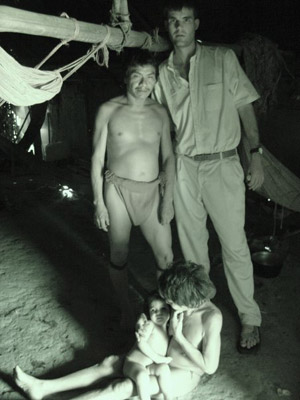 A new paper, published in the Journal of Ethnobiology and Ethnomedicine, moves beyond the cataloging of plant use to examine the diseases and conditions treated in two indigenous villages deep in the rainforests of Suriname. The research, which based on data on more than 20,000 patient visits to traditional clinics over a four-year period, finds that shamans in the Trio tribe have a complex understanding of disease concepts, one that is comparable to Western medical science. Trio medicine men recognize at least 75 distinct disease conditions—ranging from common ailments like fever [këike] to specific and rare medical conditions like Bell's palsy [ehpijanejan] and distinguish between old (endemic) and new (introduced since contact with the outside world) illnesses.
The knowledge and treatments of shamans is the product of their own scientific method, accumulated from a progressive cycle of trial, experiment and observation repeated over countless generations. It may not be transmitted in Science or Nature but in many ways is fundamentally based on the very same empirical and pragmatic principles as Western science.
Lead author Christopher Herndon, currently a reproductive medicine physician at the University of California, San Francisco, says the findings are a testament to the under-appreciated healing prowess of indigenous shamans.
"Our paper contests a prevailing view in the medical establishment that we, as scientists, have nothing left to learn from so-called 'primitive' societies," he told mongabay.com. "Our 'Western' medical system is itself but a compendium of knowledge, wisdom and therapeutics accumulated from past cultures and societies from around the world. We should be justifiably proud of the accomplishments of medical science, but at the same time not lose perspective that these advancements, in many cases, emerged only in the past half-century. My point is that we should not be so quick to sever the umbilical cord of our medical system from the womb of the last remaining cultures that helped gave it birth. We do so at our great loss."
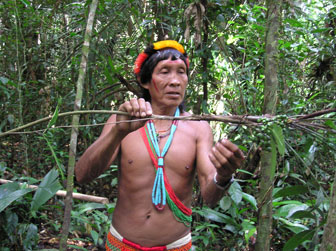 Shamanism is a product of accumulated knowledge of past generations as well as deep ties—spiritual and physical—to the natural environment. But in a world where forests are being rapidly destroyed and profound cultural transformation is occurring among younger generations in traditional societies, the healing knowledge of shaman is disappearing. Among the Trio, the trajectory was accelerated by the missionaries who initially demonized shamanic practices, ostracizing healers from their communities and leaving an entire generation without the traditional apprentice/mentor relationship that is the basis for passing on knowledge from tribal elders to youths.
But the situation is changing for the Trio, thanks in part to the pioneering efforts of the Amazon Conservation Team (ACT), a "biocultural" conservation group that collaborated with Herndon (together with a Trio shaman named Amasina and the Suriname Ministry of Health) on the research. ACT has established a system of traditional health clinics to improve healthcare and promote medicinal plant knowledge among younger members of the tribe by bridging the gap between youths and healers (the average age of shaman in the study was 68, an approximate age as all were born prior to contact).
"One cannot 'save' the medical systems of indigenous tribes alone through written inventories of their medical plant knowledge," Herndon explained. "Trio ethnomedicine, not unlike our healing tradition, is a complex art of diagnosis, examination, communication, ritual and treatment that can only be transmitted through active practice. The disintegration of traditional systems of health is most devastating to indigenous peoples, who at the same time often have very limited access to extrinsic medical resources. The adoption by organizations of programs that strengthen and retain tribal peoples' self-sufficiency is critical for their health as well as to enable the transmission of these remarkable medical systems for the benefit of future generations."
In a November 2009 interview with mongabay.com, Herndon discussed his research, the diagnostic practices and healing power of shamans, and the importance of biocultural conservation in the Amazon.