Source: Mongabay.com
Indigenous peoples and their allies have intensified their fight against two oil companies over contamination in the Peruvian Amazon. Last week, a group of indigenous protesters blockaded portions of the Marañon and Corrientes Rivers in the province of Loreto in northeastern Peru. The protesters were demanding that Pluspetrol, an Argentinean oil company, compensate them for a recent oil spill. As of December 28th, after eight days, the blockade remained unbroken.
This follows on the heels of a similar blockade in October, which drew five thousand indigenous protesters from the Achuar, Awajun and Shawi tribes. That blockade, which lasted for weeks, ended only when the regional government finally agreed to perform water quality tests in the Marañon.
Right now, the main issue is contamination from an oil spill in June 2010, when 400 barrels of oil spilled into the Marañon from a tanker transporting oil for Pluspetrol. The company has blamed outside contractors for the accident, but indigenous groups are still demanding that Pluspetrol pay up. They are asking the company to undertake reforestation efforts in degraded areas, in addition to providing food, medicines, and cash payments to affected communities.
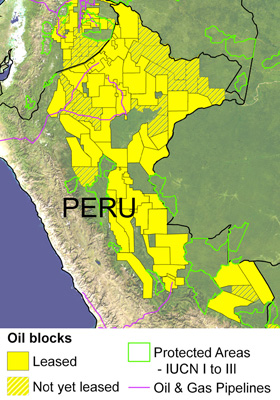 The battle over the oil spill is only the latest installment in a much longer fight. Pluspetrol owns two oil concessions in this part of the Peruvian Amazon, known as Blocks 1AB and 8. The two blocks have been producing oil for decades; for most of that time, toxic residues have been dumped in rivers or left in open pits. Heavy metals, volatile organic compounds, and hydrocarbons have infiltrated water supplies, sickening local residents. For years, the Achuar tribe, which inhabits the area, has been fighting for compensation and clean up.
Pluspetrol has only owned the blocks since 2000. The previous owner, Occidental, was responsible for most of the pollution. The Achuar have been fighting Occidental in court since 2007. On December 8th, they scored a major victory when a judge in Los Angeles ruled that their class action lawsuit could be heard in the US, as opposed to Peru. The change of venue makes it much more likely that the lawsuit will be successful.
Still, it is not clear that all will end well. Previous blockades by indigenous groups have ended in violence. In June 2009, in another part of the Peruvian Amazon, indigenous groups created blockades over roads to protest new oil and gas concessions. The protests led to bloody confrontations with the police. At least 20 policemen and 34 protesters were ultimately killed, with many more reported missing.
Oil production in Peru has expanded rapidly over the past five years, and today 41% of the percent of the Peruvian Amazon is currently covered by oil and gas concessions [PDF]. Blocks 1AB and 8, which together produce around 30,000 barrels of oil a day, are responsible for approximately 40% of Peru’s overall oil production.

