Friday, January 28, 2011

Brazil Approves Clearing Forest for Belo Monte Dam

27/01/2011
Source: Treehugger


After decades of demonstrations and protests against the building of an enormous hydroelectric dam at Belo Monte in the lush Brazilian rainforest, the government has finally given approval to begin construction. The first stages of development of the controversial project calls for the clearing of nearly 600 acres of forest, to be followed by the flooding of 121,600 more acres once the dam is finished. This important approval not only marks the early stages of its immense environmental impact, but a social one as well. For the nearly 50,000 mostly indigenous people who live in the region, the approval signal a precursor the destruction of their homes and livelihoods.

Despite the controversy surrounding the dam, Brazil's environmental agency, IBAMA, has ultimately given the go-ahead to begin the initial stages of construction at Belo Monte. When completed, it will be the third largest hydroelectric facility in the world, capable of powering 23 million homes.

Leading the fight against the Belo Monte dam had been the Brazil's indigenous peoples, who went as far as storming the Capitol to have their voices heard on the issue. Environmentalists have also taken issue with the 11,000-megawatt dam's sprawling footprint in the Amazon.

Even celebrity activists, like Avatar director James Cameron, have joined in the fight against the project, citing its impact on indigenous communities. The involvement of foreign protesters was often irksome for government officials. Last June, former-President Lula slammed "gringos" that "stick their nose where it does not belong."

When I spoke with Brazil's ex-Energy Minister, Márcio Zimmermann, in August, he echoed those sentiments, pointing out that the project had been "widely studied" and would "not flood indigenous reserves."

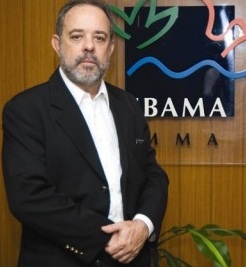
Still, Belo Monte has not been without its detractors from within the government. Just last week, IBAMA's president, Abelardo Bayma Azevedo, resigned amid pressures from the Energy Ministry to green-light the project. According to Brazilian media, Azevedo argued that approval could not be granted due to IBAMA's ongoing investigation into the dam's environmental impact. His leaving office apparently helped facilitate the approval needed to move forward.

After decades of debate, the granting of approval for the start to construction won't likely settle the issue for those opposed. Nevertheless, the government sees the project as an important step towards developing the nation's power-grid and fulfilling its goal of ending energy poverty in Brazil.

With the crossing of this hurdle, more remain; actually building the dam itself will require further approvals be granted. Officials hope to have the project completed by 2015.

Visit the spectacular Iguazu Falls in Brazil on South America tours

28 Jan 2011
Source: TravelBite.co.uk

If you're looking at South America tours to find the perfect holiday, why not consider visiting Brazil? The country is the largest in South America and boasts some spectacular natural scenery.

This interesting and diverse country is bordered by Venezuela, Suriname, Guyana and French Guiana in the north, and Bolivia and Peru on the west. Also close to Colombia, Argentina and Paraguay, you can imagine how varied the culture is in Brazil.

Initially, the country was a colony of Portugal, and still retains Portuguese as its main language despite its position within the Americas. The former capital of Rio de Janeiro was the seat of power in the country, chosen by the Portuguese royal family when they were fleeing the invading French in the early 1800s, but was later replaced with Brasilia.

There is much history to discover in Brazil, which is sure to be a big draw for those with an interest in the nation's past. If you book small group travel to the country, you can enjoy learning more about Brazil with your nearest and dearest.

In addition to the rich history of the country, another major attraction for those visiting the nation is likely to be the climate. Tropical in most places, there are also arid patches throughout Brazil, so you can be sure of a break in the sun. You'll find tropical savannahs in the centre of the country, equatorial rainforests in the north and arid deserts in the north-east.

The nation is as rich in biodiversity as it is in culture, so if you have a passion for nature Brazil packages could be the perfect break for you. Home to the Amazon rainforest, the country also boasts all kinds of forests full of wildlife. Animals that call Brazil home include deer in the south and New World monkeys in the north, as well as pumas, sloths, armadillos and jaguars.

And there are plenty of beautiful natural sights to witness across Brazil, too. If you enjoy taking in stunning views, a must-see during your Brazilian adventure has to be the breathtaking Iguazu Falls. The giant waterfalls can be found on the border of Parana and the Argentine province of Missiones and divide the Iguazu River into upper and lower sections.

Discovered in 1541, the beautiful falls have since become a major attraction for those visiting the country. Legend has it that the waterfall was created by an enraged god, whose soon-to-be-wife had fled with a mortal lover in a canoe. The god had sliced the river in two, creating an eternal fall for the woman who spurned him and her lover.

The cascade of water consists of 275 falls stretching across 1.7 miles of the river. The majority of the falls measure around 64 metres in height, although some are as tall as 82 metres. Findings have shown the waterfalls to be about three times as wide as Niagara Falls, which apparently prompted former president's wife Eleanor Roosevelt to remark "poor Niagara" upon visiting the Brazilian site. Arguably the most impressive of the falls is the Devil's Throat - a u-shaped fall that is 82 metres high and 150 metres wide.

Because of the river's position on the border of Brazil and Argentina, much of the cascading water is actually in Argentine territory. If you visit the falls from the Brazilian side, you can gain access by journeying through the town of Foz do Iguacu. The falls are located within the Parque Nacional do Iguacu - a Unesco World Heritage site.

As you move through the location you're sure to be left speechless by the surrounding beauty. One of South America's largest forest preservation areas, the park spans 185,263 hectares of land. Its main aim to preserve the natural ecosystems of the region and ensure the land is untouched. There are numerous touring agencies in the area that offer guided walks around the park if you'd like to find out more. Alternatively, you might like to take a boat ride out to the falls to witness them from a closer vantage point.

Hop over to the Argentine side of the falls for some fantastic views of the waterfalls such as Bossetti, San Martin and Bernabe Mendez, which all make up the Iguazu Falls. On this side of the water you'll also discover jungle trails and bird hikes, so you can really make a day of it.

A visit to the Iguazu Falls in Brazil is sure to leave you with memories you'll treasure forever.

Gold rush in the Amazon

28 Jan 2011
Source: Telegraph.co.uk

Illegal goldmining is laying waste to Madre de Dios, the most biodiverse region in the world

We sped across the jungle along a narrow manmade path. 'Quick! Hide the camera! If they see this, they’ll beat us up,’ shouted the motorcyclist who was driving me.

Visitors are not welcome in Guacamayo, one of the biggest illegal goldmining sites in the world, so large it is visible from space. Above the noise of the bike we could just make out a distant rumble of machines.

A sharp turn of the wheel later and the trees vanished, replaced by a vast desert dotted with shacks covered in blue plastic sheets where thousands of miners live. We were at the heart of a 21st-century gold rush that, environmentalists warn, is rapidly destroying the Amazon’s Madre de Dios (Mother of God) region in south-east Peru, 33,000 square miles of low-lying, dense rainforest containing the richest biodiversity on earth.

As we crossed endless sand dunes, groups of men became visible among the filthy swamps. They were busily keeping diesel generators going, powering pumps that suck up mud, then spew it down carpeted ramps where gold particles are trapped. They work round the clock, only pausing at dawn to wash out the carpets and extract the gold that ends up in the markets of London or Zurich.

It was scorching hot and humid and the driver stopped to scour the horizon, trying to find his bearings. Next to us, leaning against a bare trunk, was a simple white cross bearing the name Julio Cesar Zabala, aged 29, together with his birth date and the day he died – a reminder to those passing that deaths caused by landslides are a daily occurrence here; most workers are inexperienced and take no basic safety precautions.

Half an hour later, we reached the thinning line of trees marking the edge of this wasteland. We met Marco Suarez, a miner from Moquegua in southern Peru, who arrived here two years ago hoping to make a quick buck and return to his village to buy a plot of land.

'This is hell,’ he said. 'We’ve been in this spot a week and work sometimes 24 hours a day depending on how it goes. We find five, six, seven grams of gold a day, and I make up to 100 soles a day [£25]. We’re simply trying to survive. I wish there were other jobs.’

As he spoke, a couple of goldminers approached suspiciously, asking the motorcycle driver what I was doing there.

'People here don’t like to speak,’ Suarez resumed, wiping the sweat from his brow with his shirt, and pouring out the brownish water that had accumulated inside his green rubber boots. 'I know we’re destroying the forest, there were only trees here before, but what are we supposed to do?’ He smiled faintly, and then turned around and went back into the swamp. His colleagues looked on from below but no one else wished to talk and the driver began to get nervous so we drove on.

Suarez is one of about 10,000 miners working in Guacamayo (no one knows the exact number), an area that already occupies nearly 60 square miles, despite being little more than three years old.

This is the largest illegal goldmining operation in Madre de Dios, though countless other sites have sprung up elsewhere in the region. This is in addition to the legal mining concessions, whose numbers, according to miners’ unions, jumped from 500 in 2004 to more than 2,600 today. Record-high gold prices are fuelling the fever, doubling in the past two years to more than £800 per ounce, a rise caused by investors’ fears over the global economic crisis.

Enabling all this activity is a new road that has cut a huge swath across this once inaccessible territory. The 1,600-mile Trans-Oceanic Highway links the Amazon river ports of Brazil with the Pacific ones of Peru. After 40 years of planning and construction, the road was finally inaugurated in December 2010, and in January the achievement was marked by a Peru-Brazil car rally (although structural problems found in a bridge in Puerto Maldonado, the capital of Madre de Dios, mean the highway won’t be fully finished until April).

The £570 million highway is viewed as South America’s infrastructure project of the century. But it sounds the death knell for the local environment, and has unleashed a tidal wave of land exploitation and corruption.

Every day, using this road, some 300 people arrive in Madre de Dios from neighbouring dirt-poor highlands, seeking work and the promise of a better life. Two thirds of them head to illegal goldmining sites such as Guacamayo, accessible only by motorcycle from bustling Wild West-type shanty towns several miles away, which sprang up almost overnight along the highway.

The Trans-Oceanic Highway has made it so much easier to bring in the key supplies required for goldmining: petrol, bulldozers, heavy diggers and the mercury used to separate the sand from the precious metal. The highly toxic mercury, which miners handle with their bare hands, is imported from the United States and Spain and sold openly in stores. Environmental organisations estimate that more than 40 tons of it are dumped every year in the region, polluting rivers to the point that the fish are now inedible and can be sourced only from small fish farms.

Illegal goldmining in Peru has grown into a £390-million-a-year industry, employing 100,000 people nationally (it was only a few thousand some years ago), mostly in Madre de Dios where, according to the government, more than 2,000 square miles of forest have already been destroyed (environment groups say this figure is three times higher). 'Madre de Dios is the most biodiverse region in the world because it was so remote and inaccessible,’ the botanist Oliver Whaley told me from his office at Kew Gardens in London. 'The Trans-Oceanic Highway is like putting a knife into the last large area of rainforest left on earth.’

Previously, much of the Madre de Dios region could be reached only by boat or not at all. Whaley believes the new road will leave the same trail of destruction that it wrought in Brazil, when that section was completed in the 1980s. But he warns that the effects in Peru will be starker. 'Madre de Dios is the source of the Amazon, the upper watershed, so everything knocks on from there. The way seeds are dispersed, the fish moving upstream to this region to find breeding grounds, they’re the base of the nutrient cycle. If Madre de Dios collapses, everything will collapse.’

Despite the scale and potential consequences of the destruction, this issue only hit the headlines in November 2009 when a Peruvian national news­paper ran a front-page story vilifying illegal goldmining that provoked an uproar in the country. President Alan Garcia went on to call it 'a savage form of mining because it’s completely unregulated and doesn’t pay taxes’. His environment minister, Antonio Brack, a German-trained agronomist engineer and former television host, called it a 'cancer’ and one of the most important environmental problems facing Peru.

Last April, the authorities moved to establish a mining exclusion zone in Madre de Dios. But they backed down following three days of violent demonstrations by thousands of miners who blockaded the main coastal road, the Panamericana, leaving six people dead and bringing the whole south of the country to a standstill.

Luis Alfaro, the head of Peru’s National Parks, insists that there is more control than there used to be. 'For example, in Peru as a whole we now have 40 inspectors for each national park compared with 10 in 2008. But the problem is not a lack of inspectors, it’s the current high price of gold and the ease with which illegal goldminers and loggers can purchase and bring in their supplies, especially fuel, made worse in Madre de Dios by the new highway. Until now we’ve largely managed to protect the five national parks in Madre de Dios, but the threat keeps growing. Our strategy now is to try to prevent the invasions of land around the national parks but we’re fighting an uneven battle. The government isn’t doing enough to tackle this problem.’

Brack maintains that they are taking measures to combat all this. 'We’re preparing a law to forbid pumps used by miners from being operated in rivers,’ he told me. 'We’re setting up police checkpoints and working on a new legal framework to limit the transport of gas and diesel used by illegal miners, though applying these measures will take time.’

Massive deforestation is not the only consequence of illegal goldmining. Every year an estimated 1,200 girls aged between 12 and 17 are drafted into child prostitution rings operating in the area. They are brought from all over the country to brothels that have sprung up in the middle of mining camps, lured by the promise of jobs paying 10 times more than they would normally earn – jobs that turn out to be non-existent. Most arrive with no money at all. The miners warn brothel owners about any girl trying to escape, so, with no authority or police around to complain to, the girls are trapped.

Not so Teresa, a 14-year-old I met who had escaped a couple of days earlier from the brothel she had been taken to. She had arrived in Guaca­mayo under the impression that she was going to work in a restaurant, and she refused to become a prostitute.

'I was brought to the jungle,’ she said. 'I had no money, nothing, at most 70 cents. They took me to this bar, a brothel; it was horrible. It had tables, chairs, lights, a pole in the middle with loudspeakers, and a room on the side where girls slept. After a few days, when everyone was asleep I ran and ran until I found a man who took me away.’

She was speaking from a refuge, the only one of its type in the area; only 72 girls have made it here since October 2008. It is a simple wooden building on a side street in the chaotic town of Mazuko, the main entry point into the Madre de Dios region, a couple of blocks away from the highway. It was late in the evening and Teresa was waiting impatiently for her parents to arrive from Lima to pick her up.

'I was lost, I didn’t know where I was,’ she continued. 'At night everything is dark, there are no lampposts or anything. The policeman told me that it was a miracle that I had escaped because no one can usually; they rape you and throw you in the jungle.’

Teresa had explained to the owner (ironically, a woman brought to this region as a girl years ago) that she was underage, but the owner replied that even younger girls worked in the other brothels and that police never came. 'She told me that if I tried to leave, her husband would kill me. He had a gun; I saw it.’

Ana Hurtado is a Peruvian sociologist who arrived in the region in the 1990s and set up the refuge after seeing the children’s plight. Hurtado recounted the case of a 16-year-old girl who also had refused to sleep with miners. The brothel owner’s husband raped her and left her pregnant, forcing her later to have an abortion.

I had seen some of these girls in one of the many miserable tent villages dotting Guaca­mayo. When I arrived there the air stank of open sewers, and blaring salsa music drowned the noise of passing motorcycles. A few barefoot children were playing outside, next to a place offering a payphone service and another announcing 'Se lava motos' (motorcycles cleaned here). There was a row of brothels with suggestive pictures of naked women painted across the outside walls. As I sat down on a wooden stool to drink a beer, a couple of clearly underage teenage girls ventured outside one of these brothels.

I had asked Hurtado whether the police ever took any action, but she just made a resigned gesture. 'We’re trying to encourage police interventions and sometimes we succeed – last February, 12 victims were rescued. But there are informers in the police who warn the brothel owners of any operation, so almost nothing happens. What we do is just a drop in the ocean.’

When I phoned the ministry in charge of dealing with child trafficking, a spokesman told me he recognised the scale of the problem but that only nine cases were reported in the region in the whole of 2008. He added that the jungle regions are virtually lawless, with no state presence, and that children who fall into these child trafficking rings tend to disappear, never to be seen again.

Senior government officials I spoke to admitted that illegal goldmining was getting out of hand. But they were keen to highlight the advantages that the new road will bring: an estimated 160,000 tourists, mostly Brazilians, are expected to arrive here every year on their way to Cuzco and Machu Picchu. They added, rather optimistically, that current talks with mining associations to legalise mining and resolve environmental and child prostitution problems are expected to bring about 'immediate’ results.

Almost no one shares this optimism, however, especially not mining leaders. This is partly because of the influence that the mining sector exerts inside the government. Sixty per cent of Peru’s exports are minerals, and it is the sixth largest gold exporter in the world, which explains why mining extraction takes precedence over any other land use in the country.

Amado Romero, the head of the all-powerful local mining union, Fedemin, told me that part of the problem is the ease with which anyone arriving here can become an illegal miner, and that there is no political will to stop this. Anyone can buy a Chinese-built pump for about £420, and with £1,600 (to pay for fuel, food, transport costs, mercury) can head to the forest and set up their own personal mining operation. Those who own several pumps are given loans from regional banks almost immediately. Provided you have some simple equity or a friend who will act as guarantor, the whole process generally takes a week.

'The state is completely absent here,’ Romero said. 'They don’t care about the environment or try to legalise goldmining. If you check the regional government website you’ll find only three lines dedicated to mining – three lines when it’s responsible for 80 per cent of the economic activity in the region. It’s madness. If the state doesn’t take the necessary measures now, this will get out of control.’ He went on to elaborate on the danger that the national parks face, and accused journalists of focusing only on goldmining when other activities such as illegal logging and agriculture are equally destructive, having already wiped out hundreds of square miles.

He is right. This became clearer as I travelled along the highway north towards Brazil, where whole stretches of smouldering forest extended on both sides, broken from time to time by Brazilian nut palm trees that provide one of the few sustainable products to indigenous communities living in the area. This land, which multiplied in value as the highway neared completion, will probably make way for cattle ranching; or African palm oil plantations that are being introduced to feed the growing biofuels market; or, in the future, soya plantations – that is, as soon as Brazil discovers a genetically modified crop that can adapt to this humid area.

But along with the indiscriminate goldmining, it is illegal logging that is the most immediate danger exacerbated by the highway. Nowhere is this clearer than in Alerta, a small town a few miles from the border, where Jose Cahuana, a local leader elected to represent the indigenous communities, lives. 'I oversee 700,000 hectares [2,700 square miles] of forests and they’re destroying 40-50 per cent of it; they’re emptying everything,’ he said. 'As soon as they complete the bridge in Puerto Maldonado the flow of wood will be unstoppable.’

Sitting in the wooden shack where he lives, he complained about receiving death threats, and a year and a half ago he narrowly missed being killed when the area’s vice-governor was murdered after confiscating a truckload of illegal wood. 'We were unloading the logs and the owner’s son-in-law arrived with a gun. He found the vice-governor at the office and shot him eight times. I had left just a couple of minutes earlier. Since then we’ve stopped patrolling – there’s no point risking our lives. His widow hasn’t received any compensation from the state – nothing, nothing.’

Cahuana, 47, does not receive a salary and just manages to make ends meet thanks to sporadic carpentry jobs. 'Corruption is the norm here,’ he said. 'The police demand bribes from anyone transporting logs, legal and illegal. Everyone has to give them £12 per truck. If they know that wood is illegal they ask for £60; if it’s quality wood then they want £120. I’m going to resign this year, this is really hurting me. I’ve served for four years and had enough.’

With us stood Angel Gabriel Felix, 34, who had a similar brush with illegal loggers five years ago when he became the manager of the nearby Alto Purús national park, which covers 8,000 square miles of forest. He explained how illegal loggers operating deep inside the jungle initially offered him £1,100 to ignore every raft of logs leaving the area.

'When I refused and continued to stop their shipments they sent me beautiful young women. When this didn’t work they threatened to kill me,’ he said. He was saved only when the newly appointed local army captain turned out to be an old school friend – when the officer heard what was happening he placed an armed bodyguard at Felix’s door until Felix changed jobs two years ago to join the Environment Sustainability Centre, a Lima-based NGO that tries to raise awareness on environmental issues and provide experts and scientists to support sustainable projects.

Not only did the police not do anything, Felix added, but his bosses in Lima kept pressurising him to turn a blind eye to illegal logging too. Things then got worse. When loggers finally managed to bribe one of his park rangers, they used this to denounce Felix in court with the connivance of a local judge. 'I still have a trial hanging over me,’ he said. 'Here, if you try to follow the law you end up either in jail or dead. Unless the government steps in soon, Madre de Dios will become a desert like Saudi Arabia.’

Later, I crossed the border into Brazil, leaving the new Trans-Oceanic Highway behind. Endless pastures extended on both sides of the road, created decades ago, interspersed by scattered peasant shacks and the odd carbonised tree trunk – offering a grim glimpse of what the future holds for Peru’s formerly pristine Madre de Dios region.

Tackle the Amazonian rainforest in Peru

January 26, 2011
Source: NEWS.com.au


NO sooner have I dropped the little chunk of prime tenderloin in the muddy water than the battle begins.

It starts with a teasing nibble but quickly becomes a ferocious tug of war as the ravenous little fish gets a hold of the hook and the line is quickly veering in all directions.

A solid jerk on the line and he's stuck. I flick the rod, really just a bit of pointy stick with some line crudely tied, and a flash of silver and red is flying into the boat.

Ola! exclaims Roland our field guide - this is the big bad boy of the Amazon. He's only a few hundred grams, but the short-nosed, red-bellied piranha is the nastiest little brute in the family, of which there are 35 known species. His razor-sharp fangs will easily take off the end of your finger.

River ride

I'm travelling aboard the 40 metre, 400 tonne MV Aqua, based at the river port of Iquitos in Peru's northeastern state of Loreto, the last word in luxury river cruising in these parts. With just 24 passengers doted on by the same number of charming crew and guides, Aqua transports us into remote primary jungle wilderness inaccessible by any other means.

Giant panoramic windows open on to an ever-changing riverine vista, while dining includes many dishes using the produce of the jungle, such as heart-of-palm soup, camu-camu fruit and the ubiquitous and delicious catfish.

Most clients prefer the wet months between December and May when navigation is easier, but during the dry season the forest comes alive as animals and local Riberenos (river people) feverishly gather fish and fruit only abundant during the low-water months.

The majestic Amazon, the world's largest river by volume and more than 7000km long, is fed by more than 1000 tributaries, such as the evocatively named Yanayacu (blackwater) and Ucayali (canoe breaker), and home to more species of fish than the Atlantic Ocean.

Sublime pink dolphins, almost blind, chase schools of all types around the forks of streams and creeks occasionally breaking the surface for a breath of air. Another, the mysterious paiche or Amazonian cod (arapainia gigas) once grew to more than 3m long and weighed several hundred kilos, but fishing pressure has restricted the rare, partly air-breathing and tasty, creature to less than a metre.

The Amazon though is much more than simply a river. The entire basin, called Amazonia, covers 6.8 million square kilometres within Brazil, Columbia, Bolivia, Peru and Ecuador and at any one time contains more than 20 per cent of the world's freshwater reserves.

Tens of thousands of plant species, a great many with life-saving medicinal properties, thrive along the banks, lagoons and within the rainforests. Described by some scientists as "the lungs of the word", this almost incalculable mass of vegetation is responsible for re-oxygenating much of Earth's CO2-heavy atmosphere.

Notwithstanding the priceless contribution to the world's breathable air, vast tracts are vanishing at an alarming rate every day to make way for farms and grazing land. Legal and illegal logging is also taking its toll and the sky is often heavy with smoke from burn-off.

Add to this the effects of global warming and you have this dry season's lowest river levels in recorded history and they're still dropping. Many times our tender runs into the mud and must back out.

Fragile reserve
Most of our time is spent within the expanse of the Pacaya Samiria National Reserve, one of several that consume virtually the entire state of Loreto but attract just a few thousand visitors annually. Almost the size of Sri Lanka, the reserve is supposed to protect the fragile biodiversity within its largely unpatrolled borders. Naturally, poaching and illegal harvesting are rife among the poor Riberenos families looking to feed their average of six children.

Instead of policing draconian laws and stiff penalties, Aqua's management are working with the 280 local communities to reinforce the importance of preserving their important resources and cultivating sustainable farming practices.

The villagers are drafted as volunteer rangers in exchange for manageable fishing and farming rights. Hunting is forbidden anywhere in the reserve.

During our seven days on the river, we visit villages and are welcomed with open arms. School supplies, simple medicines and toys are distributed to eager, smiling children who have little more than the grubby clothes on their backs. Ali and Ari, young dentists visiting from Canada, gleefully distribute toothbrushes and toothpaste. I leave a pile of T-shirts and a handful of pens while Raoul, the ship's medico, examines infants and toddlers while comforting worried mothers.

As we're readying for a reluctant departure, Aqua Expeditions CEO Francesco Zugaro, joins us for a coffee and tells us his plans for a second vessel, due for launch in April 2011.

"MV Aria will have 16 specially designed cabins with floor-to-ceiling picture windows and is built from scratch," he tells us. Aqua, on the other hand, is a reclaimed hull with 12 suites.

The wildlife may be plentiful, but it is not the deluge you'll experience in places like the pantanal or Galapagos Islands. We see several species of monkeys, iguanas, pink dolphins, sloth, caiman, scores of bird species including the bizarre, pre-historic hoatzin and curiously dubbed horned screamer, while the botanically minded guests go crazy.

Eco-tourism is much more than turning up to ogle exotic species and swanning about in luxury. The best operators adhere to a policy of consultative interaction with local communities that give them tangible benefits such as better health and education while helping preserve the indigenous culture and environment that makes them such an asset.

We leave smiling, waving children clutching books, pens and a feeling that someone, somewhere gave a damn, even for just a moment.

Monday, January 24, 2011

Pink dolphins and silver piranhas

January 23, 2011
Source: NEWS.com.au

SUBLIME ECO-TOURISM: A villager on the Amazon. Picture: Roderick Eime

RODERICK Eime journeys into the seldom visited Peruvian Amazon rainforest and finds much more than monkeys.

No sooner have I dropped the little chunk of prime tenderloin in the muddy water than the battle begins.

It starts with a teasing nibble but quickly becomes a ferocious tug of war as the ravenous little fish gets a hold of the hook and the line is quickly veering in all directions.

A solid jerk on the line and he's stuck. I flick the rod, really just a bit of pointy stick with some line crudely tied, and a flash of silver and red is flying into the boat.

Ola! exclaims Roland our field guide, this is the big bad boy of the Amazon. He's only a few hundred grams, but the short-nosed, red-bellied piranha is the nastiest little brute in the family, of which there are 35 known species. His razor-sharp fangs will easily take off the end of your finger.

I'm travelling aboard the 40m, 400 tonne MV Aqua, based at the river port of Iquitos in Peru's northeastern state of Loreto, the last word in luxury river cruising in these parts. With just 24 passengers doted on by the same number of charming crew and guides, Aqua transports us into remote primary jungle wilderness inaccessible by any other means.

Giant panoramic windows open on to an ever-changing riverine vista, while dining includes many dishes using the produce of the jungle, such as heart-of-palm soup, camu-camu fruit and the ubiquitous and delicious catfish.

Most clients prefer the wet months between December and May when navigation is easier, but during the dry season the forest comes alive as animals and local Riberenos (river people) feverishly gather fish and fruit only abundant during the low-water months.

The majestic Amazon, the world's largest river by volume and more than 7000km long, is fed by more than 1000 tributaries, such as the evocatively named Yanayacu (blackwater) and Ucayali (canoe breaker), and home to more species of fish than the Atlantic Ocean.

Sublime pink dolphins, almost blind, chase schools of all types around the forks of streams and creeks occasionally breaking the surface for a breath of air. Another, the mysterious paiche or Amazonian cod (arapainia gigas) once grew to more than 3m long and weighed several hundred kilos, but fishing pressure has restricted the rare, partly air-breathing and tasty, creature to less than a metre.

The Amazon though is much more than simply a river. The entire basin, called Amazonia, covers 6.8 million square kilometres within Brazil, Columbia, Bolivia, Peru and Ecuador and at any one time contains more than 20 per cent of the world's freshwater reserves.

Tens of thousands of plant species, a great many with life-saving medicinal properties, thrive along the banks, lagoons and within the rainforests. Described by some scientists as "the lungs of the word", this almost incalculable mass of vegetation is responsible for re-oxygenating much of Earth's CO2-heavy atmosphere.

Notwithstanding the priceless contribution to the world's breathable air, vast tracts are vanishing at an alarming rate every day to make way for farms and grazing land. Legal and illegal logging is also taking its toll and the sky is often heavy with smoke from burn-off.

Add to this the effects of global warming and you have this dry season's lowest river levels in recorded history and they're still dropping. Many times our tender runs into the mud and must back out.

Most of our time is spent within the expanse of the Pacaya Samiria National Reserve, one of several that consume virtually the entire state of Loreto but attract just a few thousand visitors annually. Almost the size of Sri Lanka, the reserve is supposed to protect the fragile biodiversity within its largely unpatrolled borders. Naturally, poaching and illegal harvesting are rife among the poor Riberenos families looking to feed their average of six children.

Instead of policing draconian laws and stiff penalties, Aqua's management are working with the 280 local communities to reinforce the importance of preserving their important resources and cultivating sustainable farming practices.

The villagers are drafted as volunteer rangers in exchange for manageable fishing and farming rights. Hunting is forbidden anywhere in the reserve.

During our seven days on the river, we visit villages and are welcomed with open arms. School supplies, simple medicines and toys are distributed to eager, smiling children who have little more than the grubby clothes on their backs. Ali and Ari, young dentists visiting from Canada, gleefully distribute toothbrushes and toothpaste. I leave a pile of T-shirts and a handful of pens while Raoul, the ship's medico, examines infants and toddlers while comforting worried mothers.

As we're readying for a reluctant departure, Aqua Expeditions CEO Francesco Zugaro, joins us for a coffee and tells us his plans for a second vessel, due for launch in April 2011. "MV Aria will have 16 specially designed cabins with floor-to-ceiling picture windows and is built from scratch." Aqua, on the other hand, is a reclaimed hull with 12 suites.

The wildlife may be plentiful, but it is not the deluge you'll experience in places like the pantanal or Galapagos Islands. We see several species of monkeys, iguanas, pink dolphins, sloth, caiman, scores of bird species including the bizarre, pre-historic hoatzin and curiously dubbed horned screamer, while the botanically minded guests go crazy.

Eco-tourism is much more than turning up to ogle exotic species and swanning about in luxury. The best operators adhere to a policy of consultative interaction with local communities that give them tangible benefits such as better health and education while helping preserve the indigenous culture and environment that makes them such an asset.

We leave smiling, waving children clutching books, pens and a feeling that someone, somewhere gave a damn, even for just a moment.

Marathon swimmer: an interview with the first man to swim the length of the Amazon

January 23, 2011
Source: mongabay.com

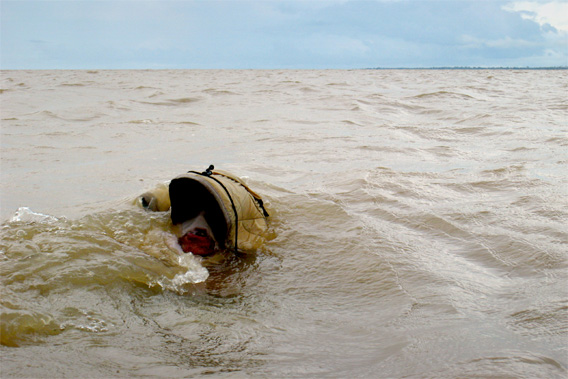
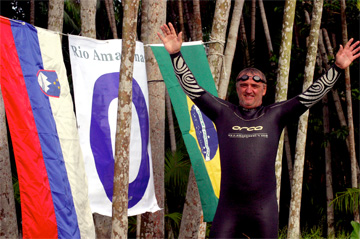
Amazon River swimmer Martin Strel. Photo courtesy of amazonswim.com.

Explorers have been making their way down the world's mightiest river for hundreds of years. Untold numbers of people have not completed the journey, drowning in its murky waters, being eaten by animals, losing their way, succumbing to tropical disease, being killed by pirates or hostile local populations. But today a trip down the Amazon is less special—it has even been rafted and kayaked by a few intrepid souls. Traversing the majority of the Amazon can be done easily by commercial boat, provided you have the time and a lot of patience.

But then in 2007 a Slovenian did something amazing: he swam the entire length of the river.

The adventure took 66 days and exacted a heavy physical and mental toll, but Martin Strel survived and in so doing conveyed a simple, but powerful message to the world: we are part of the our environment.

Strel is the subject of a new documentary—Big River Man—which won a Best Cinematography prize at the 2009 Sundance Film Festival. The film documents his 5,268-kilometer (3,273-mile) swim down the Amazon.

In a December 2010 interview with mongabay.com, Strel discussed his Amazon swim including his training regime, his message, his motivation, and the challenges of fatigue, illness and physical threats from caiman, piranha, floating logs, and fierce currents.

Corporate Hall of Shame Award Delivered to Chevron CEO at his Home in East Bay

Thursday Jan 20th, 2011
Source: Bay Area Indymedia

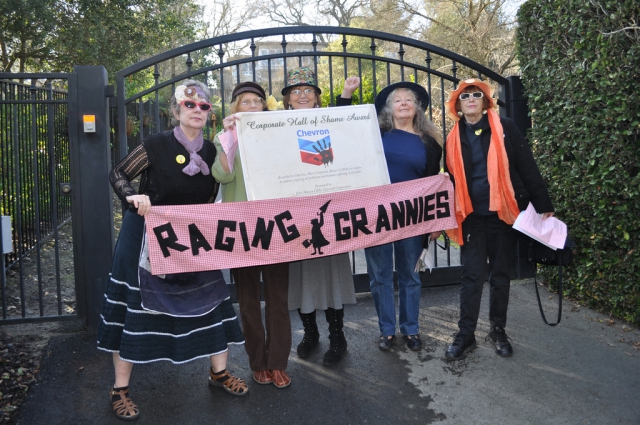
Yesterday the Bay Area Raging Grannies, along with environmental advocates Rainforest Action Network, delivered a Corporate Hall of Shame award to Chevron CEO John Watson for being one of the worst corporate abusers of 2010.


The Bay Area Raging Grannies, along with environmental advocates Rainforest Action Network, delivered a large Corporate Hall of Shame award to Chevron CEO John Watson for being one of the worst corporate abusers of 2010.

Thousands of people across the country have voted Chevron into the Corporate Hall of Shame for the company’s failure to address ongoing human suffering in Ecuador. Chevron is currently facing a multi-billon dollar lawsuit in Ecuador for dumping over 18 billion gallons of toxic oil waste onto the traditional lands of Indigenous peoples and small farmers in Ecuador’s Amazon rainforest during the course of three decades of oil drilling. Despite mountains of irrefutable scientific evidence, Chevron refuses to take responsibility for one of the world’s worst ecological disasters. Meanwhile, the company is mounting an aggressive legal and PR campaign to discredit the case, the plaintiffs and their counsel.

The Raging Grannies delivered the enlarged Hall of Shame award to the CEO's home in Lafayette, CA. The group traveled in a large biodiesel tour bus with the banner message “Chevron Clean up Ecuador.”

They spoke with neighbors of the CEO, to let them know their famous neighbor has "received an award" and told them why. The Grannies sang a few ditties into the call box at Mr. Watson's home, as no one came to the door...errr...gate. Then they left the award at the gate and returned home to Palo Alto via San Francisco on "Priscilla the Biodiesel Bus".

Nonprofit seeks city land for possible zoo

Friday, January 21, 2011
Source: Grand Junction Free Press

GRAND JUNCTION, Colo. — Janet Gardner hopes to build a zoo on city-owned, undeveloped property near Interstate 70.

Grand Junction City Council members are open to the idea of a zoo but would prefer to lease Gardner land near the Western Colorado Botanical Gardens where infrastructure already exists.

Building a zoo at Las Colonias, the 100-acre site near the botanical gardens would also bring tourists into the city, where they'd spend money at local restaurants and stores, Mayor Teresa Coons said.

Gardner's preference would be to lease a portion of the 200-acre Matchett Park, near F and 29 Roads and Interstate 70 because of its proximity to the interstate and accessibility to passing tourists. Gardner said she's concerned about the Las Colonias site being in a flood plain, and that it was a former uranium mill site.

“If we had a huge flood who would evacuate the animals and the scientific equipment,” Gardner asked.

Gardner formed the Grand Valley Zoological Quest, a nonprofit with seven board of directors, including herself, with the intention of raising the estimated $16 million needed to build the first phase of the zoo — Rainforests of the World.

Gardner is asking the city to consider leasing four acres of Matchett Park for the first phase, expanding the zoo eventually to 40 acres over a period of decades.

Phase one would include reptiles, snakes, frogs, lizards, parrots, and other tropical species. There could also be small primates, and pygmy hippopotamuses, fresh water fish, and possibly small felines, Gardner said.

The zoo would become home to many rescued parrots and other exotic animals bred in captivity, she said. A series of laws passed between 1972 and 1992, prevent the acquisition of animals from their wild, natural habitat, she added.

Zoos tend to attract a large number of out-of-town visitors and proximity to the interstate would be an important factor in sustaining the business, Gardner said.

Council member Gregg Palmer is concerned that developing the infrastructure at Matchett Park would end up costing taxpayers millions of dollars.

“They're asking for a long-term lease on city property that belongs to the citizens,” Palmer said. “There's no roads, no water, no electricity.”

Palmer said locating a zoo near the botanical gardens would be a compatible interest where infrastructure already exists. Leasing either property would require a citizen vote.

Gardner dreamed of creating a zoo 11 years ago, after meeting Harlin Wall, owner of Wall-to-Wall Reptiles, and also a boardmember of Zoological Quest.

“What we want to build first is a rainforest exhibit,” Gardner said. “It would be an immersion exhibit,” including “live plants that correlate to the animals' natural habitat. There will be natural barriers between the animals and people.”

Gardner also foresees classrooms and laboratories for both adults and children, pet education, and school programs.

Zoos have a positive economic impact on cities, Gardner said.

“The Denver Zoo is the most popular cultural attraction in Colorado,” she said.

Coons is familiar with larger communities like Albuquerque, Denver and San Diego whose zoos are “remarkable” and “great cultural and educational institutions.”

In many cases these types of cultural amenities are supported by a Scientific and Cultural District tax. Taxpayers must agree to a portion of their sales or property tax going toward these public programs, Coons said.

The scientific and cultural tax provides a significant portion of the budgets for Denver's museums, the botanical gardens and zoo, Coons said.

“I think (a zoo) could be a nice amenity and a regional draw,” she said. “But I'm concerned if they can sustain the operation without taxpayer support.”

Palmer said he's also concerned about long-term sustainability.

City staff is in the process of determining what the build-out costs would be for either location, “so everybody is fully informed,” Coons said.

“We don't want to shut the door on it. There are some good, potential benefits. We need to all go into it with our eyes wide open.”

Gardner hopes to build community support.

“We're losing rainforests — and all habitat — at a great rate,” Gardner said. “The best thing zoos can do is education, and promote conservation.”

Gardner, 48, dreamed of working with komodo dragons ever since watching a National Geographic channel at age 10.

The Grand Junction native got her wish in 1990, when she worked on a master's thesis at the Ragunan Zoo in Jakarta, Indonesia.

Gardner has two outdoor and one indoor aviary at her Grand Junction home where she keeps seven parrots, including a 23-year-old yellow-fronted Amazon that came from Michael Jackson's Neverland Ranch. She also has a cat and dog.

Saturday, January 22, 2011

Does Helping the Planet Hurt the Poor?

January 22, 2011
Source: Wall Street Journal

An area on the border of the Amazon rainforest, scorched by fire to produce charcoal and to clear land for agriculture.

Peter Singer poses an interesting and important question: Can we afford to both reduce poverty and clean up the environment? From an empirical standpoint, the answer is definitely yes. The developed world is sufficiently rich that doing both should be well within our means.

The key, of course, is being smart about how we tackle these big problems. Right now, the only legally binding climate policy, the European Union's 20-20 policy, will cost its members $250 billion in lost economic growth every year over the next century (according to research by the noted climate economist Richard Tol). Yet the net effect will be an almost immeasurable reduction in global temperatures of just 0.1 degrees Fahrenheit by 2100. If spent smartly, the same resources really could fix both global warming and poverty.

In a curious way, Mr. Singer's essay is an example of one of the stumbling blocks to making smarter policy decisions. He starts out saying we want to do a variety of good things, but almost reflexively he ends up focusing on green issues—and doing so in a very predictable way: The developed world has sinned and needs to atone.

Mr. Singer correctly points out that concerns over the environment and poverty are often linked. But he thinks about this only in terms of how poverty is bad for the environment, since poorer, less educated people tend to have more children, which puts more pressure on such things as forests and biodiversity.

But his argument can—and should—be taken further. As we get richer and such immediate concerns as water, food and health become less of an issue, we become more open to environmental concerns. Among other things, we become more willing to pay extra for technology that pollutes less and to accept more costly regulations to limit pollution.

We've already seen the results of this "greening" of society in the developed world, where for a number of decades air and water pollution has been dropping steadily. In London, which keeps the best statistics, air pollution maxed out in 1890 and has been declining ever since—to the point where the air is now cleaner than it has been at any time since 1585. In similar fashion, in some of the better-off developing countries, the focus has shifted from creating to cleaning up pollution. Today the air in both Mexico City and Santiago, Chile, is getting healthier.

Mr. Singer also evades the awkward point that an excessively green approach can actually make the environment more imperiled. Consider the fate of the world's forests. As we get richer and more environmentally conscious, our growing passion for organic farming and antipathy to genetically modified crops inevitably leads us to accept decreased agricultural yields. An obvious consequence is that we end up converting more wilderness to agricultural use.

We've seen similar unintended consequences from the use of inefficient first-generation biofuels such as ethanol. As a result of pressure from environmentalists and lobbying by agricultural interests, use of these fuels was made mandatory by many governments in the industrialized world. Diverting farm products into our gas tanks has driven up food prices, resulting in more starvation and wasted resources and causing still more forests to be razed.

Mr. Singer criticizes the use of cost-benefit analysis because it doesn't value human lives at the same rate in developed and developing countries. As uncomfortable as it may be, the reality is that we don't actually think of all people as equal. If we did, we would be building all of our new hospitals in developing countries. Mr. Singer may regard this fact as shameful, but ignoring the ethical judgment of nearly everyone makes his analysis less helpful.

Similarly, Mr. Singer criticizes the way that discounting is used by economists to make future costs comparable to values in the present. He argues that we should give "equal weight to the interests of future generations." Once again, this may sound admirable. But think about the consequences of heeding Mr. Singer's advice. By choosing a discount rate close to zero, we effectively say that the desires of infinite numbers of future generations are vastly more important than our own, meaning that we should save the great bulk of our resources for the future and consume just enough to survive. Essentially, our generation should eat porridge, while we leave virtually all benefits to the future.

This was what the economist Nicholas Stern concluded in the controversial 2006 review of climate change that he conducted for the British government. Mr. Stern said, in effect, that we should be saving 97.5% of all our wealth for future generations. The silliness of this view becomes apparent when we realize that, by this logic, our children and grandchildren also would be expected to continue the cycle of bowing to future generations, leaving almost everything to their progeny and pushing forward an ever larger mountain of resources that are never to be consumed.

We don't behave this way. Partly because we are selfish and partly because we expect that future generations are likely to be much better off than we are. Compared with the future, we are the poor generation, and it is hardly moral to have the poor generation pay the most. Rather, it makes sense to leave generalized assets, such as knowledge and technology, to future generations. This gives them a much greater capacity to tackle problems that come their way. Our actual financial savings for the future tend to be about 15% of income. We could debate whether the number should be 10% or 20%, but it is far-fetched to suggest that it should be 97.5%. We all recognize that we should care for the future, but at the same time we should care for ourselves.

Mr. Singer falls into the trap of saying that global warming is so terrible that dealing with it should take priority over all other concerns. This is simply wrong. Global warming is a problem that we must confront, but according to economic modeling by Carlo Carraro of the University of Venice, its damage is likely to cost something on the order of 2% to 5% of GDP by the end of the century.

At the same time, it is helpful to recall that our fossil-fuel economy has created amazing opportunities for almost everyone in the world, lifting hundreds of millions of people out of poverty. The United Nations climate panel estimates that economic growth will enable an increase per capita GDP in developing countries by some 2,400% over the course of the century.

Mr. Singer claims that problems related to climate change (such as an increased incidence of malaria) cause 140,000 deaths a year. Let's put aside for the moment the fact that rising temperatures are likely do more good than harm on this score, preventing so many cold-related fatalities that the net effect of global warming is likely to be a total of about 200,000 fewer people dying each year.

Even if we accept Mr. Singer's concerns, is fighting global warming through drastic carbon cuts really the best way to help people with malaria? By implementing the Kyoto protocol (at a cost of $180 billion a year), we could reduce the number of annual malaria deaths by 1,400. But we could prevent 850,000 malaria deaths a year at a cost of just $3 billion simply by providing adequate supplies of mosquito nets and medicine. For every potential malaria victim saved through climate policy, we could save 36,000 people through smarter, cheaper remedies for malaria.

From Mr. Singer's initial question of whether we can afford to both reduce poverty and clean up the environment, he ends up focusing on global warming and arguing that we simply need to "use less air-conditioning and less heat, fly and drive less, and eat less meat." This is a poor prescription, not only for those of us in developed nations but for developing countries and for future generations as well. It is an incredibly expensive way to achieve very little—and it won't happen.

Fortunately, there is a more sensible way forward that could use the same $250 billion that the European Union is expecting to waste annually on ineffective global warming policies. First, we should spend about $100 billion a year on research and development to make green energy cheaper and more widely available. Mr. Singer argues that it is not ethically defensible just to hope for a "technological miracle" that will allow us to end our reliance on fossil fuels. He is right. We must invest much more in green energy research and development, and it is the most politically realistic and economically efficient way to combat global warming.

This would leave $50 billion a year to develop adaptations for dealing with the impact of global warming and $100 billion a year for the world's poor, a sum that, according to the U.N., would go a long way toward providing them with clean drinking water, sanitation, food, health and education.

We are perfectly capable today of tackling the problems of both poverty and environmental pollution. But to do so, we must think clearly and rationally, and we must carefully weigh the costs and benefits of the approaches available to us.

Less Cloud. More Cloud Computing Clarity please.

Jan. 21, 2011
Source: SYS-CON Media

We’re only just passed the midpoint of January and yet every major IT news story of note these past few weeks has been cloud related. Whether it’s an M&A story such as Dell’s acquisition of Medical Cloud Storage Firm Insight One, a funding win or an analyst’s prediction of the market size, you cannot escape the cloud’s omnipresence.

It seems like only yesterday that you could tap the term ‘cloud’ into Google and the top results featured terms such as cirrus, altostratus and cumulus. I shudder to think what the school children of today use for illustrations in their meteorology projects. I have this recurring nightmare of pupils, standing at the front of a class, project in hand, explaining to fellow classmates that rain is formed as a result of pressure build up in the hybrid cloud and that rainforest deforestation is directly attributable to the effects of the Amazon Elastic Compute Cloud (EC2 is the given scientific name for this phenomenon).

Whilst it is certainly too early to determine what the focus for this year’s cloud stories will be, there has been a couple of rather scary articles that have caught the eye and they focus on the cloud’s perceived weakness in terms of data security. There can be no doubt that we need to educate potential users about the pros and cons of cloud computing but do we really need to scare the bejesus out of them?

“Don’t use cloud for sensitive data, EU warns members.” screamed the headlines this week as the European Network and Information Security Agency (ENISA) released a warning that government agencies in the EU bloc should only deploy cloud services for applications that do not process sensitive data. The reason for this warning? Data handling legislation in some EU states prevent certain data types from being taken out of their respective national borders.

On a similar theme, Canadian organisations have begun to voice legitimate concerns about cloud computing and the use of American based cloud hosts, in relation to the Patriot Act. Under the act, U.S. officials could access information about citizens of other countries, including Canada, if that information is physically within the United States,” reads a report on the website of Canada’s Treasury Board Secretariat.

At first glance, both reports appear to red flag security issues with cloud computing in general, and that is wholly misleading. When you dig a little deeper, and assuming that you understand the different cloud types , what you actually find is that the concerns relate to the PUBLIC cloud.

ENISA goes on to say that so-called private clouds are currently the most viable option for public sector bodies “since they offer the highest level of governance, control and visibility”. Private clouds deliver services and infrastructure in highly virtualised form from an organisation’s own data centre. This approach is exemplified by the UK government’s proposed G-Cloud project. So the cloud is safe then?

Likewise the Canadians admit that ‘of the leading public cloud providers Amazon, Google and Microsoft, none have data centres in Canada.’

What both reports are actually stating is that there are legitimate concerns with the use of the public cloud but not much wrong at all with Private (and you can certainly add Hybrid) Clouds.

Data protection is a key concern for any individual or organisation, which is why we have legislation to protect us and it should be considered a major factor when determining what cloud solution meets your needs. But despite the common misperception that the cloud is some vaporous virtual entity it does have a physical footprint. The cloud is hosted in a physical data centre, in a physical location, on a physical continent.

If the physical location of your data is critical to you, for legislative or governance issues, then simply ask your potential cloud host where their data centres reside. If they can’t give you an exact location of where your data will be hosted e.g. “Not sure. It could be in one of several countries.” then don’t use them, it’s that simple.

To suggest that the ‘cloud’ is insecure and should be avoided is, as stated, grossly misleading and I sincerely hope that this is not a trend that will gather momentum over the coming the year. We are still very much at the ‘educating’ stage of the cloud market and it is this that we all need to concentrate on.

A recent survey from PeoplePerHour.com showed small and medium enterprises were still baffled by cloud technology. Three quarters of the respondents (74 per cent) said they didn’t use cloud computing and 43 per cent of those did not even know what the term meant.

So what are the odds of that 43 per cent wanting to understand how the cloud can help their business if they believe, at the outset, that ‘it’s too dangerous a concept even for Government to use’? Pretty long I would suggest.

Amazon Mega-Dam Project Bears Uncanny Resemblance to Avatar

January 21, 2011
Source: Change.org

They’re not blue, and they don’t have tails. But in all other respects, the communities along the Xingu River in Brazil are living a story remarkably close to James Cameron’s Avatar.

After generations of living in one of Brazil’s largest networks of indigenous reserves, the lives and livelihoods of more than 40,000 indigenous people are being threatened by a massive dam project meant to power several new mining projects.

The planned dam is called Belo Monte. If completed, it would flood an area of rainforest the size of Chicago, destroying the only habitat of at least 10 endemic species, including two species of monkey. At the same time, it would choke off water to the entire downstream Xingu River area, critically damaging an environment and culture entirely reliant on the river system.

“For these people, it’s the end of the world as they know it,” says James Cameron in a short film he made to highlight the issue. “And they’re reacting accordingly.”

As I’ve written about before, most dam projects actually cause more harm than good to the environment. Belo Monte, however, is worse than many projects, particularly because, according to one new study on the financial risks of the dam, the project may actually be inferior at energy generation than the power sources that already exist.

And even if current energy sources aren’t enough, a dam isn’t the only way to go about producing more energy. According to a press release by Amazon Watch, one of an international coalition of groups opposing the project:

“Studies by respected Brazilian energy experts have shown that by investing in energy efficiency between now and 2020, electricity demand will be reduced by 40 percent. The power saved is the equivalent of 14 Belo Monte dams. Brazil has enormous potential for solar and wind energy. Studies have shown that renewable energy is economically viable for Brazil and could account for 20 percent of country's electricity by 2020, compared to only 1.3 percent today.”

Which in essence, means that if the dam is built a large area of the Amazon would be entirely destroyed for no actual benefit to energy production.

This is so obviously not in the public interest that several Brazilian officials have resigned rather than approve the project. Just last week, Abelardo Bayma Azevedo, the head of the Brazilian national environmental agency, IBAMA, left his post rather than issue a license to the project.

But still the Brazilian government continues to push the project. Brazil’s Minister of Mines and Energy, Edson Lobão, has stated that the construction license for the dam will be issued shortly. Construction could begin as early as February.

Like the Pandorans, no one in the Amazon is taking this one lying down. According to Amazon Watch, the local coalition opposing the dam, Movimento Xingu Vivo Para Sempre, is stepping up organizing efforts to stop the project. And a coalition of groups from around the world is stepping up to help. Groups like International Rivers and Survival International are sending out the message. Amazon Watch is organizing showings of James Cameron’s film short. And Avaaz.org has just sent out a petition that’s gotten over 300,000 signatures in its first week.

Add your voice to the chorus by signing this petition and help us send an overwhelming message to Brazil that Belo Monte is unnecessary, unwanted and unacceptable.

Threatened jungles are teeming with life

January 22, 2011
Source: Canada.com

Light-headed and gasping I am at 4,900 metres elevation high above the Andes Mountains in an unpressurized Twin Otter airplane.

While most visitors to Peru make a beeline to Machu Picchu, I'm heading for the Amazon jungle. Happily, we soon descend into richer oxygen, and look down on a land of endless verdant jungle, interlaced by meandering, braided rivers. Dr. Charlie Munn, an internationally renowned conservation biologist, points to a long, silt-clogged stretch of river.

"That's a mining operation. Other threats are logging and ranching," he says. "The Amazon is stunningly beautiful, but it's under attack." We bump down on a small grass airstrip hacked out of the dense jungle. The smells are ripe and rich. The foliage is lush and alive with strange caws and chirps. Bugs buzz. Sweat pours down my back.

A path leads through the jungle to a river where we board a long narrow native boat. For the next 90 minutes we travel down the Rio Madre de Dios, a fast-flowing, wide tributary of the Amazon, ever deeper into the jungle, ever deeper into an alien, lush world in which I feel totally lost.

We arrive at the Manu Wildlife Center. "It offers the best wildlife experience in the Amazon," promises Charlie. I am led to one of 17 small but comfortable thatch-roofed cabins on stilts. A mosquito net covers the bed and there is a modern toilet and shower. Almost all the staff consists of friendly local natives.

Almost immediately we are off on a long hike, sweltering along a soggy trail with wild and bizarre growth pressing in on both sides. Sweat soaks every stitch of my clothing. Finally, we reach a three-metre-high wooden blind and climb under mosquito nets. A caiman is below us, lethal and sinister, occasionally snapping at hummingbird moths that flit by. Then a troop of howler monkeys ambles past high overhead, grunting among themselves. Now it is dark and under my net, I feel alone, a million miles from civilization.

"Psst," Jose, our guide, interrupts. "A tapir is coming." He turns on a powerful lamp, which reveals a 230-kilogram piglike animal lumbering to an earthen bank where it licks at the clay.

As we hike back to the lodge, Jose's flashlight illuminates a tailless whip scorpion, a blunt-headed snake and a gladiator tree frog, whose venomous sweat, he explains, is used by natives to make poison for their blow-darts. In the darkness I cling desperately close to the group; if I get separated, I know I won't last an hour.

On returning I shower and then wander past heliconia and palm trees to the lodge, a large, attractive building with a thatched-roof and screened sides. I chat with some guests, birders, who are abuzz about the remarkable birdlife they've witnessed. Dozens of candles cast flickering shadows and the bartender wears a headlamp. For dinner we savour rolled, stuffed trout with local wild coriander and risotto and wheat germ. As I curl up under the mosquito net, lightning and thunder crash through the night. An immense torrential downpour descends and shakes the roof with primordial power.

Jose taps on my door at 5 the next morning. The rain has stopped and we travel to a 50-metre-long wooden blind comfortably equipped with chairs and tables. Charlie explains, "Macaws come from 10 kilometres distance. At first they circle around the upper canopy while sentinels check that there are no hawks or predators. Then they slowly venture downward." I enjoy watching the socializing and playing, it's like a giant bird festival with blue-headed, mealy and yellow-crowned parrots, courier toucans and green ibis. But the stars are red-and-green macaws, like technicolour rainbows. There is constant motion and noise.

"A few years ago, natives shot 45 macaws here," says Charlie. "If we hadn't established the Manu Wildlife Centre and associated national park, none of this would be protected. My passion is to establish high-quality ecotourism," continues Charlie, "so natives will have jobs, respect and they realize that the land has value if it is preserved."

That afternoon we head into the dense rainforest. We pass a giant strangler fig whose climbing tentacles have completely enveloped a host tree. A shaky, spiralling metal staircase leads us 35 metres up to a platform nestled in the upper reaches of a giant kapok tree. A delicate orchid cactus grows on a branch. Sweat bees seek the moisture on our arms. A stick-insect melds with the branches. Far below we see parakeets flitting through the thick foliage. Charlie quietly says, "It's biologically the most diverse place on Earth, a speciation machine."

Hiking back, something small and hard bonks me on the head, and then more fall around us. "Look," says Jose, "a troop of monkeys is eating nuts in the canopy." We laugh in delight as nuts come showering down like hail.

The next few days pass in a whirl.

We cruise on an oxbow lake and see endangered giant otters playing, lethal caimans cruising, wattled jacanas prancing on lily pads and listen to the to-and-fro between Charlie and Jose as they identify one exotic bird after another, often by just a sound or glimpse.

At night we cruise on the river with the luminous eyes of caimans shining in the spotlight.

On our final afternoon Charlie leads us to a cliff's edge. "This is the world's first artificial macaw lick," he says proudly. At his signal, macaw calls are played over a loudspeaker and corn is sprinkled on the ground. Within a minute, two pairs of scarlet macaws, magnificent splashes of brilliant colour, land almost at our feet. "I want tourists to seek out Manu," says Charlie, "for the experience and to get trophy photos like in Africa."

Friday, January 21, 2011

2010 Confirmed as Warmest Year on Record

1/20/2011
Source: Rhino Car Hire

For those of you just thawing out from the UK, European and US big freezes, you'll be pleased to hear that 2010 was the warmest year on record, joining 1998 and 2005 as record breakers.

That may not come as much consolation to those who suffered personal loss in flooding in Australia, Germany, Pakistan, Brazil etc but it is an indication of how topsy-turvy the world’s climate can be.

On average the year was just over half a degree warmer than the 50 year mean which is used as a baseline. Records were broken in many countries and not just for heat and drought although Cyprus recorded its hottest August temperature of 46.1 Celsius along with many other countries across the world.
The data was collected from a series of systems including ocean buoys, satellites and weather stations across the world and according to scientists confirms the trend for the earth’s mean temperature rising.
The World Meteorological Organisation noted that the hottest years have all happened in the last decade and a half.

The year broke other records including the lowest extent of Arctic ice since satellite measurements started and the warmest summer for Northern Canada and Greenland, leading to huge glacial water loss. Russia had a prolonged heatwave and drought destroying much of their food crops and the Amazon Rainforest suffered from a lack of rain!

So why then did temperatures also set record lows and rainfall, floods and hurricane winds all break records too?

The record lows came about following a change from an El Nino condition to a La Nina condition part way through the year. Up to that point scientists were convinced it would be a record warm and dry year but then the change in ocean currents dropped the world average temperature by half a degree and weather patterns changed.

Warm seas evaporated a lot of moisture which fed violent storms and water laden clouds condensed the evaporation to fall as record rainfall causing widespread flooding. Combined with another change to warmer conditions over Europe this led to a rapid melt of early winter snow and huge volumes of water fed into rivers.

The prevalence of a La Nina event as we move into 2011 has led scientists to believe that this year will be cooler than the average with quieter weather patterns across the globe. For the sake of those who suffered in 2010, we can but hope.

For the Birds: Where in the world are all the birds?

Thursday, January 20, 2011
Source: Greeley Tribune

There are around 30 million birders in the United States watching an estimated 700 species that live or migrate here from the south. In this article, I am throwing out a lot of numbers and still hoping I can show the uneven distribution of birds on our planet and some of the reasons why scientists believe this is so.

We have 7 percent of the almost 10,000 birds identified in the world, encouraging avid birders who want to increase their birding list number to travel the world to see the other 93 percent. For some reason unknown to man, the birds are more colorful where there is more food and energy from the sun. South America is the continent with the most birds, with tropical Ecuador boasting 1,500 species, twice the amount of U.S., which has 30 times the land mass. There are patterns in the geographic location of birds. For instance the North Pole and the South Pole have few species. The trend is reflected in other animals such as insects and lizards. Brazil has 222 species of ants as compared to Alaska’s seven. Brazil also has 2,500 freshwater fish, Central America has 500 and 170 in the Great Lakes. Tiny Costa Rica has 600 breeding birds, southern Mexico has 400, with 200 breeding birds in northern Mexico, 190 in the North Pacific and 100 in Alaska and Canada. Note the decline in breeding numbers as we travel away from the equator.

What is the reason for the species diminishing in numbers as we move away for the equator? Scientists are not absolutely sure, but at the equator the sun’s energy at its highest, promoting photosynthesis, which pushes the plant and animal life to a top rate of production.

There are other factors in the distribution of birds. Age of population is one of them. In areas where the birds have been there for eons of time, the population has time to diversify and evolve into more species.

North America is an example. During the Pleistocene, an era where there was repeated glaciation, many birds became extinct, including some very large eagles and vultures.

South America and Antarctica have the largest number of bird species of any area in the world, with more than 3,100 of the world’s number of 9,930, nearly a third. The Amazon Rainforest has up to 300 species in a square kilometer. That is enough motivation for a birder to book his/her travel to South America today.

Africa draws the world to see its four-legged animals, including giraffes, hippos, lions and zebras. However, the continent also has 2,500 species of birds; a not so shabby number compared to South America’s 3,100.

The continental drift has isolated Australia and New Zealand, giving nature the opportunity to evolve and diversify. Coupled with the Pacific Islands, the countries have 1,700 species total.

If you are keeping a lifetime bird list, Europe can add 500 species and the Middle East 650 to your list. The bird numbers mentioned total more than the 10,000 for the world as some birds appear in two or three regions or continents.

The book “National Geographic Global Birding Traveling the World in Search of Birds” was my primary source for this article. I have attempted to show where in the world the birds are. I hope that you are able to get out and see them.

Norma Erickson is a longtime bird watcher who lives in Greeley

FMU, UNC-Wilmington build Ecuador research station

January 20, 2011
Source: South Carolina Now

What began as biodiversity training and research for faculty and students of Francis Marion University and the University of North Carolina-Wilmington two years ago has resulted in plans for the construction of a new biological station at Wildsumaco Wildlife Sanctuary, on the east slope of the Andes in Ecuador.

The 12,560-foot Sumaco Volcano, the last major mountain before reaching the Amazon basin, makes the nearly 5,000-foot sanctuary home to one of the world’s highest levels of biodiversity.

From visits in December 2008 and 2009 by FMU and UNC-W students came several scientific papers and presentations. As a result of the studies, the initial phase of what will be known as Wildsumaco Biological Station is under way. It entails the construction of a parking area and clearing of the site. Funding for the project was provided by FMU and UNC-W.

Wildsumaco Biological Station will be operated as a partnership with Wildsumaco Wildlife Sanctuary. FMU serves as the lead academic institution, and is collaborating with UNC-W in developing scientific and educational programs for the station.

“FMU is proud to partner with UNCW in building and sustaining this unique facility,” FMU President Dr. Fred Carter said in a press release issued by the university. “It will provide a superb teaching, learning and research laboratory for our faculty and students.”

Travis Knowles is director of the station and assistant provost and associate professor of biology at FMU. UNC-W professor Dr. Brian Arbogast is the primary scientific adviser and assistant station director.

The biological station will be built using concrete block construction. It will initially consist of two buildings: a dormitory-style housing unit with bunk beds and shared bathrooms, with a capacity to house 18 people; and a combined kitchen, dining and lecture-laboratory building.

The construction and development of the station have far-reaching implications for teaching, research, and the conservation of biodiversity, Knowles said.

“This is an unprecedented opportunity for students and faculty members to engage in firsthand educational and scientific research at the hottest of hotspots for biodiversity in the world,” Knowles said in the release. “The potential for scientific study, including biodiversity inventories, new species discovery, and rainforest ecology is simply phenomenal.”

In fact, the station site is close to Sumaco-Napo Galeras National Park and sits within the larger Tropical Andes region, which is described by Conservation International as “the richest and most diverse region on Earth.”

“This is one of the most species-rich areas on the entire planet and home to many endemic and vulnerable species, including spectacled bear and white-bellied spider monkey,” Knowles said.

Recent research by faculty and students from FMU and UNC-W revealed that the area may be home to the highest density of margays, which are small, spotted jungle cats, ever documented. Knowles said future work will focus on population dynamics and ecological characteristics of margays, about which very little is known.

FMU students participating in summer field experiences at the station will have the opportunity to work alongside professional scientists, and gain firsthand experience studying tropical ecology and biodiversity. They will also have the opportunity to meet local citizens from Ecuador, including native Quechua language speakers, offering a rich cultural experience to complement the science.

The Wildsumaco Sanctuary was started by Jim and Bonnie Olson and Jonas Nilsson, who has lived in Ecuador for nearly 20 years. Associated with the sanctuary are the Wildsumaco Lodge, which caters to bird watchers, and the Rio Pucuno Foundation.

The sanctuary was established to support birding ecotourism and forest conservation in the eastern Andean foothills of Ecuador. These mid-elevation forests in the Andes have had very little scientific exploration or research, compared to low elevation rainforest sites, Knowles said.


“FMU is proud to partner with UNCW in building and sustaining this unique facility. It will provide a superb teaching, learning and research laboratory for our faculty and students,” FMU President Luther F. Carter said.

Travis Knowles is director of the station and assistant provost and associate professor of biology at FMU. UNCW Professor Brian Arbogast, Ph.D. is the primary scientific adviser and assistant station director.

The biological station will be built using concrete block construction. It will initially consist of two buildings: a dormitory-style housing unit with bunk beds and shared bathrooms, with a capacity to house 18 people and a combined kitchen, dining and lecture-laboratory building.

The development of the station has far-reaching implications for teaching, research, and the conservation of biodiversity, Knowles said.

“This is an unprecedented opportunity for students and faculty members to engage in firsthand educational and scientific research at the hottest of hotspots for biodiversity in the world. The potential for scientific study, including biodiversity inventories, new species discovery, and rainforest ecology is simply phenomenal,” Knowles said.

In fact, the station site is close to Sumaco-Napo Galeras National Park and sits within the larger Tropical Andes region, which is described by Conservation International as “the richest and most diverse region on Earth.”

“This is one of the most species-rich areas on the entire planet and home to many endemic and vulnerable species, including spectacled bear and white-bellied spider monkey,” Knowles said.

Recent research by faculty and students from FMU and UNCW has revealed that the area may be home to the highest density of margays -- small, spotted jungle cats -- ever documented.

Knowles said future work will focus on population dynamics and ecological characteristics of margays, about which very little is known.

FMU students participating in summer field experiences at the station will have the opportunity to work alongside professional scientists and gain firsthand experience studying tropical ecology and biodiversity.

They will also have the opportunity to meet local citizens from Ecuador, including native Quechua language speakers, offering a rich cultural experience to complement the science.

The Wildsumaco Sanctuary was started by Jim and Bonnie Olson and Jonas Nilsson, who have lived in Ecuador for nearly 20 years.

Associated with the sanctuary are the Wildsumaco Lodge, which caters to bird watchers, and the Rio Pucuno Foundation.

The sanctuary was established to support birding ecotourism and forest conservation in the eastern Andean foothills of Ecuador.

These mid-elevation forests in the Andes have had very little scientific exploration or research, compared to low elevation rainforest sites, Knowles said.

Thursday, January 20, 2011

IBAMA President resigns over pressure from Belo Monte Complex supporters

January 19, 2011
Source: Celebrities With Diseases

Abelardo Bayma Azevedo, the President of IBAMA, Brazil’s environmental agency, tendered his resignation last week after heavy pressure was placed on him to grant a full installation license for the Belo Monte Complex. The Belo Monte Complex is intended to be bigger than the Panama Canal and will dam the Amazon, flooding over 400’000 acres of farmland and rainforest in the process.

A political war between Brazil’s Ministry of Mines and Energy, and the Ministry of the Environment is claiming many victims; but the real loser is the Amazon and the surrounding environment.

Who’s afraid of the BIG (bad) WOLF?

Azevedo is the latest in a string of players to be forced out of their position by the heavily influential Minister of Energy, Edison Lobão (“big wolf” in Portuguese), but did he jump or was he pushed? Lobão was quick to take the place of former Minister Márcio Zimmerman at the side of recently elected President Dilma Rousseff, and has developed quite an appetite for environmentalists and Amazonian sympathisers who oppose his big plans.

A report in O Globo said, “in meetings with Eletronorte directors, Abelardo refused to grant the definitive license [for Belo Monte]. He argued that IBAMA could not grant the license because the project was still full of pending environmental problems.”

According to another source, Minister of Environment Izabella Teixeira “promised” Lobão that Bayma Azevedo would grant the installation license during the month of February 2011, despite such environmental problems.

IBAMA, are however fighting off the bid by Norte Energia to go ahead with building the Belo Monte Complex as it has so far failed to meet 40 conditions required by the environmental agency. Eletrobrás, of which Eletronorte is a subsidiary, holds a 49.98% stake in Belo Monte consortium Norte Energia, S.A, and since 2010 has sought a “partial” installation license to begin construction before the “hydrological window” closes on the Xingu River.

Funding for the mega-dam has been granted courtesy of a loan from the World Bank, and that raises questions over who is truly behind the installation and what they hope to achieve by building it, given that questionable figures such as Paul Wolfowitz are involved.

The real losers in all of this are the wildlife in both the Amazon River and surrounding rainforests, as well as the indigenous folk who rely on the river as a source of income and food.

Farmers will also suffer due to the proposed flooding needed to displace the water for construction and food will have to be supplied from elsewhere as a result.

The one saving grace for now is that small window of opportnity for building the dam which will soon be closed, quite possibly before permission is given to start construction of the Belo Monte Complex.

Environmental risks associated with the mega-dam include global warming due to loss of rainforests, water pollution from chemicals within the dam and its construct, and endangerment of fish stocks and other wildlife species.

Please share your thoughts on this potential environmental disaster by leaving a comment.

‘Science Cafe’ serves up rainforest mythbusters

Wednesday, January 19, 2011
Source: N.C. State University Technician Online

As part of the N.C. Museum of Natural Sciences' monthly "Science Cafe," Meg Lowman discussed the hard facts of the state of the world's rainforests Tuesday at Tir Na Nog in Raleigh.

Lowman, director of the museum's Nature Research Center and research professor of natural sciences at N.C. State, said the talk centered on explaining the realities of the rainforests, including their value and how to conserve them. She also used the Cafe as an opportunity to clear up common misunderstandings about rainforests.

As one of the first researchers to discover the mass amounts of plant and animal species living among the forest canopies, Lowman certainly knows the topic.

According to Lowman, the world's rainforests do not solely provide luxuries — they also provide some of the most basic things important to human survival.

"Rainforests provide almost everything we eat — from coffee, to chocolate, to cinnamon," Lowman said. "But the [rainforest] also provides oxygen, fresh water, medicines, foods, construction materials, homes to millions of species and climate control."

However, Lowman said most people aren't helping to conserve these forests, but are instead letting their destruction go unchecked.

"We are losing rainforests and there is a tipping point at some level of fragmentation — some people think that tipping point for the Amazon is 20 percent degradation, and it is estimated that we have decimated 17 percent at this point in time," Lowman said. "In other words, the world is destroying these forests to a point where they may continue to degrade."

This may be in part due to widely held and vastly incorrect illusions of rainforests, according to Lowman.

One of the most common fallacies about the forests is that since the trees are lush, the soil is rich.

Actually, Lowman said, this is not the case. "Soils are very poor as all the nutrients in rainforests are contained in the trees. Another [myth] is that rainforests must regenerate quickly since they live in warm, moist places. And this, too, is incorrect. I was involved in a long-term forest regeneration monitoring project. We had seedlings 5 inches tall that were 50 years old. That is not rapid growth."

Lowman said she believes another reason for the lack of public support for the conservation of these ecosystems is a result of their distance from the public eye.

"These forests are out of sight of Americans," Lowman said. "But we are the main consumers of products that lead to the loss of forests."

According to Lowman, the consequences of continuing destruction of the tropical forests would be devastating — and not just for the trees and monkeys.

"Continued degradation can cause extreme climate change, including loss of seasonal rainfall patterns as we know them now, significantly more carbon in the atmosphere and many trickle-down weather patterns including storms, winds and others," Lowman said. "It would also mean the loss of many indigenous people who make their home, [and] loss of life for millions of species, many of which provide us with essential cures to disease or important food products."

But Lowman said this doesn't have to happen, and there are several things students and faculty can do to prevent it.

"If you want to help, read books, buy sustainably and ask questions about products before you buy," Lowman said. "Even better, visit the rainforest to support ecotourism. This is a great way to pay the locals to save their forests—not to cut them down."

For Lowman, the Science Cafe discussion on tropical forest degradation and conservation was a success, and she said she has plans to continue her work with these forests.

"There is a mystique and allure, as well as a sense that they are disappearing and we need to be educated. It really appeals to all ages, which showed since there were people in the audience from age seven to 80," Lowman said. "Science cafes are a great way to share knowledge with local scientists and citizens."

AmazonEncore Announces 16 Books to Be Published in Late Spring and Early Summer 2011

January 19, 2011
Source: Business Wire

Amazon.com, Inc. (NASDAQ:AMZN) today announced that AmazonEncore will introduce 16 books this late spring and summer—all of them novels. AmazonEncore books are available in print format at www.amazon.com and national and independent booksellers, and as wireless digital downloads in less than 60 seconds from the Kindle Store (www.amazon.com/kindlestore) to Kindle devices and Kindle apps. For more information on AmazonEncore and upcoming titles, visit www.amazon.com/encore.

“Summer is about great reads, finding that perfect book for the beach or the backyard or wherever your travels may take you, so we are particularly pleased to offer 16 exceptional novels for readers to enjoy this summer,” said Jeff Belle, Vice President, Amazon.com Books. “We’re especially pleased to be publishing multiple titles by a number of our authors, including bestseller Karen McQuestion, reflecting our commitment to building long-term relationships with these compelling writers.”

McQuestion’s “Life on Hold” tells the story of teenager Rae Maddox, who has spent her entire life on the move thanks to her free-spirited mother’s zest for adventure, and what happens when she finally settles in Wisconsin during high school. AmazonEncore will also be publishing McQuestion’s “Favorite,” a young-adult novel that straddles the line between thriller and coming-of-age novel. Readers began to discover McQuestion, who had written fiction for years, when she self-published her first novel “A Scattered Life” on Kindle. Since its release in August last year, “A Scattered Life” has sold more than 100,000 copies, reaching No. 5 in the Kindle Store, with over 150 days in the top 100. A movie option and a five-book publishing deal quickly followed. McQuestion lives in Hartland, Wis., with her husband and three children. “Life on Hold” and “Favorite” will both be published on April 1.

“Daughters of the River Huong” and “Mimi and her Mirror” are the first novels of Vietnam-born Uyen Nicole Duong. “Daughters of the River Huong” spans four generations of Vietnamese women, transporting the reader from the royal palaces of Violet City of Hue to the teeming streets of wartime Saigon, from the affluence of Paris’ St. Germain-des-Pres to Manhattan. “Mimi and her Mirror” is a poetic, passionate and sometimes chilling novel about Mimi Suong Giang, a girl whose youth was destroyed by a brutal assault as she attempted to escape during the fall of Saigon. The author arrived in the United States at the age of 16, a political refugee from a country torn apart by war. She went on to study law at the University of Houston and Harvard, and now lives in Houston. “Daughters of the River Huong” will be published on April 1 and “Mimi and her Mirror” will be published on June 14.

James Polster has worked as a novelist, movie producer, screenwriter, explorer and journalist. He has explored the Amazon Rainforest, spent time in the jungles of Irian Jaya with cannibals in 1989 and both covered and played in the world championships of elephant polo for Sports Illustrated in Nepal in 1991. Polster lives in Los Angeles. His novels “A Guest in the Jungle” and “Brown” will be re-released by AmazonEncore on April 19 and May 17, respectively. “The Graduate Student,” also by Polster, will be released for the first time in print on June 21.

Lynmar Brock Jr.’s “In This Hospitable Land” tells the story of the Severin family, who flees Belgium during World War II and lands in the center of the French Resistance. The author, who served in the U.S. Navy and was the elected president/CEO of Brock and Co., Inc., lives in Connecticut. “In This Hospitable Land” will be published on April 26.

Harold Taw’s “Adventures of the Karaoke King” is a funny and affecting novel exploring people who struggle against themselves and each other as they chase elusive dreams in the bizarre world of competitive karaoke. Taw, who lives in Seattle, is a recognized screenwriter. “Adventures of the Karaoke King,” his debut novel, will be published on April 26.

“Declaring Spinsterhood” is a funny and compassionate novel about 30-year-old Emma Bailey, who has earned the stigma “old maid” from her family and friends. Author Jamie Lynn Braziel is an English major currently working in the finance world in Texas, where she lives. “Declaring Spinsterhood” will be published on May 3.

In R.J. Keller’s “Waiting for Spring,” a recently divorced woman trudges out of one small Maine town into an even smaller one, hoping to escape her pain. Instead she finds herself surrounded by people who are also trying to put haunted memories behind them. Keller lives in central Maine. “Waiting for Spring,” her first novel, will be published on May 10.

In “Deadfolk” by Charlie Williams, Royston Blake is the respected bouncer at Hoppers Wine Bar & Bistro in the English town of Mangel. When his reputation takes a hit, Blake squares off with a local crime family to regain his street credibility in this bloody, demented and utterly entertaining black comedy. Williams lives in Worcester, England. “Deadfolk” will be published on May 10. The sequel to “Deadfolk”—“Booze and Burn”—also featuring Royston Blake, will be published on June 14.

The first novel in Rex Kusler’s Las Vegas Mystery Series, “Punctured” introduces former Las Vegas homicide detective Jim Snow, who is brought back to his work after his sister is accused of murdering her estranged husband. Kusler lives in the San Francisco Bay Area. “Punctured” will be published on May 31.

In “Why I Love Singlehood,” a committed single woman navigates the dating scene to figure out exactly who—or what—is the true love of her life. Co-authored by the Kindle bestselling author of “Faking It” and “Ordinary World,” Elisa Lorello, and physician/writer Sarah Girrell, “Why I Love Singlehood” is a funny insightful read for anyone who has been stymied by love. “Why I Love Singlehood” will be published on June 7. Lorello’s “Ordinary World” will now be published on June 14.

Announced in May 2009, AmazonEncore identifies exceptional yet overlooked books and emerging authors using information on Amazon.com, such as customer reviews and sales data. Amazon then works with the authors to introduce or re-introduce their books to readers through marketing and distribution into multiple channels and formats, such as the Amazon Book Store, Amazon Kindle Store, and national and independent bookstores via third-party wholesalers. AmazonEncore is a brand for titles published by Amazon Content Services LLC.