Saturday, October 30, 2010

Children learn of wonders in the Amazon Rainforest

October 28, 2010
Source: Gainesville.com

Tasting and other activities bring the region to life.

Samples of coconut, cashews and starfruit and an array of other edibles found in the Amazon Rainforest were a mid-morning snack for second-graders in the gifted magnet program at Williams Elementary School on Friday morning.

Justin Smith, 7, liked tasting the chocolate along with the berries, while classmate Jimari Reese, 7, really liked the cashews.

They were a little leery of the “funny looking” ginger root and didn't care much for the coconut water, being surprised it was not sweet.

The students in Sandy Davis and Pat Edwards' classes spent the day exploring the rainforest as they concluded a six-week unit that included learning about the animals and food found there, its geography and other issues. Students rotated through eight stations manned by parent-volunteers or other school staff.

A mural in the hallway showcased the many animals found in the rainforest like a macaw made by Matthew Dvorchick, 8, who likes colorful birds.

Matthew received help with his project mostly from his mother in making the body of the bird, while his father helped with the painting.

“I learned that a macaw has two back toes but mine doesn't have them because I forgot to tell my mom when we were making him,” Matthew said. “And I learned that a macaw can fly up to 35 miles per hour and they have a lifespan of up to 80 years.”

David Oi, a research entomologist with the U.S. Department of Agriculture in Gainesville, fielded questions about ants found in the rainforest and set up a microscope to a computer so the children could see the tiny fire ants up close.

Drought strikes the Amazon rainforest again

October 28, 2010
Source: Nature News

Climate change may explain why history is repeating itself in Brazil.

Black River (Rio Negro, in Portuguese) is seen empty due to drought in Manaus, in the Brazilian northern state of Amazonas, on October 21, 2010. Fourty of the 62 municipalities belong Amazonas state declared state of emergency because of the lack of waterA severe drought is affecting the Amazon for the second time in five years.E. QUEIROZ/AP/Press Association Images

Five years ago, vast areas of the Amazon were hammered by a historic drought, which destroyed trees, impacted the livelihoods of fishermen and others who are dependent on the river and presented scientists with what was seen as a rare opportunity to investigate the world's largest rainforest in extreme distress. Drought has now struck again, reinforcing fears that the invisible hand of climate change may be involved. Nature takes a closer look.

How does the current drought compare with the one in 2005?

So far it seems the drought is similar in size, although some features vary. Luiz Aragao, a remote-sensing expert at the University of Exeter, UK, who has reviewed Brazilian data from ground stations and satellites, says that the drought appears to be broader in scope but slightly less intense than 2005. The current drought has affected a large area covering the northwest, central and southwest Amazon, including parts of Columbia, Peru and northern Bolivia. Fewer clouds and less rain also translate into higher temperatures, and Aragao says that the maximum temperatures in September are 1 °C higher than 2005, and 2–3 °C higher than average. Water levels in the primary tributary Rio Negro — or Black River — are at historic lows.

Although deforestation in Brazil has decreased, there have been reports of increased fire activity. Is that related to the drought?

Yes. Forest fires are generally associated with deforestation, but drought amplifies the impact of fires that are set in order to clear land.

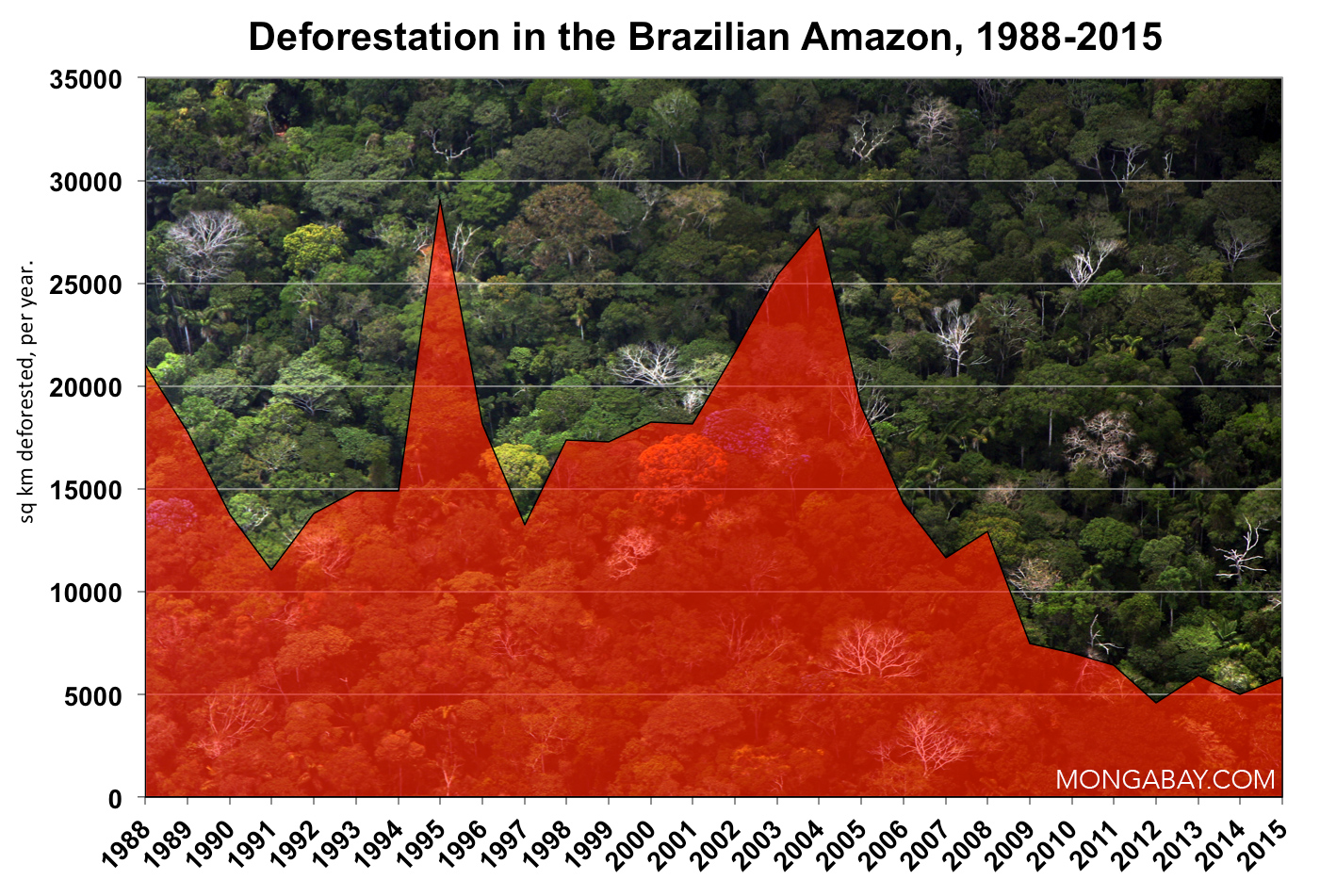
Preliminary data for 2010 indicate that deforestation has fallen by some 85% compared with its recent peak in 2004. When the final data are released in the coming weeks, Brazil might be able to claim that it has met its commitment to reduce deforestation by 80% (compared with a rolling average) a decade early. For perspective, the Union of Concerned Scientists, based in Cambridge, Massachusetts, estimates the corresponding reduction in greenhouse-gas emissions at 1 gigatonne, which is roughly comparable to what the United States and the European Union have each committed to over the next decade.

Despite that remarkable news, Aragao says that fire activity has increased to about 80% of the 2005 levels. Natural fires are a rare occurrence in the Amazon, but during a drought, fires that are set to clear smaller plots are more likely to escape into the forest.

Is climate change to blame for the drought?

It is hard to pinpoint a culprit, but both the 2005 and the 2010 droughts align well with longer-term projections by some climate modellers for a drying out of the Amazon due to climate change. Much of the Amazon normally experiences a dry season that begins in around July or August and continues to September or October. Periodic droughts are also associated with El Niño — a periodic warming of surface waters in the eastern Pacific Ocean — but there are some indications that the 2005 and 2010 droughts could be associated with warmer surface temperatures in the Atlantic Ocean north of the equator, which effectively pull the trade winds — and all of the moisture they carry — to the north. Scientists described the 2005 drought as a once-in-a-century phenomenon. But clearly it wasn't.

What kind of impact did the 2005 drought have?

Five years on, remote-sensing scientists are still debating that question with surprising intensity. A controversial 2007 study in Science1 found that the Amazon 'greened up' in 2005, suggesting that the rainforest was more resilient than previously believed. But other researchers have looked at the same data and failed to detect any such greening (see 'Amazon drought raises research doubts')2. Some go as far as to say that the satellite data aren't good enough to answer the question at all.


The remote-sensing data discussion continues in the scientific literature, but ground data provides clear evidence of biomass loss and an increase in tree deaths. A study published in Science last year suggests that the drought reduced cumulative carbon storage in affected areas by some 1.6 gigatonnes3. From this perspective, fewer clouds and more sunlight could spur an initial increase in photosynthesis resulting in more plant growth, but the reduced soil moisture caused by prolonged drought has a bigger effect in the end. A recent analysis in the Proceedings of the National Academy of Sciences4 builds on this by suggesting that drought conditions could spur leaf loss and new leaf budding while simultaneously leading to a rise in tree deaths.

Could the 2010 drought help to answer those questions?

It will certainly give scientists another opportunity to pore over the various ground and satellite data, and this time they will have an even better idea what to look for. It's not clear how the debate over satellite data will play out. As the recent PNAS paper indicates, much work remains to be done to explain why satellites see green — if in fact they do — and assess the broader impacts of drought on carbon storage. Having a second set of data to analyse certainly won't hurt

Brazil to auction off large blocks of Amazon rainforest for logging

October 28, 2010

Source: Mongabay.com

Brazil will auction large blocks of the Amazon rainforest to private timber companies as part of an effort to reduce demand for illegal logging, reports Reuters.

The government will grant 1 million hectares (2.5 million acres) of logging concessions by the end of the year, according to Antonio Carlos Hummel, head of Brazil's National Forestry Service. Within four to five years, 11 million hectares will be auctioned.

Existing concessions cover only 150,000 hectares, yet Brazil is the world's largest producer of tropical timber, mostly due to illegal logging on the poorly governed forest frontier.


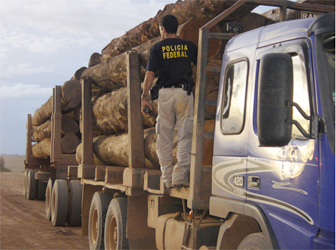
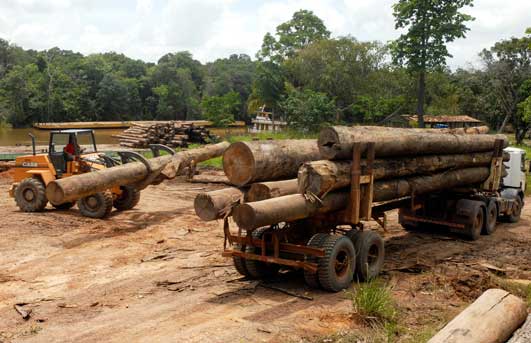
Brazilian Federal Police officer on a logging truck. Image courtesy of the Brazilian Federal Police
Hummel told Reuters the privatization of Amazon forests would help meet demand for timber products that is currently filled by illicit logging. Most of Brazil's Amazon timber is consumed domestically, rather than exported.

While the Brazilian government currently has a timber tracking system, it has been abused. In 2008 authorities arrested more than 200 people involved in a scam that modified records to increase timber allocations for logging and charcoal companies.

Humel told Reuters that the new plan will include audits by non-government organizations to ensure that companies aren't harvesting forests beyond their capacity to regenerate.

Daniel Nepstad, an Amazon scientist at the Woods Hole Research Center, said while the track record of private forest concessions in the tropics has been "dismal" in the past, he is guardedly optimistic about the proposal. "Forest policies that feature logging concessions to private companies on publicly-owned lands have had a dismal history in most of the world's tropical nations, plagued by graft, crony-ism, and royalties that miss the mark," Nepstad told mongabay.com. "But if any country can make this work, Brazil can."

Brazilian lawmakers appears to share Nepstad's sentiment. Hummel told Reuters that opposition to privatization of concessions has waned since the government last tried to auction forest lands in 2003.

"Back then we didn't explain the process well," Hummel was quoted as saying by Reuters. "Now, it's all cleared up. There hasn't been a questioning of privatization for over a year."


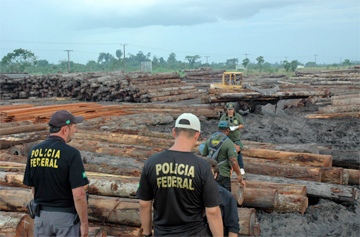
Operation "Arco de Fogo"(Arc of Fire) in 2008. Image courtesy of the Brazilian Federal Police
Nevertheless concerns about the system remain.

"One obstacle to the policy's success is the difficulty of establishing concessions on the forest lands that are most at risk of deforestation (and most in need of protection) because of previous claims on the forest from land grabbers and legitimate private landholders," said Nepstad, adding that the scale of logging in the Brazilian Amazon will force the government to move slowly on the granting of concessions.

"More than a thousand logging companies supply their mills with timber harvested from privately-held properties and farm settlements in operations that are very difficult for the government to control."

William F. Laurance, a scientist who ran the Biological Dynamics of Forest Fragments Project in Central Amazonia for several years, said the "the devil is in the details" of the deal.

"Industrial logging on this scale would have a major impact on the ecology of Amazonian forests. But more important is whether or not the selective logging facilitates substantial forest destruction, as has often been the case in the past," he told mongabay.com via email.

"If the logging and be controlled and managed to limit environmental impacts, then it'll be one thing. If it's poorly controlled and just opens up the frontier for more illegal deforestation and land speculation, then it's something else altogether."

"Brazil has done a good job recently in reducing Amazon deforestation but great care is needed--or we might see a return to the bad old days of rampant forest disruption in Amazonia."

Meanhile Roberto Smeraldi, director of Amigos da Terra - Amazônia Brasileira, told mongabay.com the initiative may be "too little, too late."

"This should theoretically limit the expansion of the frontier by creating (competitive) alternatives to agriculture and livestock activities, with long-term management. Why theoretically? Because the pace and scale are indeed insufficient to represent a significant obstacle to the agricultural frontier," he said.


Click to enlarge
"So, too little, too late: it took five years to put in place such small concessions, while it takes five months, or less, for a farm or ranch to start operating. in order for this to work, you need less bureaucracy, more transparency so that investors can trust the system, and a reliable financial guarantee to back the long-term managers in relation to liabilities towards the state."

Hummel also said bureaucracy, as well as lack of training, financing, and technology, as big challenges, especially for small operators, like community cooperatives.

However if the new concession system proves transparent, well-managed and credible, it could help Brazilian timber companies export more timber to Europe and the U.S., which have recently enacted strong regulations on illegally sourced wood. At the same time, private concessions could bolster governance on the forest frontier, since registered companies will be under more pressure to comply with laws than informal operators who have legal claims on land. The effect could be to shift the incentive structure for forests in the Amazon, according to Hummel.

"Everything in this country is an incentive for deforestation, for developing destroyed forest. So we're having to change the paradigm -- finance standing forests."

The ultimate bike trip: the Amazon rainforest

October 28, 2010

Source: mongabay.com

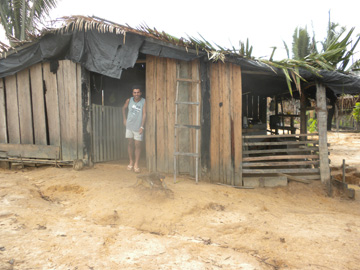
Like all commercial roads through rainforests, the 5,300 kilometer long Rodovia Transamazonica (in English, the Trans-Amazonia), brought two things: people and environmental destruction. Opening once-remote areas of the Amazon to both legal and illegal development, farmers, loggers, and miners cut swathes into the forest now easily visible from satellite. But the road has also brought little prosperity: many who live there are far from infrastructure and eek out an impoverished existence in a harsh lonely wilderness. This is not a place even the most adventurous travelers go, yet Doug Gunzelmann not only traveled the entirety of the Transamazonica in 2009, he cycled it. A self-described adventurer, Gunzelmann chose to bike the Transamazonica as a way to test his endurance on a road which only a few before have completed. But Gunzelmann wasn't just out for adrenaline-rushes, he was also deeply interested in the environmental issues related to the Transamazonica. What he found was a story without villains, but only humans—and the Amazon itself—trying to survive in a complex, confusing world.

"These days, it’s very difficult to be the first or fastest in any endeavor, but this gave me the opportunity to be amongst a few who have completed the route on bike," Gunzelmann told mongabay.com in a recent interview, adding that "the difficulty of this trip intrigued me. There is no real reward on a day to day basis other than to push forward. Maybe that’s why so few people have bothered cycling this road. I wanted to face a punishing journey."


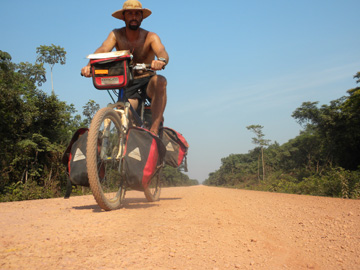
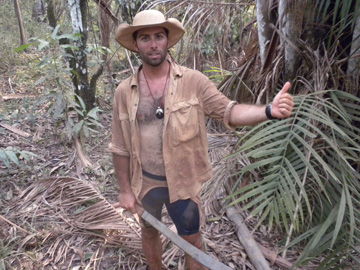
Gunzelmann biking the Transamazonica. Photo courtesy of Doug Gunzelmann.
Punishing it was: Gunzelmann faced thousands of miles of roadway through exhaustingly hot forests, endless hills, and then had to cross over the Andes to reach his final destination in Lima, Peru. On his journey, Gunzelmann says that evidence of environmental destruction was everywhere.

"Everyday I would hear the buzz of chainsaws. Charred lots skirted the road the entire length and nearly the entire length of the TransAm is abutted by fazenda, or cattle ranch, 100-200 meters on either side before the tall green jungle is visible. I met miners along the road and saw huge shanty towns and strip mines in Peru. […] It is openly illegal, but there is no one there to enforce these laws."

There are three major environmental issues in the region according to Gunzelmann: deforestation, massive hydrological projects including the infamous Belo Monte dam, and the roadway itself which has opened the region to often unregulated development.

"Roads will bring destruction, no question about it, but how does one meet Brazil’s right to compete and keep the Amazon from being mowed down in the process?"

This became the question Gunzelmann consistently faced during his travels. He realized quickly that the people directly participating in environmental destruction were not 'villains' as they are sometimes categorized, but simply trying to survive.

"The people I met and witnessed poaching and deforesting were good people and very kind to me, at times saving me from potential disaster. Some were completely selfless, giving the shirt off their back when they had so little to give. They were providing for themselves and their families immediate needs. Their alternative options were generally limited," Gunzelmann said. "These people should be no more vilified than the average person from the developed world whose environmental impact is likely to be much more severe over time."


. Making a camp in the jungle. Photo courtesy of Doug Gunzelmann.
Yet the problem remains: how does Brazil lift its population out of poverty while at the same time safeguarding the forest, which provides intrinsic benefits from carbon sequestration, biodiversity, and clean water?

"I now realize how tightly woven we all are as a global community. We can’t ask Brazil to stop destroying the jungle without asking ourselves to stop consuming and creating the demand for those products," Gunzelmann says. "Brazil is competing in the global market place to create wealth and prosperity for its people. The US has done the same, becoming an economic powerhouse, while wreaking havoc world wide in the process. People should realize the quality of life they enjoy may be a direct result of this attitude toward the environment. If you want a mahogany bedroom set then perhaps realize a road will be cut through the jungle to fell a single tree to meet your demand. Who’s more to blame, the lumber company, the peasant who cut down the tree, or you?"

While there is no simple or easy answer, Gunzelmann says that looking to the past may help bring about a solution.

"Researchers have learned the Amazon Basin supported a huge population in ancient times without destroying the forest. I would think that the possibilities are limited only by ones imagination. The issue is time and effort."

Gunzelmann says that his trip across South America earned him the "right to rest"—at least for a little while. He's looking at options for his next cycling adventure (hint: "it’s more remote, in worse condition, and on the opposite extreme of temperature" as the Transamazonica).

In an October interview Doug Gunzelmnan talked with mongabay.com about his adventures on the Transamazonica (including a run-in with a jaguar), his experiences with loggers and farmers, the challenge for Brazil to balance development while protecting the rainforest, and why the Amazon's survival depends on western consumption patterns.


AN INTERVIEW WITH DOUG GUNZELMANN

Mongabay: What's your background?


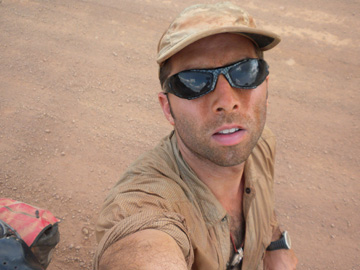
. Gunzelmann covered in dust after leaving Pacaja. Photo courtesy of Doug Gunzelmann.
Doug Gunzelmann: I’m the middle brother of three from upstate New York. I went to Notre Dame on a track scholarship (ran the 800m) and studied biology. Since my freshman year in college I have been traveling around the world whenever my wallet allows me to. Some off the cuff adventures include bullfights in Nicaragua, Muay Thai in Bangkok, bribing armed guards in Guatemala, and rallying my rental car along the race course at Monte Carlo.

Mongabay: What inspired you to bike the entirety of the Transamazonica?

Doug Gunzelmann: First off, I left on my 29th birthday. The approach of a man’s 30th year is a powerful motivator to break out of the daily grind. Second, it had been cycled only a few times in its history. These days, it’s very difficult to be the first or fastest in any endeavor, but this gave me the opportunity to be amongst a few who have completed the route on bike. Third, the difficulty of this trip intrigued me. There is no real reward on a day to day basis other than to push forward. Maybe that’s why so few people have bothered cycling this road. I wanted to face a punishing journey.

Mongabay: What is the significance of this road?

Doug Gunzelmann: The Transamazonica, or BR-230, bisects the jungle interior for thousands of miles giving land access to otherwise inaccessible jungle. This road has been utilized by settlers, loggers, and miners. Recently, its importance has come into the lime light with the building of the Xingu dam which will provide electricity for Brazilians in every direction. The project is huge and will require paving of long stretches of the TransAm. This has been a major issue in Brazilian media lately, especially as a campaign topic amongst politicians seeking election.


ADVENTURES

Mongabay: Even adventurous people would probably never consider doing what you did, what kept you going?

Doug Gunzelmann: Many things kept me motivated on any given day of the brutal ride. Receiving encouraging emails and comments on my website was something that kept me in touch with my friends and family back home. There was a lot of time to think while pedaling up to 12 hours per day and thinking of those words of encouragement were helpful. Next, was the disappointed I’d feel for failing. I wanted to make it a "respectable" distance across the jungle before being forced to stop. Luckily, time and circumstance led me to the opposite coast despite a million potential pitfalls. Finally, people can become accustomed to almost anything. After 5 weeks or so I felt strong and confident which meant high moral which in turn meant steady progress. A positive attitude is essential for forward movement.

Mongabay: What was the best moment of your journey? What was the worst?


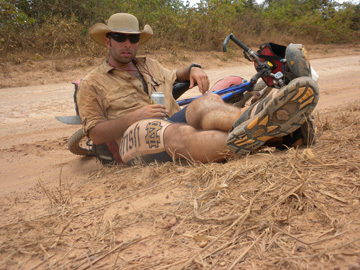
Gunzelmann taking a beer break. Photo courtesy of Doug Gunzelmann.
Doug Gunzelmann: The best moment undoubtedly was my arrival in Humaita. That was the end of the roughest part of the TransAm (and far enough before the Andes for me to worry about them yet). I got drunk, ate a lot of burgers and ice-cream, and did a little fishing. The worst was being sick in Jacareacanga. I had been riding myself into the ground with inadequate nutrition and had never felt weaker in my life. The nearest town of any size was 350 miles back through untouched jungle to the east, or 500 miles of abandoned farmland to the west. I truly felt isolated and hopeless.

Mongabay: Will you tell us about your encounter with a jaguar?

Doug Gunzelmann: I was at the end of an 11 hour day of pedaling and about 100 miles into a jungle reserve. I set up camp in the jungle and was standing in the road with my SAT phone as it began to rain. I could hear heavy thunder in the distance and dusk was 20-30 minutes away. There was a deep grunting noise that I assumed was from a howler monkey. They make a sort of blunt roar at dusk and dawn. The sound persisted and seemed close which I looked uphill on the narrow roadway and saw what looked like a baby cow, or calf. That would have been impossible of course and I quickly realized the animal looking at me broadside was a jaguar.

Mongabay: You had never traveled alone before this. In a foreign land, in the middle of no-where, how did you combat loneliness?

Doug Gunzelmann: I was most lonely the first few days and on some of the holidays. When your surroundings are unknown, and your future is unknown, you begin to lose yourself. It’s an unsettling feeling indeed. However, the job of moving forward everyday began to force out everything else. After a few weeks I never felt very lonely again. That’s something people probably won’t know about themselves until they are truly removed. My ability to function alone was news to me!


CONSERVATION AND SOCIAL ISSUES

Mongabay: What are the environmental impacts of this largely failed road project, the Transamazonica, on the Amazon rainforest?


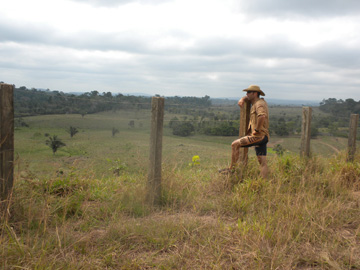
Gunzelmann near Uruará. Cattle ranching (pictured here) and soy farming extend along the Transamazonica. Photo courtesy of Doug Gunzelmann.
Doug Gunzelmann: During my trip I saw three major issues concerning the Amazon, its resources, and the people living there (of course there are more). First is the creation of dams for hydroelectric power. The Tucurui dam is one of the largest in the Amazon Basin and will be joined by a dam in the Xingu river area around Altamira called Belo Monte. The dam will of course result in flooded jungle which will displace the people and animals that live along these waterways as well as disrupt the livelihood of those living down stream of the dam. I witnessed protests for water rights and against the construction of these dams in Belem and Altamira.

Next is the popular deforestation issue which is easily observed on nearly all of the Transamazonica. I spent nights with the men and woman responsible for some of this destruction as well as time and meals with people who now depend on the cleared land for a living. It’s a complicated problem for me to come to terms with now. There needs to be a resolution that preserves the jungle yet allows these people to at least maintain their livelihoods and better yet to prosper. Brazilians have every right to work towards a higher quality of life and are competing on a global market to accomplish this, as are Americans.

Finally, the roadways themselves are a major issue in this part of the world. Roadways, like the Transamazonica or the Trans-Oceanic highway, offer access to these remote areas and the potential for exploitation of the jungle and people. However, the people I came to depend on for my own safety and well being also depend on these roads for transportation of their goods and themselves. These roads allow Brazil, Peru, and other countries of South America to move their goods to ocean ports to sell on the world market. For instance, parts of the Transamazonica between Santarem and Cuiaba have been widened and paved since I rode them a few months ago, to transport truck loads of soybeans. Roads will bring destruction, no question about it, but how does one meet Brazil’s right to compete and keep the Amazon from being mowed down in the process?

Mongabay: How active is cattle ranching, slash and burn farming, and mining along the road?

Doug Gunzelmann: All of those activities are very rampant. Everyday I would hear the buzz of chainsaws. Charred lots skirted the road the entire length and nearly the entire length of the TransAm is abutted by fazenda, or cattle ranch, 100-200 meters on either side before the tall green jungle is visible. I met miners along the road and saw huge shanty towns and strip mines in Peru. I was giving a few pieces of white Brazilian Topaz by a drunk miner in Humaita. The Trans-Oceanic road in Peru is especially a hotbed for illegal mining activities. It is openly illegal, but there is no one there to enforce these laws.

Mongabay: You spent some time with poachers and loggers, who are often vilified by environmentalists. What is your view?

Doug Gunzelmann: Few things are black and white, and of course these issue are no exception. The people I met and witnessed poaching and deforesting were good people and very kind to me, at times saving me from potential disaster. Some were completely selfless, giving the shirt off their back when they had so little to give. They were providing for themselves and their families immediate needs. Their alternative options were generally limited.

More or less these activities have been culturally ingrained. These people should be no more vilified than the average person from the developed world whose environmental impact is likely to be much more severe over time.

Mongabay: Poverty is one of the biggest issues in the Amazon. Do you see any way to lift people up without destroying the forest?


Resu, a pig farmer, who Gunzelmann stayed with on the road. Photo courtesy of Doug Gunzelmann.
Doug Gunzelmann: There are many ways to sustainably use the forest to support its inhabitants. Researches have learned the Amazon Basin supported a huge population in ancient times without destroying the forest. I would think that the possibilities are limited only by ones imagination. The issue is time and effort. Often the quickest and most profitable ways to turn a buck are the destructive ones.

Mongabay: What was your impression of the lives of indigenous communities in the area?

Doug Gunzelmann: Indigenous communities are either being marginalized by "progress" or have already been marginalized or absorbed by development. The tribes being subsidized by FUNAI that I witnessed in Jacareacanga and Itaituba were largely listless and had alcohol abuse issues. They functioned outside the Brazilian culture in these towns even while occupying the same space. The day-to-day life I saw reminded me greatly of the conditions and issues found on Indian reservations here in the United States.

Mongabay: After seeing the forest loss face-to-face and meeting the people who build their lives along the road, have your views of environmental issues changed?

Doug Gunzelmann: I now realize how tightly woven we all are as a global community. We can’t ask Brazil to stop destroying the jungle without asking ourselves to stop consuming and creating the demand for those products. Brazil is competing in the global market place to create wealth and prosperity for its people. The US has done the same, becoming an economic powerhouse, while wreaking havoc world wide in the process. People should realize the quality of life they enjoy may be a direct result of this attitude toward the environment. If you want a mahogany bedroom set then perhaps realize a road will be cut through the jungle to fell a single tree to meet your demand. Who’s more to blame, the lumber company, the peasant who cut down the tree, or you? I don’t want to be preachy, we are all more connected than we might realize is all.

Mongabay: What do you say to people in the US who wonder how they can help or what changes they should make in their own lives?

Doug Gunzelmann: This is very simple, consume less and know how your purchases impact the world beyond you. For example if you eat beef, realize where the meat might come from. If you say you’re a vegetarian, realize where your soy might come from. Bottom line is to be mindful of your role in the greater world picture.

Mongabay: How much hope do you have for the Amazon?

Doug Gunzelmann: Hope for the Amazon is directly linked with my faith in man to do what is right. Perhaps there is a grim outlook, especially if we base future behavior on historical trends.


FUTURE

Mongabay: How did the trip change you as a person?


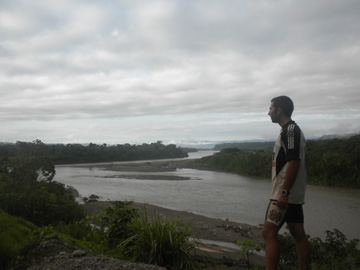
Gunzelmann at the foothills of the Andes in Peru. Below him, along the river, is a gold mining camp. Photo courtesy of Doug Gunzelmann.
Doug Gunzelmann: I’m a restless person. The expedition pushed my body, my mind, and my emotional endurance to the edge. I took this trip on as a sort of pilgrimage.

Colombian presidential candidate Ingrid Betancourt quoted perfectly after her captivity in the Amazon jungle by members of the FARC paramilitary: "many times in the Bible—it says that when you cross the valley of tears and you arrive to the oasis, the reward of God is not success, it's not money, it's not admiration or fame, it's not power—his reward is rest."

That’s what I gained in some part of my mind, the right to rest.

Mongabay: If someone wanted to follow in your bike tracks, what piece of advice would you give?

Doug Gunzelmann:
  • Pack light
  • Learn to love dust (for breakfast, lunch, and dinner)
  • The rolling hills will eventually end, it just takes 1500 miles
  • Raise your fist and bark back at dogs (get a rabies vaccine before starting the trip)
  • Traversing the Andes takes lungs and patience, but coca leaves help


Mongabay: What's your next adventure?

Doug Gunzelmann: I’ve been looking at The Road of Bones through Siberia. Compared to the Transamazonica it’s more remote, in worse condition, and on the opposite extreme of temperature. Perhaps the most difficult road to cycle in the world!


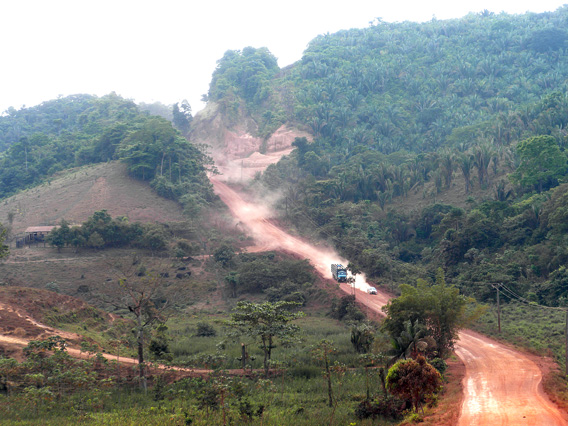
Hills to Pacaja. Photo courtesy of Doug Gunzelmann.


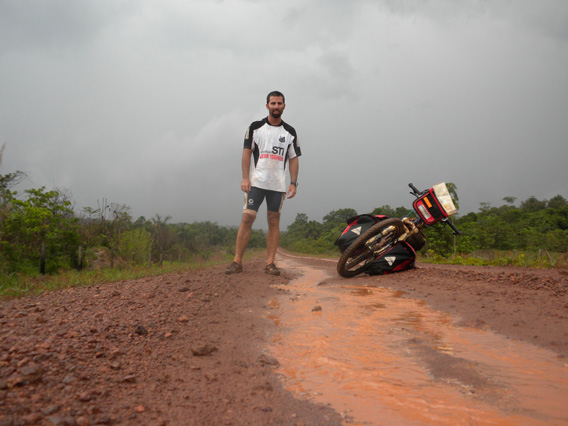
Pit stop after downpour. Photo courtesy of Doug Gunzelmann.

Thursday, October 28, 2010

Spectacular unknown species found in Amazon

October 27, 2010

Source: Yahoo News

NAGOYA, Japan (AFP) – Spectacular species previously unknown to the outside world are being discovered in the Amazon rainforest at a rate of one every three days, environment group WWF said in a report published Tuesday.

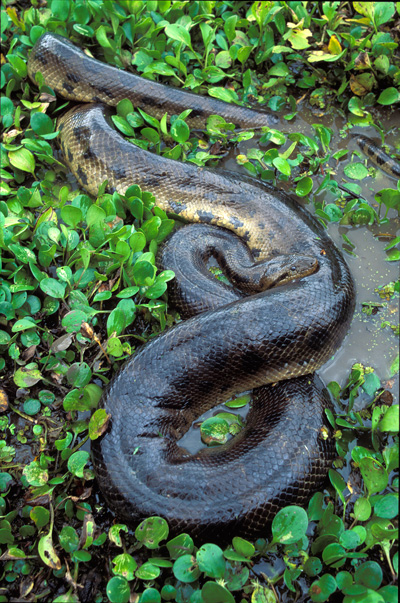
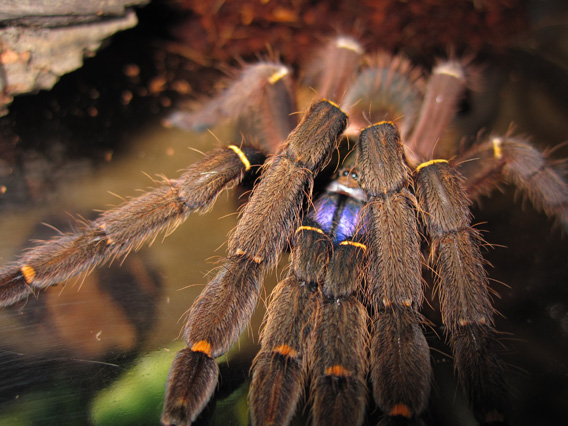
An anaconda as long as a limousine, a giant catfish that eats monkeys, a blue fanged spider and poisoned dart frogs are among the 1,220 animals and plants to have been found from 1999 to 2009, according to the study.

Click image to see photos of the new species


The report was released on the sidelines of a United Nations summit in Japan that is being held to try to stem the mass extinction of species around the world, and the WWF said it highlighted why protecting the Amazon was so vital.

"This report clearly shows the incredible, amazing diversity of life in the Amazon," Francisco Ruiz, head of WWF's Living Amazon Initiative, told reporters at the launch.

"(But) this incredible region is under pressure because of the human presence. The landscape is being very quickly transformed."

Logging and clearing for agriculture uses such as cattle farming and palm oil plantations have led to 17 percent of the Amazon -- an area twice the size of Spain -- being destroyed over the past 50 years, according to the WWF.

The WWF compiled the findings reported by scientists over the 10-year period to highlight the extent of biodiversity loss that may be occurring without humans even knowing while the Amazon is being cleared.

"It serves as a reminder of how much we still have to learn about this unique region, and what we could lose if we don't change the way we think about development," Ruiz said.

One of the most amazing discoveries was a four-metre (13-foot) anaconda in the flood plains of Bolivia's Pando province in 2002.

[Photos: See more new species discovered in Papua New Guinea]

It was the first new anaconda species identified since 1936, and became only the fourth known type of that reptile, according to the WWF.

There were a total of 55 reptile species discovered, with others including two members of Elapidae -- the most venomous snake family in the world that includes cobras and taipans.

A kaleidoscope of different coloured frogs were also found, including 24 of the famed poison dart variety and one that was translucent.

Among the 257 types of fish discovered in the rivers and lakes of the Amazon was a "goliath" catfish.

One of them found in Venezuela measured nearly 1.5 metres long and weighed 32 kilogrammes (over 70 pounds).

Although the "goliath" catfish normally exists on a diet of other fish, some of them have been caught with parts of monkeys in their stomachs, according to the WWF.

Another extraordinary species of catfish that was discovered in the Brazilian state of Rondonia was extremely small, blind and red.

Villagers found the fish when they accidentally trapped them in buckets after hauling up water from a well.

At least 500 spiders were also discovered, including one that was completely brown except for a pair of almost fluorescent blue fangs.

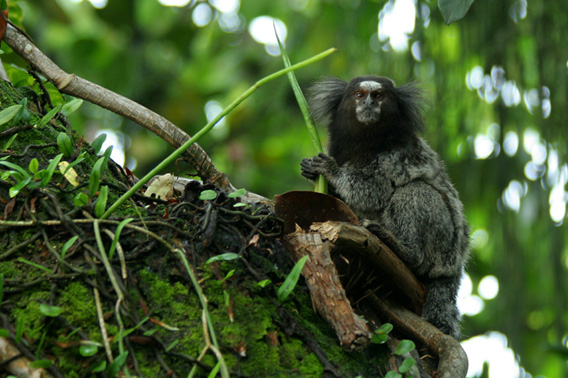
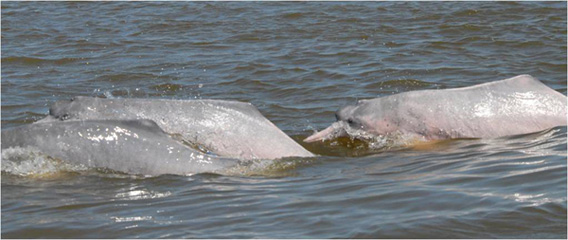
Thirty-nine new mammals were also found, including a pink river dolphin, seven types of monkey and two porcupines.

Among the 637 new plant species discovered were sunflowers, ivy, lilies, a variety of pineapple and a custard apple.

The Amazon is home to at least 40,000 plant species, and the WWF described the scale of diversity in some areas as "mind boggling".

It said 1,000 plant species were documented in one hectare (2.5 acres) of lowland rainforest in Ecuador, while 3,000 were found in a 24-hectare region of the Colombian section of the Amazon.

As part of efforts to save the Amazon, the Brazilian government has worked with the WWF, the World Bank and other groups to establish protected areas of rainforest covering 32 million hectares over the past six years.

The WWF said the protection efforts, in which foreign governments and organisations provide some of the finance to help run the projects, should serve as a model for the world in how to save rainforests.

Brazil to Privatize Portions of Amazon Rainforest

October 28, 2010

Source: Hardwood Floors

In an effort to curtail illegal logging, the government of Brazil will auction logging concessions for "large swaths" of the Amazon rainforest, the world's largest, to private timber companies and cooperatives, according to Reuters. Within the next five to six years, Brazil will grant logging concessions for nearly 30 million acres of rainforest; existing concessions total about 370,000 acres. Antonio Carlos Hummel, head of Brazil's National Forestry Service, said the future of the Amazon is dependent on strengthening forest management. According to Reuters, the private logging companies will only harvest as many trees as the rainforest can regenerate, unlike illegal loggers that have already destroyed nearly 20 percent of the rainforest. Hummel said earlier concessions helped establish state control in certain lawless regions of the rainforest. To lessen abuse of the auctions, upcoming concessions will be overseen by non-government organizations.

Wednesday, October 27, 2010

Brazil's Lula Defends Sustainable Development in Amazon Rainforest Region

October 27, 2010

Source: CRIENGLISH.COM

Brazil's President Luiz Inacio Lula da Silva on Thursday defended the sustainable development of the Amazon Rainforest region.

"It is possible to grow, to develop, without destroying," he said.

Lula praised the recent fall in the deforestation figures in Brazil. According to the country's National Institute of Space Research, deforestation in the Amazon Rainforest region fell 47 percent in August compared with the same period last year, and totaled 265 square km.

The president also noted that preserving the nature does not mean that the Amazon Rainforest region will be left undeveloped. Instead, it is necessary to provide more ecologically correct means for the local population to live.

In addition, the president reaffirmed his defense of the Belo Monte hydroelectric power plant, which has been criticized by environmentalists due to its impact on the Xingu River region.

Why Brazil Is Right to Auction Off the Amazon Rainforest

October 27, 2010
Source: Fast Company


It sounds like a nightmarishly bad idea: Brazil is auctioning off big pieces of the Amazon ... to timber companies. But it's a move that could ultimately save the Amazon from destruction, according to Brazil's National Forestry Service.

Reuters reports that the Brazilian government is offering logging concessions for 2.47 million acres by the end of the year and 27 million acres in the next four to five years. That's about the same size as Virginia. For some perspective, Brazil currently only offers 370,000 acres to logging companies. So why the increase?

Right now, speculators often illegally occupy state land. These speculators log illegally (slash and burn practices have already destroyed 20% of the planet's rainforests), making lots of money for themselves, but little for the Brazilian government. By privatizing the land, the government hopes to promote sustainable logging -- only as much as the rainforest can regenerate. And of course, Brazil also hopes to get some jobs and tax revenues out of the deal.

It's not a perfect solution. Legitimate corporations like Sinar Mas Group's Asia Pulp & Paper (APP) are often accused of unsustainable logging practices. But it's better than the alternative.

Tuesday, October 26, 2010

Life shocker: new species discovered every three days in the Amazon

October 26, 2010
Source: mongabay.com

A new report by the World Wide Fund for Nature (WWF) confirms the Amazon rainforest, even as it is shrinking due to deforestation, remains among the world's most surprising places. According to the report, Amazon Alive, over the past decade (1999-2009) researchers have found 1,200 new species in the Amazon: one new species for every three days. Not surprisingly invertebrates, including insects, made up the bulk of new discoveries. But no type of species was left out: from 1999-2009 researchers discovered 637 new plants, 357 fish, 216 amphibians, 55 reptiles, 39 mammals, and 16 new birds. In new discoveries over the past decade, the Amazon has beaten out a number of high-biodiversity contenders including Borneo, the Eastern Himalayas, and the Congo rainforest.

"This report clearly shows the incredible diversity of life in the Amazon and what we could lose if we don’t act now,” said Francisco Ruiz, Leader of WWF's Living Amazon Initiative, in a statement. "We need to change the way we think about development and promote conservation at a regional level that provides economic, social, and environmental benefits to people in the region and those within the Amazon’s far-reaching climatic influence."

Some standout specie discoveries over the past ten years include a new anaconda, a controversial species of river dolphin, an ancient ant, a big spider with blue fangs, and seven new monkeys.

Despite its wealth in biodiversity, the Amazon has been plundered over the last half-century. According to WWF, seventeen percent of the Amazon—an area double the size of Spain—has been lost since 1960. Industrial farming, logging, mining, oil exploitation, roads, massive dams, slash-and-burn agriculture have all taken deep cuts out of the forest. However, cattle ranching is likely the largest destroyer of the Amazon, making up approximately 65-70 percent of deforestation in the Brazilian Amazon.

"The fate of the Amazon—and of its species whether known or yet to be discovered—depends on a significant shift in the current way development is embraced by all Amazon countries," said Ruiz.

The Amazon, which is home to a variety of culturally unique indigenous groups, also provides a wide-array of ecosystem services, including carbon sequestration, rainfall, massive freshwater sources, food production, the possibility of undiscovered pharmaceuticals, and of course its biodiversity.

WWF's Amazon Alive report is being presented today at the Convention on Biological Diversity (CBD) in Nagoya, Japan. The UN conference has brought leaders together from around the world to come up with an agreement on saving the world's imperiled biodiversity. A previous agreement had set a goal to stem biodiversity loss by this year, however, by all accounts the global community has failed in this.


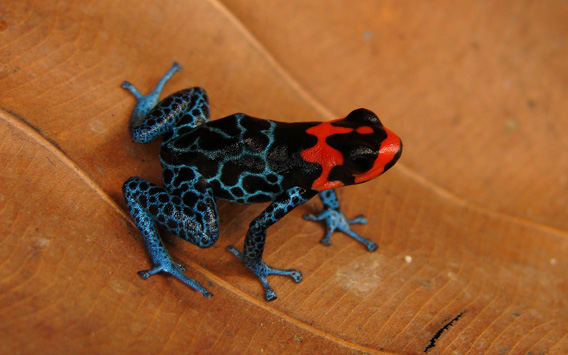
The spectacularly colored (Ranitomeya benedicta) was discovered in central Peru in 2008. Photo by: Evan Twomey

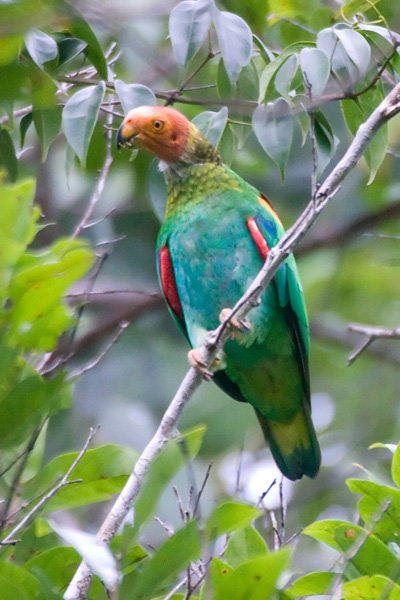
Known as the bald parrot (Pyrilia aurantiocephala), this weirdly bald bird is known for its magnificent colors. Known from a small area in Brazil, the bird is threatened by large logging operations. Photo by: Arthur Grosset.


Initially thought to be a hybrid, researchers recognized the Bolivian anaconda (Eunectes beniensis) as a unique species only recently, the first new anaconda since the 1930s. Photo by: José Maria Fernández Díaz - Formenti.


The bluefang (Ephebopus cyanognathus) received its name from its uniquely-colored pair of feeding implements. Discovered in 2000 in French Guiana, this species of spider may feed on birds as well as smaller animals. Photo by: Peter Conheim.


One of seven new monkey species discovered in the past ten years. The Rio Acari marmoset (Mico acariensis) was discovered when it was being kept as a pet by Brazilian locals. Scientists do not know the range or population of this species and, due to this, it has been classified as Data Deficient by the IUCN Red List. It has never been studied in the wild. Photo by: Georges Néron.


Genetic evidence has shown that the Bolivian river dolphin (Inia boliviensis) is likely a unique species of Amazon river dolphin, although that distinction is still debated. Photo by: Fernando Trujillo.

Brazil Plans a Price on Oil to Accelerate Climate Efforts

October 25, 2010

Minister of Environment Izabella Teixeira said the government will reduce the annual chopping and burning of the Amazon rainforest to between 4,000 and 5,000 square kilometers. The figures will be announced in the run-up to this year's U.N. climate change conference in Cancun, Mexico, this December.

The Amazon clearing is a far cry from the 24,000 square kilometers the so-called "lungs of the Earth" lost in the beginning of this decade. But, Teixeira said, it's also not enough.

"OK, you did this, yes, we are so great," the minister said in a self-mocking flourish at the Woodrow Wilson International Center for Scholars' Brazil Institute. But, she added with seriousness, "this challenge is not the only one."

Last year, at climate talks in Copenhagen, Denmark, Brazil promised to reduce its carbon dioxide output 36 percent over the coming decade. Meeting that goal would bring Brazil -- now the world's seventh-largest emitter -- back to its 1994 levels. This week, Teixeira said, President Luiz Inácio Lula da Silva will sign Brazil's sectoral strategy and investment plan to show how the country will meet that target. Also this week, Brazil will launch a long-planned climate change fund, bankrolled by a levy on oil production and exploration.

Together, these moves and others are part of a larger Brazilian strategy of assuming a new role in the U.N. climate talks: that of an emerging economic superpower intent on protecting smaller, developing countries while also proving to the United States and others that it will do its part to fight rising global emissions.

But what impact that will have at the 16th U.N. Framework Convention on Climate Change, or COP16, talks, where nearly all attention will be focused on getting the United States and China to come to terms over mitigating emissions, is unclear.

An emerging player throws chips on the table

In an interview with ClimateWire after speaking to the Brazil Institute about the current Convention on Biological Diversity conference in Nagoya, Japan, Teixeira was at once dismissive and upbeat about the Cancun meeting.

"COP 16? Forget it," said Teixeira when told the interview topic. Then she recovered. Cancun, she said, is key to bringing leaders together. "It's important that you have a pragmatic approach, and that you can show the global society that we are doing something. It's important to show the world that we can establish a pragmatic basis for actions."

Teixeira maintained the need for an international treaty -- though she didn't specify when that might become a reality -- and stressed the importance of developed countries like the United States making good on commitments to give poor countries $30 billion by 2020 to cope with climate change consequences.

"Let's be current with our declaration," she said. "If we're not able to do this, why are we able to spend lots of money with wars?"

The gregarious minister, who in the course of her public talk teased a questioner about her marital status ("I hope that you can have a lot of marriages. High biodiversity.") and handed her personal e-mail to a graduate student who had written recently on Brazil, offered few other specifics on COP16. Instead, she peppered much of her talk with platitudes.

On whether the Cancun meeting is a referendum on the troubled U.N. climate process: "It's important to understand that climate change is an issue with high complexity."

On whether countries, including Brazil, trust the United States when it says it will keep its Copenhagen promise to cut carbon about 17 percent below 2005 levels, despite the absence of legislation: "It's very important that you have political leadership from President Obama."

As to whether Lula will attend COP16, the minister said she wasn't sure. But, she added, "to have political leadership, you don't necessarily need to go to the COP."

Brazil's plan to grow jobs in a 'low-carbon economy'

But beyond the boilerplate on Cancun, Teixeira was clear about what she felt Brazil must do in the international arena. The sectoral agreements, which will lay out plans to both reduce the country's deforestation rates 80 percent by 2020 as well as sharp emission reductions in the agriculture and steel industry, she said, are key.

"This is part of a strategy to have a plan for a low-carbon economy," she said. Brazil, Teixeira insisted, needs to have the blueprint not just as something to show the international community, but for its own economic and social development.

"We need to change," she said. "I do believe we need to have a different approach. Not just how to preserve, how to conserve, but how to use. ... We are doing our part, but we need to think about development in the Amazon region."

Amazon deforestation accounts for more than half of Brazil's emissions. Since 2004, though, rates have steadily declined, due both to tough new enforcement provisions and to falling commodity prices. But at the same time, Teixeira noted, demand for energy has increased 13 percent per year in the Amazon regions -- and that's something policymakers can't ignore, either.

"I also have to generate jobs, and I have to increase the social inclusion," she said. "It's very important that you show how environmental issues are a precondition for social development, not a restriction."

On the international level, she called for new leadership. Not necessarily from in her own country -- which, one way or another, will get it when voters elect a president to succeed Lula on Oct. 31. Rather, the entire trajectory of the climate change discussions needs to focus more on ways to listen to the needs of developing countries and, she said, "understand the perspectives of the other side."

In Cancun, Teixeira said, "We are working hard to have some results there. We can have good news in Cancun. We cannot give up on the Cancun conference."

Drought brings Amazon tributary to lowest level in a century

Tuesday 26 October 2010

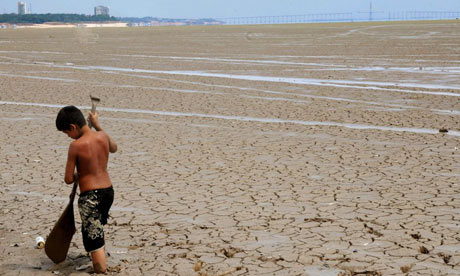
A child plays with a paddle on the dried bed of the Negro river, 120 km from Manaus, in northern Brazil. Photograph: Euzivaldo Queiroz/AFP/Getty Images

One of the most important tributaries of the Amazon River has fallen to its lowest level in over a century, following a fierce drought that has isolated tens of thousands of rainforest inhabitants and raised concerns about the possible impact of climate change on the region.

The drought currently affecting swathes of north and west Amazonia has been described as the one of the worst in the last 40 years, with the Rio Negro or Black River, which flows into the world-famous Rio Amazonas, reportedly hitting its lowest levels since records began in 1902 on Sunday.

In 24 hours the level of the Rio Negro near Manaus dropped 6cm to 13.63m, a historic low.

The Solimões and Amazonas rivers have also seen their waters plunge since early August, stranding village dwellers who rely on the Amazon's waterways for transport and food and marooning wooden boats on brown sand banks.

According to local authorities nearly half of Amazonas state's 62 municipalities have declared states of emergency, among them Manaquiri, one of the worst hit areas during the last major drought in the region in 2005. That year thousands of families were forced to abandon their homes and schools closed for lack of students.

Authorities say around 62,000 families have been affected by this year's receding rivers and on Friday the federal government announced $13.5m in aid for the region.

The problem has been particularly intense up river from state capital Manaus towards the border with Peru and Colombia. But the area around the city has also been badly hit. In Iranduba, 25km from Manaus, authorities are reportedly planning to hack a small road through the rainforest in order to reconnect their community with the outside world.

"In my whole life I have never seen a drought like this one," 50-year-old river-dweller Manoel Alves Pereira told the local A Critica newspaper.

Colonel Leite, from Manaus' Regional Air Force Command, said two Hercules cargo planes had ferried around 830 tons of food aid to isolated regions near the Amazon towns of Tefé and Tabatinga.

"Medium and large boats have not been able to reach various places across the Amazon," he said. "Our planes take the supplies to the airport and from there the transport has to be done in small boats or on foot – these are the only ways of reaching some communities."

Meteorologists and activists are divided on the drought's causes – some point to hurricanes in the Atlantic which may have sapped humidity from the Amazon while others blame forest fires for stifling rainfall or speculate that early effects of global warming may already be reshaping the region's climate patterns.

Rafael Cruz, a Greenpeace activist in Manaus who has been monitoring the drought, said that while the rise and fall of the Amazon's rivers was a normal process, recent years had seen both extreme droughts and flooding become worryingly frequent.

Although it was too early to directly link the droughts to global warming, Cruz said such events were an alert about what could happen if action was not taken.

"The photographs we are seeing of boats stranded in dry riverbeds are photographs that show the face of climate change, that show the impact climate change could have on the 20m people who live in the Amazon region."

"If this situation continues the state of Amazonas will live in a permanent state of emergency. The changes in peoples' lives would be horrific."

A magnificent forest. But the Government may wield the axe

Tuesday, 26 October 2010

The first of the oak leaves were turning golden in Alice Holt forest yesterday. Walking amongst them, on the most beautiful day of the autumn, it was not hard to see the problem with the Government's plan for a massive forest sell-off: a forest is much more than trees.

In Alice Holt, on the borders of Surrey and Hampshire 50 miles from London, it was stillness and peace. It was an eye-popping light show as the sun sparkled through the foliage, making the oaks and the hazel beneath them seem lit from within – making the very shadows tremble. If you stopped and breathed in, it was an exotic collection of scents, scents of earth and grass and moss and fungi and leaves, being exhaled even from an ecosystem hunkering down for the winter.

For that's what a forest is: a huge ecosystem, a kingdom apart whose teeming life can provide some of the richest human experiences, and the problem with the Government's leaked intention to sell off enormous amounts of the land holdings of the Forestry Commission is that it views forests merely as a commodity.

If the Government had decided to sell off Government bricks, say, or Government six-inch nails, or Government sprockets or Government widgets, fair enough. Get that deficit down. But if you sell off Government timber, you're also selling off an untold number of those ecosystems, of those kingdoms apart, and you may very well be consigning some of them to perdition.

The official response is this: that the Government should not be in the business of growing trees. Well, that's a pretty respectable argument, as far as it goes. After all, the Government does not catch fish, or grow grain. But to advance it now, in an entirely narrow way, is to ignore the history of forestry in Britain.

We have not been good custodians of our woodlands. We love the medieval myth of the greenwood covering the country, but once we got properly started on it, the greenwood did not last very long.

Much of our ancient forest cover was cut down in Elizabethan times, cleared for agriculture as well as having been exploited for charcoal burning and for shipbuilding, and by the end of the 19th century, Britain – with Ireland – had the lowest forest cover of any European country, barely 5 per cent. Compare that to nearly 30 per cent in France, over 30 per cent in Germany and more as you go eastwards, until you get to Russia, where over half the land surface is forested.

Take a Brazilian environmentalist to task about how much of the Amazon rainforest his country has cut down and he is likely to hit back that we in Britain have destroyed a far greater proportion of our ancient woodland, the equivalent ecosystem – and he will be right.

This absence of forests has been a great impoverishment of our experience of the natural world in Britain – the forest itself, dark and mysterious, does not remotely play the role in the British imagination as it does, say, in the German one. But 90 years ago this began to change.

The shift came out of the First World War, and the critical need for wooden pit props to keep the coal mines going, at a time when Britain ran on coal; we could not produce enough of our own, and the German submarine blockade of 1917 very nearly choked off imports.

Never again, vowed the Government when hostilities finished: we will create a strategic reserve of timber for pit props and other essential uses; and in 1919 the Forestry Commission was born.

The Commission's original job was simply to grow trees, and to grow them quickly and cheaply, and for decades it did this using conifers from the northern Pacific coast of the USA – the Douglas fir, the lodgepole pine and above all, the Sitka spruce. They were never popular. But in the past 20 years, its mission has broadened beyond all recognition and now the Commission is as much a conservation body as a tree farmer, having moved beyond conifers to recognise the value of our native forest of oak and ash and all the other shady, whispering broad-leaved trees that have been familiar and beloved for centuries. The Forestry Commission does not just grow trees any more. It looks after ecosystems, those kingdoms apart.

And now half of them are to be sold to the highest bidder. Walking through Alice Holt yesterday I found it hard to believe that anyone could contemplate taking away protection from what was all around me.

I was in the Straits Inclosure, a particular piece of woodland I know well because I visit it in July looking for the splendid woodland butterflies of high summer – the white admiral, the silver-washed fritillary and the purple emperor.

All can be found there because of the magnificent richness of the ecosystem, which holds the honeysuckle which supports the white admirals, the violets which support the silver-washed fritillaries and the sallows which support the purple emperors.

Yesterday, it was merely a spectacularly lovely landscape. In July it is the loveliest of landscapes exploding with exquisite life. And this, the Government would have us believe, is a commodity, the same as bricks, the same as six-inch nails.

Monday, October 25, 2010

Brazil - New rules from Wal-Mart beef buyers

25 Oct 2010

Walmart announced new sustainable agriculture goals that include expanding to all of its companies worldwide by 2015 Walmart Brazil’s practice of only sourcing beef that does not contribute to the deforestation of the Amazon rainforest.The company did not expand on the new beef sourcing rules, adding only that it is estimated that 60 percent of deforestation in the Brazilian Amazon is related to cattle ranching expansion.

The company also said for the first time it will ask suppliers about the water, energy, fertilizer and pesticide they use per unit of food produced.

“Through sustainable agriculture, Walmart is uniquely positioned to make a positive difference in food production -- for farmers, communities and customers,” Walmart President and CEO Mike Duke said in a news release. “Our efforts will help increase farmer incomes, lead to more efficient use of pesticides, fertilizer and water, and provide fresher produce for our customers.”

Walmart divided its new goals into three categories: produce more food with fewer resources and less waste; sustainably source key agriculture products; and support farmers and their communities.

Produce more food with fewer resources and less waste

In an effort to optimize the resources required to produce food and drive more transparency into its supply chain, Walmart said it will ask suppliers about the water, energy, fertilizer and pesticide they use per unit of food produced. Specific goals include:

Accelerating the agricultural focus of the Sustainability Index, beginning with a Sustainable Produce
Assessment for top producers in its Global Food Sourcing network in 2011
Investing more than $1 billion in its global fresh supply chain in the next five years
Reducing food waste in its emerging market stores and clubs by 15 percent and by 10 percent in stores and clubs in its other markets by the end of 2015.

Sustainably source key agriculture products

Walmart said it will focus on two of the major contributors to global deforestation, palm oil and beef production, by:

Requiring sustainably sourced palm oil for all Walmart private brand products globally by the end of 2015.

Expanding the already existing practice of Walmart Brazil of only sourcing beef that does not contribute to the deforestation of the Amazon rainforest to all of its companies worldwide by the end of 2015.

Support farmers and their communities

Walmart said it will help many small and mid-sized farmers gain access to markets by:

Selling $1 billion in food sourced from 1 million small and medium farmers
Providing training to 1 million farmers and farm workers in such areas as crop selection and sustainable farming practices -- the company expects half of those trained to be women
Increasing the income of the small and medium farmers it sources from by 10 to 15 percent.
In the United States, Walmart will double its sale of locally sourced produce and increase its purchase of select U.S. crops.

Walmart consulted with a number of suppliers, universities and non-government organizations to develop these goals. Among them were World Wildlife Fund, Conservation International, Rainforest Alliance, The Nature Conservancy, Natural Resources Defense Council, the Field to Market Alliance and Environmental Defense Fund.

Beauty in the most tragic sense

October 24, 2010

SEATTLE CONSERVATION photographer Daniel Beltrá's work is so visually stunning that it always begs a second glance.

It is only then, once you're seduced by the sheer beauty of the pictures, the mesmerizing play on patterns both natural and man-made, the bird's-eye sense of scale, that you're struck with the outrage he's really trying to provoke.

That picturesque shipwreck in a patch of sand? Look again. It's a functioning boat mired in silt where the mighty Amazon River would be, were it not for drought attributed to climate change.

That psychedelic expanse of June-bug greens and midnight blues with perfect waves of rust-colored streaks running across it? Mother Nature had nothing to do with it. That's oil from the BP undersea pipeline rupture in the Gulf of Mexico.

Beltrá, 45, has made a career out of traveling to the world's precious ecosystems to document settings most of us conjure only in daydreams. From the thick rain forests of Indonesia to the icy reaches of the Arctic to the sweltering waterways of Brazil to the labyrinthine marshes of Louisiana, his subjects are the stuff of travel adventures.

But his images of those places are beautiful in the most tragic sense.

They are snapshots of raw nature hobbled by the folly of man, scenes of environmental devastation so artful in their composition that they take on a bizarre loveliness.

Beltrá's work isn't intended to make you visit these places. He wants you to help save them.

Beltrá himself is an unassuming man, not so much an agent provocateur as a humble craftsman who lets his work speak for itself.

The Spaniard possesses a feline calm that is broken only by an affable grin or a soft-spoken aside, his speech smoothed by the trilled r's and lullaby cadence of his Castilian accent.

He's on assignment six to nine months a year, an absence from home that happens with the blessing of his wife, Shoshana Beltrá, an ultrasound technician from Seattle.

In the field, Beltrá says he's a "single-man band," lacking a crew of assistants.

Actually, "in the field" isn't quite accurate. Some of his most famous images were taken high above the scene from an airplane or helicopter, which allows him to pan out and capture the scope of clear cuts, forest burns and melting ice. Aerial photos have been his signature since an assignment in Spain in the mid-'90s, not long after he stumbled into photojournalism by shooting amateur pictures of a Basque-separatist bombing scene in Madrid when he lived there.

"Something clicked in my brain — I was very comfortable up there, and I could see things differently, in a way that was really appealing to me," he says of that first aerial shoot. "I also figured out rapidly that people respond very well to those images." Literally on the fly, he has just moments to capture the nuance that is so evident in his best work.

His physical distance from the ground or water works in his favor, revealing to him illustrative patterns, textures and color variations that the photographer on foot can't possibly detect.

At ground level, a forest being burned down to make way for agriculture looks like a wilderness on fire. But seen from above, the deforested blackness menaces the landscape like a slow-moving monster.

With his work on the Amazon, the scale depicted in the aerial shots becomes a part of the story. "The images take on their own life," he says. "It's sometimes scary, really scary, how much power the images can have."

His images capture the world the way an angry god would see it, beautiful creation imperiled by the reckless hand of humanity.

The scenes that unfold in Beltrá's viewfinder do not make him sad about the trade-offs we accept for energy, food and economic development.

"I get more pissed than depressed," he says.

The possibility of making a difference serves as motivation.

He has the single-minded purpose of a street activist who just happens to wield the photographic mastery and distinctiveness of an auteur.

This summer, Beltrá and colleagues in the International League of Conservation Photographers (ILCP) traveled to Northern British Columbia to capture the landscapes, wildlife and people of a region threatened by a planned transcontinental oil pipeline that will bring millions of barrels of oil from the tar sands of Alberta through the Great Bear Rainforest for pickup by tankers plying the narrow passages along the coast. The Canadian company that wants to build the pipeline, Enbridge, is the same firm whose pipeline rupture near Battle Creek, Mich., this past summer sent up to a million gallons of oil into the Kalamazoo River.

Beltrá was assigned to document vulnerable B.C. waterways from the air.

"Daniel is one of those photojournalists who's not compromising about what he does; he's not out to make pretty pictures," ILCP President Cristina Mittermeir says. "He's a journalist in the real sense of the word, and he's defining how conservation photography should be done."

Mittermeir has worked with Beltrá on other projects in the past and describes him as a very funny man off the clock.

"He likes to sing and tell stories," she says. "But when the action starts, he becomes a journalist. He's like a machine."

On his first and second trips to the gulf, assignments sponsored by Greenpeace, Beltrá snapped about 27,000 images, mostly during four-hour stints in a low-flying airplane.

Through his oil-spill work and other projects funded by Greenpeace, Beltrá has a constant international platform to raise awareness about conservation. In fact, his pictures have been used in nearly every major Greenpeace campaign for the past 20 years, says Tim Aubry, visual communications director for Greenpeace's American division.

"One thing that stands out almost more than any other environmental photographer's work is his work brings an element of art — he brings another dimension to it," Aubry says. "It's striking, and that's what brings you in and makes you wonder what's going on."

Beltrá resists the suggestion that his work qualifies as art, or that he has art in mind when framing the next shot.

If his work is art, it crosses this threshold in the same way that Mary Ellen Mark's gritty but museum-worthy photos of Seattle street kids in the 1980s made viewers want to give a hand to people they'd probably ignored a thousand times.

Looking at either photographer's work, one is compelled to ponder the conditions that made the scenes possible in the first place, to see not only what's there but, more importantly, what caused it.

Recently, though, he's made some forays into the art world, agreeing this summer to include his work from the BP oil disaster in "Spill: Crude Response," an exhibit at the 212 Gallery in Aspen, Colo., that explored "the intellectual rapture found in organic forms," an apt description of the Beltrá effect.

The Depression-era documentary photographer Dorothea Lange once said "this benefit of seeing... can come only if you pause a while, extricate yourself from the maddening mob of quick impressions ceaselessly battering our lives, and look thoughtfully at a quiet image... the viewer must be willing to pause, to look again, to meditate."

"It's our job as photographers to make it immediate and real — sugarcoating is no longer an option," Mittermeir says, noting that some other conservation photographers fear being seen as too activist in their work because it might alienate people.

"When you listen to Daniel talk, he talks about the immediacy of the image," she says. He's trying to get the viewer to feel some of the passion and indignation he experiences in the field.

But unlike many of his peers, Beltrá has yet to produce a mass-market photo book to share his concern with a broader audience. The closest he's come is a book published in recognition of his 2009 Prince's Rainforests Award. As part of the award, given by Prince Charles, he was sent on a three-month trip to document endangered rain forests in the Congo, the Amazon region and Indonesia. He heard that Prince Charles gave the limited-edition book to world leaders at the Copenhagen climate conference, a huge honor.

"When you talk about being able to influence policy, I don't think I'm ever gonna have that opportunity again," Beltrá says in a characteristically modest tone.

"Some photographers take reality and... impose the domination of their own thought and spirit," the landscape photographer Ansel Adams once said. "Others come before reality more tenderly and a photograph to them is an instrument of love and revelation."

It's hard to tell whether Beltrá's approach falls between those two mindsets or encompasses them both.

In his own loving way, he reveals that we are all accomplices in the destruction he captures.

"Sometimes people ask me, 'How can it be beautiful if it's terrible?' " Beltrá says.

He doesn't have a good answer to that question. But if this approach gets people to pay attention to environmental issues, talk and act, that's justification enough.

"I am more and more interested in the dialogue than confrontation," Beltrá says of his work. "We are all together under this roof, and we better figure out a way to get along and solve these problems."

Archaeologists discover pre-Colombian water conservation measures in Amazonia

Monday, October 25, 2010
Source: Spero News

The pre-Columbian American societies that once lived in the Amazon rainforests may have been much larger and more advanced than researchers previously realized. Brazilian and Swedish archaeologists have found the remains of approximately 90 settlements in an area South of the city of Santarém, in the Brazilian part of the Amazon.

"The most surprising thing is that many of these settlements are a long way from rivers, and are located in rainforest areas that extremely sparsely populated today," said Per Stenborg from the Department of Historical Studies of the University of Gothenburg , who led the Swedish part of the archaeological investigations in the area over the summer. He was accompanied by Brazilians Denise Schaan and and Marcio Amaral-Lima.

Traditionally archaeologists have thought that these inland areas were sparsely populated also before the arrival of the Europeans in the 16th and 17th centuries. One reason for this assumption is that the soils found in the inland generally is quite infertile; another reason is that access to water is poor during dry periods as these areas are situated at long distances from the major watercourses. It has therefore been something of a mystery that the earliest historical account; from Spaniard Francisco de Orellana's journey along the River Amazon in 1541-42, depicted Amazonia as a region densely settled with what the Spanish described as pueblos (towns), situated not only along the river itself, but also inland. The investigation area is situated near the city of Santarém, between the Amazon mainstream and its tributary, the Rio Tapajós in northern Brazil.

The current archaeological project in the Santarém area could well change researchers' ideas about the pre-Columbian Amazon, according to Stenborg. The team of archaeologists has come across areas of very fertile soil scattered around the otherwise infertile land. These soils, known as "Terra Preta do Indio", or "Amazonian Dark Earth" anthrosols, are not natural, but have been created by humans.

"Just as importantly, we found round depressions in the landscape, some as big as a hundred metres in diameter, by several of the larger settlements," said Stenborg. "These could be the remains of water reservoirs, built to secure water supply during dry periods."

It is therefore possible that the information from de Orellana's journey will be backed up by new archaeological findings, and that the Amerindian populations in this part of the Amazon had developed techniques to overcome the environmental limitations of the Amazonian inlands.

The archaeological sites in the Santarém area are rich in artefacts, particularly ceramics. A large and generally unstudied collection of material from the area is held by the Museum of World Culture in Gothenburg. Collected in the 1920s by the Germano-Brazilian researcher Curt Unkel Nimuendajú, the material ended up in the Museum of Ethnography in Gothenburg and is essential for increasing the world's knowledge of the pre-Columbian Amazon. Brazilian researchers are therefore interested in joint projects, where new field studies are combined with research into the contents of the Museum of World Culture's collections from the same area.

The Santarém area is presently experiencing intensive exploitation of various forms, including expansion of mechanized agriculture and road construction," said Schaan at Universidade Federal do Pará. "This means that the area's ancient remains are being rapidly destroyed and archaeological rescue efforts are therefore extremely urgent."

"Our work here is a race against time in order to obtain archaeological field data enabling us to save information about the pre-Columbian societies that once existed in this area, before the archaeological record has been irretrievably lost as a result of the present development", averred Brazilian archaeologist Márcio Amaral-Lima at Fundação de Amparo e Desenvolvimento da Pesquisa, in Santarém.

Amazon suffers worst drought in decades

October 24, 2010
Source: mongabay.com

The worst drought since 1963 has created a regional disaster in the Brazilian Amazon. Severely low water levels have isolated communities dependent on river transport. Given a worsening situation, Brazil announced on Friday an emergency package of $13.5 million for water purification, tents, and food airdrops.

The drought has also hit local fishermen who are unable to transport wares down the rivers. In some places the rivers are so desiccated, all the water is evaporated and the riverbed is cracking up. Ships have been stranded and accidents have been blamed on the low river levels.

Greenpeace activists say such droughts are likely to occur more frequently in the future due to climate change.

"There is already a climate change going on at some level. Greenpeace is tracking the impacts this can have on the Amazon, the impacts that the global warming—some two degrees—may bring to the Amazon […] This year was out of the line," Rafael Cruz, a Greenpeace Amazon forest activist, told Aljazeera.net.

Scientists have warned that climate change combined with widespread deforestation could push the Amazon rainforest ecosystem past a tipping point, whereby it would change from rainforest to savannah.

A particularly severe hurricane season is also likely to have contributed to the drought: hurricanes in the Atlantic Ocean draw moisture out of the Amazon when they form.

The rainy season begins in November.

Saturday, October 23, 2010

Marwell Celebrates Latest Birth

22nd October 2010
Source: AboutMyArea

Marwell Wildlife is celebrating the recent birth of a Brazilian tapir. Born on 2 September to proud mum Summer and dad Ronny, the baby girl has been named ‘Quito' (pronounced kito) after the capitol city of Ecuador, which lies in the western part of the tapir range.

Quito was born with a very pretty coat of pale spots and stripes on a reddish brown background. When she is around a year old she will loose her markings and develop a beautiful light brown colour, just like her big sister Rio. "Quito is doing really well and is full of confidence, she loves nothing better than exploring her new home. Summer is an excellent mum, whilst her big sister Rio and dad Ronny are never far away in case she runs into trouble. Brazilian tapirs are generally shy animals however, our family are very easy going and Ronny in particular loves a tickle under his chin" said David White, Head keeper for the tapirs.

Brazilian tapirs live in the Amazon rainforest and spend much of their time foraging near water, which they also use as an escape route from predators such as jaguars. They are able to stay submerged for hours using their long noses to breathe through, just like a snorkel. Tapirs are often confused with hippos and anteaters however, their closest living relatives are hoofed animals likes horses and rhinos.

Although not as critically endangered as the Malayan tapir, there are still several threats to the survival of the Brazilian tapirs including: illegal hunting, habitat fragmentation which can result in reduced genetic diversity and home range, plus loss of habitat by subsistence farmers and illegal logging. They are currently listed as Vulnerable on the IUCN Red List.

Severe drought afflicts Brazilian Amazon

22 October 2010
Source: BBC News

The Brazilian government has announced $13.5m (£8.6m) in emergency aid for Amazon regions hit by the worst drought in decades.

The money will fund water pumping and purification, as well as food deliveries to towns cut off by the drop in river levels.

The Brazilian air force has already flown 500 tonnes of supplies to areas that usually depend on water transport.

The River Amazon at Manaus has fallen to its lowest level since 1963.

Scientists say the region is facing its worst drought since that year.

In Amazonas state 27 municipalities have declared a state of emergency because of the dry spell.

Several tributaries of the Amazon have almost completely dried up, paralysing river transport and the fishing industry.

The rainy season in the region usually begins in November.

The Peruvian Amazon, 2,000km (1,240 miles) upstream has also been affected.

The rainy season in the region usually begins in November.

Environmental groups say severe droughts are likely to become more frequent in the Amazon as a result of global warming, putting further strain on the rainforest.

The Amazon is the world's second-longest river, after the Nile, but discharges far more water from its mouth and drains more territory.