Monday, May 31, 2010

The joys from Brazil

Monday 31st May 2010
Source: The Northern Echo

As Stockton prepares to sway to the Brazilian Samba beat when the Festa Junina takes centre stage next month, Graeme Hetherington discovers that there’s a closely-knit Brazilian community living on our doorstep.

THERE’S a Latin rhythm in the air.

Men are dressed as farm boys, with braces and straw hats, the girls in pigtails and red-checkered dresses, the atmosphere is so thick with South American culture you could imagine you are at a village hop on the outskirts of Rio.

This, however, is Stockton and the final touches are being put to Festa Junina, part of a series of events celebrating South American history and culture being staged by a group of expats from Brazil.

“There’s closely knit Brazilian community in the North-East with more than 80 families living and working in the region. We have regular get togethers and decided that we wanted to bring an authentic taste of Brazil to the area,” says artist Vera Hynes.

Ms Hynes is part of a flourishing group of musicians and artists who established the North-East Brazilian Community to celebrate and raise awareness of their culture and tradition through vibrant and exciting festivals in the region.

“It’s about giving people a taste of our culture and about wanting to share it with our friends in the North-East,” says artist Vera Hynes.

“There’s one thing about Brazilians – we accept everybody. We accept people from everywhere and we like to think people will accept us as well.”

To get the Samba rhythm started, the group’s Festa Junina – which takes place on Saturday, June 12 – will be an explosion of colour, sounds, smells and tastes from the depths of north-east Brazil. Celebrating the middle of the southern hemisphere’s winter, the festival draws on the region’s folklore, music and dance.

Traditionally, it takes place in an outdoor arena, but out of convenience this festival will be held in Stockton’s Georgian Theatre.

The event is expected to attract members of the Brazilian community from across the country, as well as local people wanting to enjoy an evening of South American atmosphere.

Photographer Gilmar Ribeiro, who is originally from Sao Paulo but now lives in Hartburn, Stockton, believes it’s important to become part of where you live.

“I love the North-East, although I do still struggle with the cold weather after 20 years, and I am really pleased that our family decided to move to my wife’s hometown area,” he says.

“Now we’re trying to connect with people in the community and give something back to the areas where we live. I lived and worked in London for many years, where there is a huge Brazilian community, but decided to move to the region when my children were young to get away from the city.

“Now we are trying to build a new community in the North-East and we believe that by inviting people to explore our culture we will be able to give them a feel of Brazil.

“Brazilians are like one huge, happy family wherever they find themselves and we want to share that with the people of the region.”

Men attending the Festa Junina are being encouraged to dress up as farm boys, with braces and straw hats, while women can wear pigtails and a red checkered dress in loving tribute to the origins of the rural festivities.

The rural celebration coincides with the rainy season, which is essential for the farming community. It also gives the predominantly Catholic nation a chance to give thanks to St Peter and St John for the rain.

A key part of the celebration is the Quadrilha, a type of Brazilian square dance, which retells the story of a wedding and all the ups and downs of the day.

THE festival is the first in a series of artistic events the group are organising to raise the profile of their culture. The next project lined up is an exhibition called Recycling from Brazil at the Sassari restaurant, in Middlesbrough, from July 5.

Born and raised in Brazil, Hynes uses her native homeland as the inspiration for her work.

Her paintings and ceramic work is influenced by environmental issues and she is a keen advocate of using recycled products in her art.

“We go into schools and talk about environmental issues, especially about the Amazon as that’s something really important that they nay have already learnt about,” she says.

“The children love it an we are hoping to make them more aware of the river and the rainforest.”

The event is designed to get the people to interact with the artists’ work with displays of painting, photography, ceramics and mixed media installations.

Ribeiro has a great interest in traditional and contemporary forms of photography. His work regularly adorns glossy magazines and literature promoting the region.

His work at the exhibition will show images of the most prestigious art fair in the world, The Venice Biennale, using recyclable photographic materials.

The third exhibitor will be Eduardo Leonardi, a painter who lives and works in Newcastle.

His work draws inspiration from the Brazilian Neo-Concrete movement of the Sixties.

The opening night of the exhibition will include a performance of Capoeira, a form of martial art created by black slaves during the Portuguese colonisation in the 16th Century, by Filhos de Bimba.

“We are hoping to interest people from all backgrounds to come along and have a sample of our Brazilian culture,” says Ribeiro.
Will the UN's forest protection dream turn into a nightmare?

Thursday 27 May 2010
Source: guardian.co.uk

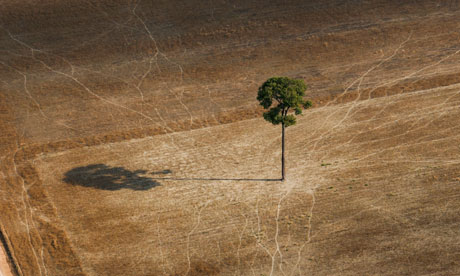
The tropical forest conservation plan, known as REDD, has the potential to significantly reduce deforestation and carbon dioxide emissions worldwide. Photograph: Daniel Beltra/Greenpeace

It could be the cheapest way to save the planet from climate change. Western governments and corporations want to shut down a major source of carbon dioxide emissions by paying the people who destroy forests to desist. But the dream could turn into a nightmare, in which Western polluters use their carbon credits to evade cutting emissions at home, while the promised benefit to the atmosphere is lost in a mire of conflict and corruption.

The plan is called REDD, for Reducing Emissions from Deforestation and Forest Degradation. It has backing from big oil and forest tribes, the World Bank, and blue-chip environment groups like the Nature Conservancy. Right now, REDD looks to be the only positive outcome likely to emerge from this December's Cancun climate conference, the successor to last year's failure in Copenhagen. If it happens, a new global business of carbon conservation in forests could soon be worth tens of billions of dollars a year.

The stakes are high. The destruction of tropical rainforests is responsible for an estimated 17 percent of global CO2 emissions — six times the amount of emissions from aircraft. REDD's backers say REDD could snuff out those emissions, sharply reducing deforestation by 2030. Already a range of pilot projects are up and running. But the warning signs about what could go wrong are flashing.

Take the Nature Conservancy's Noel Kempff Climate Action Project in Bolivia. This is a 14-year-old forest conservation project rebranded as a model for REDD. But Greenpeace last year called it a "carbon scam."

The $10 million project doubled the size of an existing national park to more than 800,000 hectares. It expelled loggers and installed forest rangers with funding from corporate sponsors, including the oil giant BP and America's largest coal burner, American Electric Power. The plan is to reward this corporate philanthropy with carbon credits equivalent to half the amount of carbon fixed in the forest. The rest go to the Bolivian government.

To date, carbon auditors say the project has prevented emissions of more than a million tons of CO2. One day, the partners may offset the carbon credits against their own emissions back home, or sell them in the carbon market likely to emerge under REDD.

The Noel Kempff project is highly regulated. Nobody doubts extra carbon is being kept in the forest. But there is a problem about its benefit to the atmosphere that can be summed up in one word: leakage. Some of the loggers expelled from the park simply put their chainsaws in the back of the pickup, drove down the road, and resumed cutting in the next forest. Since the project started, UN data show that rates of deforestation in Bolivia overall have gone up, not down, with a 4.4 percent rise between 2000 and 2005.

Timber pirates are everywhere, says Karl Bahler, a principal at Bahler Consulting and the former portfolio manager at Sustainable Forest Systems, which runs a green-minded logging project near the Noel Kempff forest. "The idea that governments in places like Bolivia can effectively police property rights just doesn't match up to the reality on the ground," says Bahler. So the bigger picture suggests that, however virtuous the Nature Conservancy's activities within the park, they may not be keeping carbon out of the air. Those carbon credits may represent hot air.

To prevent such leakage, many people say governments should have to ensure that national deforestation rates are curbed before anyone can claim any carbon credits for local projects. "National accounting is essential," says Kevin Conrad, the son of an American missionary in Papua New Guinea who has promoted REDD in his adopted country as the special envoy for climate change. Yet groups like the Nature Conservancy and Conservation International oppose the idea that credits should be awarded at the national level. They have lobbied hard at the UN that local projects should qualify, whatever goes on over the back fence.

Perhaps this is not surprising for organizations whose main activity is "on-the-ground" conservation. The Nature Conservancy accepts that "national-scale accounting is the ultimate goal." But it argues that "a transition period should be allowed in which subnational or project-scale activities can generate credits for sale," which will ensure "learning by doing." In UN negotiations, the Obama administration has argued the same position. But, even if leakage does not become endemic, the danger is that a few well-publicized cases could fatally undermine the whole REDD project.

REDD faces many other challenges if it is to become part of the solution to climate change, rather than part of the problem. They range from the scientific to the economic, legal, and political.

Satellites have transformed the ability of independent scientists to track deforestation, and ended reliance on questionable form-filling by national governments. But if scientists are to verify REDD, what exactly should they be measuring? A study last year by the Nairobi-based World Agroforestry Centre showed that in many places, farm woodlots and woody scrub are as important in capturing carbon as forests, but they are not part of the REDD definition.

There are other critical questions for the carbon counters. If countries are to be given carbon credits in return for cutting rates of deforestation, how do you measure the baseline rate? It can make a massive difference. In Brazil, for instance, deforestation rates doubled between 1990 and 2004, then fell by two-thirds in the next four years. So measuring changes in deforestation against the earlier, higher rate, would yield far greater compensation than if a more recent date were chosen.

On economics, there is a real danger that so many carbon credits will be awarded that they will end up flooding the existing carbon market and causing prices to crash. A Greenpeace study last year concluded that REDD could cut prices of carbon credits by 75 per cent. That would undermine the economics of a huge range of initiatives to reduce CO2 emissions, such as the development of renewable fuels.

Meanwhile, carbon accounting is likely to prove difficult and open to abuse. A carbon credit is more like an abstruse financial commodity than, say, a ton of wheat or coffee. In the jungles of the financial markets, the potential for carbon fraud is huge. Last August, several London City traders were arrested on suspicion of operating swindles involving carbon credits. They may be the first of many.

Is REDD fair? A looming problem is that REDD sets out to reward the bad boys of the forests if they mend their ways. The worse they are now, the more they stand to gain in the future. The bad guys are wise to this. On the Indonesian island of Sumatra, major companies responsible for pulping ancient rainforests now want to be rewarded with carbon credits for setting aside a small fraction of their huge landholdings for conservation.

Meanwhile the good guys — those who have conserved their forests all along — may get nothing. Nothing for Costa Rica, the only country in the tropics to have curbed rampant deforestation and increased its forest cover. Nothing for Guyana, which has kept its forests. And nothing for indigenous tribes who have looked after their forests for centuries.

Some say the rules should be changed to recognize long-time conservers. One carbon finance fund in London, Canopy Capital, has bought up the carbon-credit rights to the 370,000-hectare Iwokrama forest in Guyana in the hope of a payout one day. Such rewards may be fair. But if someone can gain carbon credits for protecting forests they never intended to destroy, that makes a mockery of the intention of REDD to compensate people who give up forest destruction. Paying people who have never destroyed their forests to ensure they carry on the good work may be valuable, but would not demonstrably reduce rates of deforestation or benefit the atmosphere. To pay them in carbon credits that could be sold to offset actual emissions would be potentially counterproductive in the fight against climate change.

REDD also raises afresh the issue of who owns the forests and is entitled to claim carbon credits. Some forest communities, such as the Surui tribe in the Rondonia region of the Brazilian Amazon, believe they can benefit from running their own carbon-sink forests. There are precedents. In part of the Juma rainforest in Brazil, the state government has given every household a credit card account into which it deposits $50 each month as a payment for keeping the forest intact.

But in Indonesia, the government owns the forests — and hence any carbon credits that they attract. Campaigners there complain that REDD pilot projects being set up by the Indonesian and Australian governments in Borneo — with support from the world's largest mining company, and would-be carbon offsetter, BHP-Billiton — are more likely to end up evicting forest dwellers to guarantee the protection of the forests than to enrich them.

This may already have happened in the Harapan forest in southern Sumatra, where locals say they have been thrown off their land as part of a carbon-sink project endorsed by the Prince Charles Rainforest Project and the conservation group Birdlife International. Birdlife says only illegal loggers have been expelled, but the locals say that isn't so. The only certainty is that the project seems to have created a lot of local antagonism.

We should not be too skeptical. It may be that a mixture of government concern and consumer pressure will soon outlaw pirate loggers, and that financiers can create carbon markets that will reward good behavior by landowners and governments alike. But, even in the days of satellite observations, it will remain hard to know exactly what is going on deep in the forest.

Amnesty International Calls For Release of Peruvian Indigenous Leader Alberto Pizango

31st May 2010
Source: Latin America News Dispatch

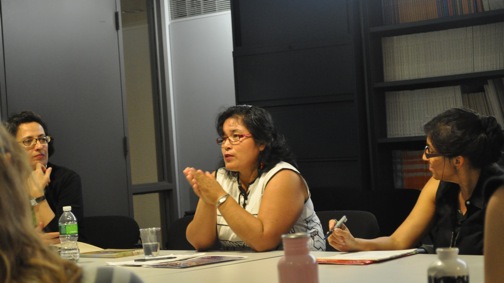
Vice President of AIDESEP Daisy Zapata spoke at New York Univeristy in May. Photo by Roque Planas.

Human rights organization Amnesty International (AI) called upon the Peruvian authorities to drop charges against indigenous leader Alberto Pizango on Friday.

The Peruvian government has accused Pizango of rebellion, sedition, conspiracy and other crimes, in connection with violence that broke out between police and protesters last June.

“The charges against Alberto Pizango appear to be politically motivated and must be dropped immediately,” said AI spokeswoman Guadalupe Marengo in a statement issued Friday.

Q’orianka Kilcher, a German actress of Peruvian origin who starred in the American film “Pocahontas,” accompanied Pizango on the flight back to Peru and has also demanded that the Peruvian government drop the charges.

“I’m going to tell people about everything when I return to Hollywood, includng my flight with Alberto Pizango. Many celebrities will get together and want to know what’s going on here,” Kilcher said, according to Peruvian daily El Comercio.

Kilcher has also disseminated her position on the Pizango case through her Twitter account.

The violence that the Peruvian government accuses Pizango of instigating took place last June. The Interethnic Association for Development of the Peruvian Rainforest, AIDESEP in Spanish, led a series of protests over two months against presidential decrees to privatize indigenous territories located in the Amazon rainforest.

The decrees were signed in 2007 and 2008 in order to bring Peruvian law into accordance with a free trade agreement with the United States, according to Chilean daily El Mercurio. The most controversial law, Decree 1090, had not been implemented due to protests from indigenous groups who say the law threatened their control over their lands.

A government commission was established to study the question in August of 2008, but no solution was proposed and protests began anew in April 2009.

Violence broke out between police and protesters when the Alan García administration ordered security forces to break a road blockade in Bagua, a town located in Northern Peru. Sources disagreed over who initiated the violence and how many died, but AI says at least 33 people were killed.

According to AI, protesters killed 23 police officers, including 10 who were held hostage outside of Bagua. Police killed another 10 civilians and at least another 200 people were injured.

Peru’s Congress subsequently suspended the decrees that had prompted the protests and passed a law last month requiring the government to consult with indigenous groups before authorizing concessions that affect their lands.

Though Pizango was not present in Bagua at the time of the violence, in May 2009, he called for an “indigenous insurgency,” a statement he later retracted at the urging of the Peruvian Ombudsman for Human Rights, according to AI.

Pizango subsequently fled Peru and has lived for the last 11 months in Nicaragua. He voluntarily returned to Peru on Wednesday and was briefly detained.

During Pizango’s absence, acting president of AIDESEP Daisy Zapata has called upon the international community to pressure the Peruvian government to drop the charges against Pizango and to recognize indigenous claims to the disputed lands.

“The Peruvian government says that it wants development for indigenous peoples,” Zapata said during a visit to New York University in May. “But what we see are concessions to transnational corporations.”

Zapata testified before Congress on April 29, where she requested that free trade and military agreements between the U.S. and Andean countries be conditioned on respect for human rights and indigenous land claims, according to Spanish news agency EFE.

SK3 Group Sells Biomolecules to SuperFruit BioSciences

Mon, 31 May 2010
Source: Trading Markets

SK3 Group, Inc. announced that it has signed a $5M biomolecule sales agreement with SuperFruit BioSciences, Inc., a Florida corporation.

The biomolecules that are the subject of the sale are intended for cosmetic product use and skin treatment
in the United States and South America. They were produced as a by-product of the proprietary and patented adult stem cell regeneration technology owned by Texas-based adult stem cell technology company Regenetech. Discovia Life Sciences, the biotechnology
and advanced life sciences holding portfolio of parent company Healthcare of Today, sold the biomolecules to SK3 Group earlier this year.

SuperFruit BioSciences, Inc. is a value added manufacturer, direct supplier, and innovator in Amazon Rain Forest super fruit ingredient processing. The Amazon Rainforest holds many of the health and wellness answers for the earth's aging population and is a treasure chest of medicinal bio-resources derived from fruits, plants and trees that, when harnessed together, will provide a powerful and diverse portfolio of products to the marketplace. Sourcing super fruits such as Acai in the Amazon basin while following sustainable, environmentally conscious business practices and food and health product
safety guidelines, Superfruit BioSciences, Inc. captures the essence of this opportunity by bringing together well known local Brazilian experts, along with critical focus on R&D with several U.S. universities and the Institute for Superfruit Research, which it founded.

The sales agreement provides a non-exclusive right to distribute and use the biomolecules for cosmetics, skin treatments and related uses in the U.S. and an exclusive right of distribution in Brazil. The company plans to investigate the development of products marrying the high anti-oxidant oils, powders, butters and creams derived from Rain Forest natural products, with the regenerative powers of the biomolecules, for use in new cosmetic lines as well as skin treatments and similar uses.

Healthcare of Today is a vertically integrated healthcare holding company. Founded in 2008, it has acquired a number of companies, many specializing in the senior care industry. Its direct and indirect subsidiaries are engaged in a range of businesses including: nurse staffing, residential care facilities for the elderly, home healthcare services, home healthcare equipment sales, healthcare IT, medical devices, healthcare consulting, insurance, data security, biotechnology, and alternative energy.

Sunday, May 30, 2010

Biomapas Petrobras - Expedição Amazônia

Saturday, May 29, 2010

‘Amazon on tour’ with WWF/Sky’s rainforest pod

28 May 2010
Source: WWF News

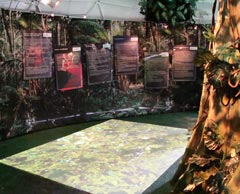
People across the UK have the chance to get up close and personal with the Amazon rainforest by visiting the Sky Rainforest Rescue Pod, which is about to embark on a UK tour.

WWF and Sky have created the Amazon pod to raise awareness about deforestation in the Amazon and encourage people to support Sky Rainforest Rescue, a project that aims to save one billion trees in the Brazilian state of Acre.

Visitors will be able to step into the magic of the Amazon, as they experience the sights and sounds and take a 3D tour through the rainforest, all for free.

The pod is at the Hay Festival in Wales from 28 May to 1 June, then will travel around the UK. Make sure you keep an eye on the Sky Rainforest Rescue website to find out when it’s coming to a location near you!

Rich countries to give $4bln to fight deforestation

27 May 2010
Source: France24

Rich countries will bring to about 4.0 billion US dollars the amount committed to fighting deforestation by 2012, 500 million more than committed to at the UN climate summit in Copenhagen, Norway said Thursday.

"We have reached around four billion dollars," Prime Minister Jens Stoltenberg of Norway, which is hosting an international deforestation conference, told a press conference.

The amount includes the 3.5 billion dollars committed to by the United States, Norway, Japan, Britain, France and Australia at the UN climate summit in December.

Indigenous Amazonians Prepare For War to Stop Massive Hydroelectric Dam on Xingu River

05.26.10
Source: Treehugger

Brazil's planned 11 gigawatt Belo Monte Dam on the Xingu River (a tributary of the Amazon) has raised a lot of protest in the past few months--and some comparisons of life imitating art, with James Avatar Cameron entering the fray. Now, as reported in Mongabay, indigenous leaders are preparing for war to stop the project.

The a chief from the Kayapo people told French television, "I have asked my warriors to prepare for war and I have spoken of this with other tribes from the Upper Xingu." A different group of Kayapo have been blockading a ferry crossing over the Xingu in protest for the past month. Chief of the group setting up the blockade has said that his people are prepared to "die fighting for our rights."

Speaking more broadly, Atossa Soltani of Amazon Watch describes the situation:

Indigenous people are determined to disrupt the 'business as usual' model of destructive development projects that ruin the environment and their traditional ways of life. Indigenous groups from the Xingu Basin have sent the Brazilian government a clear and resounding message that they will not allow the Belo Monte Dam to move forward.

The Belo Monte dam is scheduled to come online in 2015, will be the third-largest hydroelectric dam in the world, flooding 500 square miles of rainforest, directly displacing some 12,000 indigenous people and affecting the lives of 45,000 more.

Peru indigenous leader released before trial

Thu May 27, 2010
Source: Reuters

May 27 (Reuters) - A Peruvian indigenous leader accused of fueling protests against foreign investment in which more than 30 people died was released on Thursday pending his trial on charges of fomenting violence.

Police arrested Alberto Pizango on Wednesday after he returned from a self-imposed exile in Nicaragua, where leftist President Daniel Ortega had granted him political asylum.

Amazon tribes, guided by an organization headed by Pizango that represents Indian groups in the Amazon, staged protests in June last year to force Congress to repeal laws designed to encourage foreign mining and energy companies to invest billions of dollars in the rainforest.

Violence broke out when police tried to break a roadblock that had been in place for weeks. A clash between protesters and police left scores of people killed or injured in the worst violence of President Alan Garcia's term, prompting him to shuffle his Cabinet.

"As indigenous groups, we don't just fight for our rights, but for the defense of life, humanity and mother earth, which is being damaged by voracious multinational companies," Pizango told reporters on Thursday.

Pizango, who was wanted in Lima on charges he contributed to the violence, fled to Nicaragua soon after the unrest.

The bloodshed underscored divisions in Peru between wealthy urban elites and poor indigenous groups in the countryside.

Garcia lacks support in rural areas, especially the Amazon, and his critics say his free-market policies benefit mainly the urban middle class.

Peru's Congress suspended several land-use laws two weeks after the violence. But indigenous people still want Garcia to sign a bill that would give them the right to be consulted about major natural resource projects on their ancestral lands. (Reporting by Patricia Velez and Terry Wade; Editing by Xavier Briand)

Friday, May 28, 2010

Obama urged to protect uncontacted tribes from oil pipeline

28 May 2010
Source: Survival International

President Obama has been urged to help protect Peru’s uncontacted tribes when he meets with Peruvian president Alan Garcia on 1 June.

Survival has written to President Obama highlighting the threat posed to two of the world’s last uncontacted tribes by the construction of an oil pipeline in the remote Peruvian Amazon.

ConocoPhillips and Spanish-Argentine oil giant Repsol-YPF stand to benefit if the pipeline is built. Both companies are hoping to explore for oil in the region where the tribes live and would need the pipeline, due to be built by Anglo-French company Perenco, to help transport any oil from the rainforest to Peru’s Pacific Coast.

‘We urge you to appeal to President Garcia to stop the construction of the pipeline and prohibit companies like ConocoPhillips from working in this area, and indeed any area where there are ‘uncontacted’ tribes,’ reads Survival’s letter to President Obama. ‘Working in such areas is a blatant violation of the tribes’ rights under international law and the UN Declaration on the Rights of Indigenous Peoples, and endangers the lives of some of the most vulnerable people on earth.’

The meeting between Presidents Garcia and Obama, scheduled to be in the White House, comes soon after statements from the US’s ambassador to the UN, Susan Rice, that the US would review its position on the UN Declaration.

President Garcia has publicly called uncontacted tribes the ‘invention’ of environmentalists. Perenco, Repsol-YPF and ConocoPhillips spokespeople have all claimed the tribes don’t exist.

Chevron Condemned for Human Rights Abuses, Ecuador Disaster at Annual Shareholder Meeting

May 27, 2010
Source: HotIndieNews.com

Activists Arrested Inside and Outside Chevron’s Meeting Community Leaders Barred, Ejected from Annual Meeting for Exposing the Truth about Chevron

At Chevron’s shareholder meeting the company faced outrage for its continued lies, deception, silencing of critics, and human rights abuses. Concerned community leaders from several nations including Ecuador and Nigeria traveled from around the world yet were refused entry to Chevron’s annual meeting.

One of the few community members allowed inside the shareholder meeting was Mariana Jimenez, a 71-year-old grandmother from Ecuador. She spoke directly to Chevron’s CEO and Board and demanded an end to Chevron’s lies about the massive oil contamination in Ecuador that is destroying her community in the Amazon rainforest.

“In 1976, I lost two young children. In 1979, one of my daughters became very sick with an unknown illness on her throat and lost her voice for three months. People are still getting sick every day. There are children born with birth defects. I want him [Watson] to take responsibility for the crime that his company committed in my country.”

Rather than showing Ms. Jimenez and the 30,000 other Ecuadorean people the respect they deserve, Chevron CEO John Watson chose to mock the community’s suffering and disingenuously claimed that, “My predecessor (former CEO David O’Reilly) showed great empathy and I will do the same.”

“We don’t need empathy from Chevron, we need them to accept full responsibility for the pain and suffering they have caused our people and clean up Ecuador now,” said Guillermo Grafa, an Indigenous leader from Ecuador who was denied access to Chevron’s shareholder meeting after traveling from his home in the rainforest.

Chevron’s Board also felt the heat inside the shareholder meeting. During the Board re-election process, shareholders challenged Chevron’s Board of Directors to intervene in the company’s failed strategy of covering up its massive liability.

“While Chevron’s management systematically deceives regulators, shareholders, and the public about its liability in Ecuador, the Board of Directors has been asleep at the wheel,” said Maria Ramos, Change Chevron Campaign Director at Rainforest Action Network.

“Since taking the helm at Chevron, we have seen Mr. Watson continue to endorse this company’s long running, expensive and dead-end strategy with respect to the dire situation in the Amazon – a strategy which has cost both the company and the people of the Amazon dearly.”

Meanwhile outside, Chevron arrested four shareholders and representatives who refused to leave Chevron property after they were denied access to the meeting. Those arrested were trying to voice their concerns about environmental destruction and human rights abuses in Ecuador, Richmond, CA, Houston, TX, and around the world. The people arrested were Han Shan and Mitchell Anderson of Amazon Watch; Juan Parras of TEJAS in Houston; Rev Ken Davis from Richmond. Antonia Juhasz of the True Cost of Chevron coalition was arrested while trying to make a statement inside the shareholder meeting after being admitted with a valid proxy. None of the arrested had been released as of 3:30 pm CT.

Amazon Watch staff Han Shan and Mitch Anderson participated in the “sit in” before their arrests. “More than twenty valid [Chevron] proxy shareholders have been barred from the meeting for no valid, legal or legitimate reason, but simply because they come from communities in Ecuador, in Burma, in Nigeria, in Richmond, CA like Rev. Davis here. And they want to deny those people speaking out about their concerns. It’s appalling.” Said Han Shan. Mitch Anderson added, “We are not leaving the premises. They have disenfranchised our voices and they are going to have to drag us out of here.”

Shelley Alpern, Vice-President at Trillium Asset Management Corporation was also outraged at Chevron’s actions, stating, “I attend several shareholder meetings every year and I have never seen a company deny entry to legal proxy holders. This is outrageous and reflects very poorly on our company’s respect for the laws that govern our proxy process. The shareholders in attendance today should stand forewarned not to say anything critical or it could be you next year.”

Protestors arrested at Chevron meeting

26 May 2010
Source: Upstream Online

Five protestors were arrested at the Chevron general meeting today in Houston as they tried to call attention to the US supermajor’s environmental and human rights record in the developing world, according to an environmental group.

Rainforest Action Network reported the arrests on its website.

A Chevron representative refered questions about the events outside the general meeting to the Houston Police Department.

The protestors arrested were identified as Mitch Anderson and Han Shan of Amazon Watch, Juan Parras of Texas-based environmental group Tejas, Ken Davis, and Antonia Juhasz of human rights group Global Exchange, according to Karen Hinton, who heads communications for a group that is suing Chevron, alleging that it is responsible for contamination in the Ecuadorian Amazon that led to health problems.

The plaintiffs are seeking as much as $27 billion in damages.

The oil field in the swath of remote jungle was operated by Texaco and later Petroecuador.

Chevron, which later bought Texaco, has repeatedly said that Texaco met its portion of cleanup responsibilities and the remaining work belongs to Petroecuador.

Bridge to Drive Urban Growth in Heart of Amazon

May 26, 2010
Source: Inter Press Service

The 74 pillars that will hold up the bridge over the Negro river to join this major city in Brazil's Amazon jungle to nearby urban districts have mostly been laid, without environmental protests or major debates on the impact of a fast-growing metropolitan area in the heart of the Amazon rainforest.

The 3,595-metre long bridge is a symbol of the triumph of the automobile over river transport in an area where rivers have historically been the only highways.

The bridge will join together cities separated by the Negro river, which were formally united in the Metropolitan Region of Manaus (RMM) in 2007 by the government of Amazonas, which is Brazil's largest state and is home to the greatest forest and water resources in the country.

"The Manaus-Iranduba bridge has no meaning without the Metropolitan Region and vice versa," the head of the project, René Levy, the state government's secretary of the RMM, told IPS.

The idea is to expand the development driven in Manaus, the capital of the state of Amazonas, by the free trade zone originally created in 1967.

Thanks to tax incentives, the Manaus industrial district took shape in this city in Brazil's extreme northwest. Despite its distance from the huge markets of central and southern Brazil, the district is now the country's leading producer of electronic goods, motorcycles and other durable consumer goods.

This city of 1.7 million people, which represents half of the population of the entire state, is a big magnet for human and natural resources from surrounding areas, without a counterflow, Levy said.

But the bridge, to be opened at the end of the year, will facilitate access to the huge Manaus market, fuelling explosive growth in agricultural production in the municipalities on the other side of the Negro river, Paulo Ricardo Carrilho, sales manager at the Iranduba Agricultural Cooperative (COAPIR), told IPS.

Because of the isolation of Manaus, most supplies of perishable products are shipped in, mainly by air, from distant parts of Brazil.

The city is only connected by paved road (BR-174) to Boa Vista, the capital of the state of Roraima, to the north, and from there to Venezuela and the Caribbean coast.

The municipalities of Iranduba, Manacapurú and Novo Airão, which have abundant fertile land, should logically be major suppliers of food to Manaus. But farmers and fisherfolk there face a major barrier: a cost of 50 to 100 reals (28 to 56 dollars) for each truck ferried across the river.

The bridge -- which will be toll-free "because it is a public service," as Levy explained -- will replace the riverboats and reduce the crossing time from half an hour (plus the time spent waiting in what are often long lines, especially on weekends) to just four minutes.

"My guests won't have to leave five hours ahead of time to catch the plane at the Manaus airport, and they won't miss their flights because the riverboats aren't operating," Francisco Vasconcelos, owner of the Posada Amazonia, a 30-room jungle lodge, told IPS.

The new bridge will also fuel further growth of ecotourism, which will help curb the deforestation driven by the city's economic and population growth, said Vasconcelos, who comes from a family of "15 brothers and sisters who have always lived in Manacapurú," 80 km from Manaus. The lodge is located along the road to that town.

Iranduba, which is closer to Manaus, has dozens of brick factories. But Levy predicted that as the free trade zone expands thanks to the bridge, the town's industry will grow and diversify.

The nine riverboats currently in service take some 2,500 vehicles a week across the river, 15 percent of which are large trucks loaded with bricks and ceramic products.

Of the 25,000 to 30,000 passengers ferried across every week, many are university students who commute up to four hours a day to attend class in Manaus, Marinaldo Matos, press officer at the Sociedade de Navegação, Portos e Hidrovias do Estado do Amazonas, the state office that runs the ferries, told IPS.

The construction of what will be the biggest river bridge in Brazil will absorb one million sacks of cement and is being financed by Brazil's national development bank, the BNDES. The original cost was projected at 574 million reals (320 million dollars), but later grew "25 percent," Levy said.

Some concern has been expressed over the bridge's future effects in terms of growing deforestation, pressure on fragile ecosystems like wetlands and preserved wildlife areas, and the rising cost of land, as a result of the expected economic and population growth in the municipalities across the river from Manaus.

However, the economic and social benefits of the project have apparently quietened its critics, and there have been no significant public protests by environmentalists.

Land whose price was previously quoted by hectare is now sold by square metre, and prices have risen tenfold or more in some spots in Iranduba, Matos said.

This phenomenon will drive the poor living on the outskirts of Greater Manaus into more remote areas, where they will clear and settle land in the jungle, leading to further deforestation.

There will also be a loss of biodiversity and an increase in social inequality, anthropologist Alfredo Wagner, coordinator of the Nova Cartografia Social da Amazônia project, told IPS.

Several universities are involved in the project, which is mapping out the different cultural and social groups in the Amazon jungle region.

Greenpeace Amazon campaigner Paulo Adario told IPS that the expansion of the Manaus metropolitan region will drive the illegal settlement of protected areas, like the Jaú National Park and the Anavilhanas archipelago, despite their distance from the city.

But Albertino de Souza Carvalho, a professor at the Federal University of Amazonas, which coordinated the project's environmental impact study, remarked to IPS that while the urban growth "will necessitate greater care," construction of the bridge has proceeded "smoothly, without any violations" of standards and regulations.

Levy, meanwhile, said the "strategic plan" drawn up to accompany construction of the bridge will prevent negative impacts by providing for proper zoning of economic and environmental areas and protecting the most vulnerable zones.

The roads that will see heavier traffic as a result of the bridge already exist, he also noted.

Furthermore, he said, the project has helped fill a "knowledge gap" on the geology of the Negro river and surrounding natural areas.

But in the future, the bridge will facilitate the reconstruction of the BR-319 highway, which links Manaus with Porto Velho, the capital of Rondonia state, nearly 900 km to the south. The highway was originally built in 1973 but fell into disuse and has been impassable for years.

The repaving of the road cutting straight through the rainforest poses an extreme risk of deforestation. Environment Ministry figures indicate that 75 percent of deforestation in the Amazon over the last decade has occurred in strips up to 50 km wide on either side of roads running through the jungle.

To completely break the isolation of Manaus, one other bridge, over the Solimões river, would also be needed. "That would be fantastic, because Greater Manaus would thus be integrated with the rest of Brazil and connected to the Pacific ocean," besides the existing road northwards to the Caribbean, Levy said.

The city is located on the north bank of the Negro river and its confluence with the Solimões river, which extends eastward as the Amazon river.

Thursday, May 27, 2010

Urban planning in the Brazilian rainforest

26 May 2010
Source: Newsdesk

A vast experiment in urban planning is underway in Brazil’s jungle metropolis of Manaus.

At the center of the urban expansion is the construction of a 2.2-mile bridge that is to connect the central city of the old rubber trade to industrial cities and towns across the Rio Negro—the largest left tributary of the Amazon and the largest blackwater river in the world. The Rio Negro flows into the Rio Solimões to form the Amazon River below Manaus.

The bridge is likely to have a major impact on the city, which is situated in the heart of the Amazon rainforests of northwest Brazil and whose 1.7 million people currently rely heavily on ferry services to move goods, and air transport for most supplies of perishable products.

Construction of the bridge is expected to fuel significant growth in agricultural production in the municipalities on the other side of the Negro river. Manaus currently is connected to only one paved road, which runs north.

But for all the economic growth impact, critics fret that the rising land prices will drive people into protected areas such as the Jaú National Park and the Anavilhanas archipelago—keystones for the area’s eco-tourism industries.

So far, however, the professor who coordinated the project’s environmental impact study for the Federal University of Amazonas said that the construction of the bridge so far has proceeded smoothly.

Manaus was at the center of the Amazon region’s rubber boom during the late 19th century. Its gaudy opera house, the Teatro Amazonas, still exists today; it has been restored, was used in the Werner Herzog film Fitzcarraldo, and after 90 years, presents operas once again.

Manaus is a cosmopolitan city, and, because of its location next to the Amazon rainforest, it attracts a substantial number of Brazilian and foreign tourists, who can find plenty of boat and land trips into the surrounding jungle. A great diversity of wildlife can be found even in the surroundings of Manaus.

It is also home to one of the most endangered primates in Brazil, the Pied tamarin.

Ominously, the first shopping mall in the Brazilian Amazon opened in 1991 in Manaus, which incidentally has special status as duty-free zone. In April 2009, the 227-store Shopping Manauara opened with jungle trees in the food court.

The project was funded in part by Developers Diversified Realty Corporation, a publicly traded U.S. real estate investment trust. At least two developer groups are considering additional mall projects for the city.

Sales of timber, rubber latex and Brazil nuts help Amazon and people

27 May 2010
Source: WWF International

Valciclei’s distant dream of owning a motor cycle came true. Not because he was blessed by a fairy but because of the income earned from forest management. ‘People are now buying motor vehicles, electronic appliances, clothing and household items, he said, proudly showing off his newest acquisition.

Twenty-year old Valciclei da Silva is ‘a child of the forest’. He grew up in a small rural community close to the town of Xapuri, located in Brazilian state of Acre. Situated in the western part of the country the region is mostly covered by the Amazon rainforest.

The Amazon is known worldwide for its exceptional biodiversity. A considerable number of the world's plants and animals live in the Amazon, most of which remain undiscovered by scientists. To date, at least 40,000 plant species, 427 mammals, 1,294 birds, 378 reptiles, 427 amphibians, and at least 3,000 fishes have been scientifically classified in the region.

But behind the beauty lies a dark picture. Many people in local communities throughout the Amazon live in poverty. To survive, many of them resort to illegal logging. Frequently, they cut down the trees and sell the wood, then using the deforested land to raise their cattle. Even worse, some locals sell their land to cattle ranchers or illegal loggers and migrate to urban areas in search of job for which they do not have required qualification.

Such sad stories used to be numerous in the State of Acre, but times are changing. The vicious circle of conflict between encouraging economic activities and preserving the wildlife is being stopped thanks to the implementation of sustainable forest management practices.

In Brazil, the first forest management related initiatives kicked off in the 1960s and were mainly aimed at increasing the production of forest based products. It is only after the 1992 Rio Earth Summit that the practices truly became sustainable and that new models of land use were proposed, taking into account the protection of biodiversity and the social and economic development of the local communities.

‘Timber, rubber latex and nuts sales have substantially improved the living of the entire community’, says Valciclei who has been the household provider for his mother and sister since his father left the home.

Data from the Acre State Government shows that forest management models carried out in partnership with native communities, businesses, the government and non government organizations such as WWF nearly tripled the average yearly family income in rural areas.

‘If the land is exploited in a diversified way and forest based products are sold at a good market price, it can ensure considerable income for local families’ says Carlos Ovídio Rezende, Forest Secretary for the State of Acre. ‘Ten years ago, the forest used to yield around 15 US$ per hectare per year. Today, the yield tops 90 US$.’

‘Moreover, forest management not only increases family income and preserves biodiversity; it also contributes to improve the value of real estate in rural areas’ stresses Rezende. Properties with management plans can be worth around five times more than those without.

Ecuador Oil Contamination Spawns Turmoil at Chevron Annual Meeting

May 26, 2010
Source: Environment News Service

At Chevron's annual shareholder meeting here today Mariana Jimenez, 71, from Ecuador told company officials and board members that oil contamination by Texaco, now a Chevron company, is destroying her community in the Amazon rainforest.

"In 1976, I lost two young children. In 1979, one of my daughters became very sick with an unknown illness on her throat and lost her voice for three months. People are still getting sick every day. There are children born with birth defects," Jimenez said.

She called for Chevron CEO John Watson "to take responsibility for the crime that his company committed in my country."

From 1964 to 1992 Texaco, now owned by Chevron, was part of consortium that built and operated oil exploration and production facilities in the northern region of the Ecuadorian Amazon.

In 1993, a lawsuit was filed by 48 Ecuadorian Indians and farmers representing tens of thousands of people in the region who claim to have suffered illnesses and ecological damage to their land caused by oil contamination. The lawsuit, now underway in Lago Agrio, Ecuador, alleges that from 1964 to 1990, Texaco deliberately dumped more than 18 billion gallons of toxic oil production process waste into unlined pits in the rainforest rather than injecting it underground.

A report by a court-appointed team in 2008 concluded that pollution caused mainly by Texaco's Ecuadoran affiliate, Texaco Petroleum, had led to 1,401 cancer deaths in the region. Team leader, Ecuadoran geologist Richard Cabrera, reported high levels of toxins in soil and water samples near Texaco's production sites and assessed damages at up to $27.3 billion.

At the shareholder meeting today, Chevron's new CEO John Watson replied to Jimenez by saying, "My predecessor [former CEO David O'Reilly] showed great empathy and I will do the same."

"We don't need empathy from Chevron, we need them to accept full responsibility for the pain and suffering they have caused our people and clean up Ecuador now," said Guillermo Grafa, an indigenous leader from Ecuador, who was denied access to Chevron's shareholder meeting after traveling from his rainforest home.

Concerned community leaders from several nations, including Ecuador and Nigeria, traveled from around the world yet were refused entry to Chevron's annual meeting.

Outside the Chevron building on Louisiana Street, demonstrators made speeches and displayed banners with slogans such as, "Chevron Energy Costs Lives. Clean Up Ecuador."

Houston police arrested four shareholders and proxy representatives who refused to leave Chevron property after they were denied access to the meeting.

The people arrested were Han Shan and Mitchell Anderson of Amazon Watch; Juan Parras of Texas Environmental Justice Advocacy Services in Houston; and Reverend Ken Davis from Richmond, California. Shan and Anderson participated in a sit-in demonstration before their arrests.

Antonia Juhasz of the True Cost of Chevron coalition was arrested while trying to make a statement inside the shareholder meeting after being admitted with a valid proxy. None of the arrested has yet been released.

"More than 20,000 proxy shareholders have been barred from the meeting for no valid, legal or legitimate reason, but simply because they come from communities in Ecuador, in Burma, in Nigeria, in Richmond, California, like Reverend Davis here. And they want to deny those people speaking out about their concerns. It's appalling," said Shan.

Shelley Alpern, vice-president at Trillium Asset Management Corporation said, "I attend several shareholder meetings every year and I have never seen a company deny entry to legal proxy holders. This is outrageous and reflects very poorly on our company's respect for the laws that govern our proxy process. The shareholders in attendance today should stand forewarned not to say anything critical or it could be you next year."

Inside the shareholders' meeting, Watson emphasized the company's safety record, saying, "If employees see a situation that could harm people or the environment, they not only have the authority to stop operations, we expect them to stop or trigger a stop to operations."

"As in safety," said Watson, "our efforts to improve our environmental performance will never stop."

Lloyds Register, an independent auditor, validated the integrity of Chevron's health, environmental and safety reporting procedures, said Watson.

"The Carbon Disclosure Project, an independent nonprofit organization, gave us the energy sector's top score in its Leadership Index. The index ranks companies taking "best in class" actions to measure and report carbon emissions," he said. "And for the fifth consecutive year, we're in the Dow Jones Sustainability Index for North America."

In 2009, said Watson, "We earned $10.5 billion. That's a 10.6 percent return on capital employed."

Chevron stockholders voted on nine proposals and none of those regarding the environment received a majority of votes. In the vote that gathered the most shareholder support, 26 percent of the votes cast went to the stockholder proposal regarding the appointment of an independent director with environmental expertise.

Approximately nine percent of the votes cast were voted for the stockholder proposal regarding financial risks from climate change.

And only seven percent of the votes cast were voted for the stockholder proposal regarding a human rights committee.

Several times during his speech, Watson referred to the ongoing BP oil spill in the Gulf of Mexico.

"Following the incident, at Chevron we held safety briefings around the world reviewing drilling processes and procedures along with wellcontrol contingency plans. We sent subsea experts to BP's aid, joined a Coast Guard incident command team, and participated in two industry taskforces examining offshore drilling procedures," Watson said. "Last week, those task forces made draft recommendations to Interior Secretary [Ken] Salazar for improving offshore safety."

"When the investigation into the cause of the Gulf disaster is complete, there will be lessons to learn," said Watson. "Our industry will learn them."

Ship with over 200 passengers sinks in Peruvian Amazon River

26th May 2010
Source: DigitalJournal.com

Iquitos - A ship with about 200 passengers sank early this morning while travelling down the Amazon River, near the Peruvian city of Iquitos. Survivors have been rescued, however as many as 100 people are missing.

The boat, MV Camila, with about 200 people on board including passengers and crew, sank this morning at 0240 hours (0740 GMT) while travelling from the city of Iquitos to the town of Santa Rosa, in the district of Indiana, near the border with Colombia.

Admiral Rodolfo Reátegui, chief of the General Command of Operations in the Peruvian Amazon, told radio station Radio-Programas del Perú (RPP) that dozens of survivors have been rescued, but two persons are dead and there is an unknown number of missing people.

Most of the passengers were Peruvians, however there were at least four Brazilians and one person of German nationality according with information given to RPP by Admiral Reátegui .

"There is evidence that the boat was carrying a larger number of passengers that it was allowed by its capacity," said Reátegui, adding that “Navy specialists continue to search for the missing.”

According to local media, the MV "Camila" was 12 years old and partially collapsed. There are reports of noise coming from the interior of the boat, apparently from trapped survivors.

Iquitos with a population of more than 370,000 people is the largest city in the Peruvian rainforest. It is considered the most populous city in the world that cannot be reached by road. Located on the Amazon River, it is more than 3,000 km away from the mouth of the Amazon at Belém in Brazil, on the Atlantic Ocean. The city can be reached only by boat or plane.

Wednesday, May 26, 2010

'Prepare for war': tensions rising over Brazil's controversial Belo Monte dam

May 25, 2010
Source: mongabay.com

Tensions are flaring after Brazil's approval of the Belo Monte dam project last month to divert the flow of the Xingu River. The dam, which will be the world's third larges, will flood 500 square miles of rainforest, lead to the removal of at least 12,000 people in the region, and upturn the lives of 45,000 indigenous people who depend on the Xingu. After fighting the construction of the dam for nearly thirty years, indigenous groups are beginning to talk of a last stand.

"I have asked my warriors to prepare for war and I have spoken of this with other tribes from the Upper Xingu. We will not let them [build the Belo Monte Dam]," Chief Raoni Metuktire, of the indigenous Kayapo tribe in Brazil, told the French Channel TF1. He is currently traveling through Europe appealing for support in putting the brakes on the project.

Another group of Kayapo, led by Chief Megaron Txukarramãe, have set up a blockade of a ferry crossing on a major Amazonian highway over the Xingu River in Mato Grosso in protest against the dam. As of last week the blockade was nearing its 30th day.

Chief Megaron recently called Brazil's President Lula "enemy number one" of indigenous people in Brazil, and has said that his people are prepared to "die fighting for our rights."

The Brazilian government argues that the dam, which was originally proposed in the 1970s under a military dictatorship, is necessary for increasing energy demands in the country. The 11 to 17 billion dollar dam will provide energy to 23 million homes, yet during three to four months of the year the dam will only run 10-30 percent capacity due to low waters. Critics argue that for the dam to be at all viable—and economical—other massive dams will need to be built on the Xingu River as well.

"Indigenous people are determined to disrupt the 'business as usual' model of destructive development projects that ruin the environment and their traditional ways of life," said Atossa Soltani of Amazon Watch, an environmental and indigenous-rights group, in a press release. "Indigenous groups from the Xingu Basin have sent the Brazilian government a clear and resounding message that they will not allow the Belo Monte Dam to move forward. A Brazilian and international coalition of organizations and social movements stands in solidarity with these groups, and is mobilizing further social and legal actions."

The issue recently gained wider media attention as James Cameron, director of Avatar, and several cast members protested against the dam in Brazil. Cameron also visited indigenous groups in the area that will be directly impacted by the dam.

Although construction has not yet started, the government says that the dam will be online by 2015. While hydroelectricity does not produce as much carbon as burning fossil fuels, studies have shown that dams, especially those in the tropics, emit significant amount of methane—a greenhouse gas which is approximately 20 times more potent than carbon—due to rotting vegetation in reservoirs.

MSU environmental scholar heads into heart of the Amazon

May 25, 2010
Source: PhysOrg.com

A Michigan State University researcher is helping lead the first research expedition along the western-most leg of the Transamazon Highway - a 700-mile dirt road that begins at the point where civilization essentially ends in the Brazilian Amazon.

This summer's trip is part of Bob Walker's ongoing research, funded by the National Science Foundation, into the impact of tree loss, or deforestation, on the Amazon. Walker, an MSU professor of geography, and colleagues will document logging activity as it impacts the forest and interview workers in the logging industry and longtime residents about the effects of development.

The western Transamazon is unexplored territory. The great unknown. As the Brazilian government cracks down on logging operations in the east to protect the environment, loggers are moving west along this wild stretch of road, Walker said.

While Brazil has become a major global exporter of wood, beef, soybeans and the ethanol used in biofuels, critics say this comes at the expense of the environment. Walker said massive development along the western Transamazon could eventually push the Amazon to its tipping point - when the rainforest ceases to exist.

"This may be the battleground of that tipping point, and it's critically important to study it in the early stages of change," Walker said.

But the trip comes with the threat of danger. Loggers are known to kill one another over territory. There are bandits. Malaria-carrying mosquitoes. Vampire bats with rabies. Massive snakes. Tainted water. Rickety bridges that can collapse under the weight of the researchers' vehicle.

Walker, who made his first research trip to the Amazon 20 years ago, estimates he's spent a good two years of his life crisscrossing the world's largest rainforest to study the effects of agriculture, logging and development. But even after all his time in the Amazon, he admits he doesn't know what the team will encounter.

"It's a new frontier," Walker said, "with indigenous peoples, gold miners and very few settlements. Our feeling is one of excitement, tinged with a sense of the unknown."

The trip also comes during the 40-year anniversary of the Transamazon, which was started in 1970 and terminated two years later. Officially known as BR-230, the highway was envisioned as a fully paved thoroughfare integrating the isolated Amazon with the rest of Brazil and other South American countries.

But today, while eastern parts of the highway are paved, the western portion remains a dirt roadbed that can be impassable during the December-May rainy season.

The researchers will travel in a standard four-wheel-drive truck from the city of Itaituba west to the small town of Labrea, where the Transamazon ends. The trip should take about two weeks. Traveling with Walker will be three Brazilians: Eugenio Arima, a former doctoral student of Walker's who is now an assistant professor at Hobart and William Smith Colleges; Ritaumaria Pereira, an MSU doctoral candidate in geography; and a local driver.

The researchers will sleep on mosquito net-covered hammocks strung up in the mud huts of local settlers, in the truck, or wherever they can find shelter. They'll pack as much bottled water as possible and eat local fare, including rice and beans, fish and plenty of papaya and other fruit.

For Walker, who made his first trip to the Amazon 20 years ago, the research offers him a chance to help inform environmental policy in one of the world's most ecologically rich regions.

"This is an opportunity to study a place that just 40 years ago was absolutely pristine, and to try to understand how it could be sustained in the face of changes that are coming down the road," Walker said. "I would like to be part of that - helping in that process of protecting a legacy for future generations."

SK3 Group, Inc. Announces $5M Sale of Biomolecules to SuperFruit BioSciences, Inc.

May 25, 2010
Source: MarketWatch

MIAMI, FLORIDA, May 25, 2010 (MARKETWIRE via COMTEX) -- SK3 Group, Inc. (PINK SHEETS: SKTO) today announces that it has signed a $5M biomolecule sales agreement with SuperFruit BioSciences, Inc., a Florida corporation.

The biomolecules that are the subject of the sale are intended for cosmetic product use and skin treatment in the United States and South America. They were produced as a by-product of the proprietary and patented adult stem cell regeneration technology owned by Texas-based adult stem cell technology company Regenetech (www.regenetech.com). Discovia Life Sciences, the biotechnology and advanced life sciences holding portfolio of parent company Healthcare of Today, sold the biomolecules to SK3 Group earlier this year.

SuperFruit BioSciences, Inc. is a value added manufacturer, direct supplier, and innovator in Amazon Rain Forest super fruit ingredient processing. The Amazon Rainforest holds many of the health and wellness answers for the earth's aging population and is a treasure chest of medicinal bio-resources derived from fruits, plants and trees that, when harnessed together, will provide a powerful and diverse portfolio of products to the marketplace. Sourcing super fruits such as Acai in the Amazon basin while following sustainable, environmentally conscious business practices and food and health product safety guidelines, Superfruit BioSciences, Inc. captures the essence of this opportunity by bringing together well known local Brazilian experts, along with critical focus on R&D with several U.S. universities and the Institute for Superfruit Research, which it founded.

The sales agreement provides a non-exclusive right to distribute and use the biomolecules for cosmetics, skin treatments and related uses in the U.S. and an exclusive right of distribution in Brazil. The company plans to investigate the development of products marrying the high anti-oxidant oils, powders, butters and creams derived from Rain Forest natural products, with the regenerative powers of the biomolecules, for use in new cosmetic lines as well as skin treatments and similar uses.

About Healthcare of Today, Inc.

Healthcare of Today is a vertically integrated healthcare holding company. Founded in 2008, it has acquired a number of companies, many specializing in the senior care industry. Its direct and indirect subsidiaries are engaged in a wide range of businesses including: nurse staffing, residential care facilities for the elderly, home healthcare services, home healthcare equipment sales, healthcare IT, medical devices, healthcare consulting, insurance, data security, biotechnology, and alternative energy. For further information please visit www.healthcareoftoday.com.

About SK3 Group, Inc.

SK3 Group offers a range of services in the healthcare industry. In addition to offering the most valued healthcare services in the industry today, including hospice care, the company provides supportive healthcare business services. Further information can be found at http://www.sk3groupinc.com.

Safe Harbor Statement

Safe Harbor Statement under the Private Securities Litigation Reform Act of 1995: This news release may contain forward-looking information within the meaning of Section 27A of the Securities Act of 1933, as amended, and Section 21E of the Securities Exchange Act of 1934, as amended, including statements that include the words "believes", "expects", "anticipates" or similar expressions. Such forward-looking statements involve known and unknown risks, uncertainties and other factors that may cause the actual results, performance or achievements to differ materially from those expressed or implied by such forward-looking statements. This news release speaks as of the date first set forth above and no responsibility or obligation may be assumed or exists to update the information included herein for events occurring after the date hereof.

Amazon River Cruise Travelers Enjoy Exclusive Opportunity to Hear Pink River Dolphins

May 25, 2010
Source: PRNewswire

BIRMINGHAM, Ala., May 25 /PRNewswire/ -- International Expeditions, the world leader in nature travel, is offering travelers on its Amazon River cruises an exclusive opportunity to listen to the river's famed pink river dolphins using hydrophones.

(Logo: http://www.newscom.com/cgi-bin/prnh/20100525/CL10696LOGO )

Travelers on the 10-day Amazon riverboat cruise use hydrophones to listen to the high-pitched calls of the pink river dolphins, while knowledgeable naturalists explain how the dolphins use these sounds to stun fish as they hunt.

"Guests love listening to the pink dolphins while they try to capture these unique creatures on film," said Jorge Salas, International Expeditions' Amazon Expedition Leader. "What they may not realize is that while they're listening to the dolphins, we are recording those sounds to share with local universities and interested groups. Science still has so much to learn about these freshwater dolphins."

Daily outings on this small-ship adventure into the Peruvian Amazon take travelers deep into the pristine Pacaya-Samiria National Reserve for explorations on small excursion boats to spot diverse wildlife, hikes deep into the rainforest, and even piranha fishing. Guests also spend time with riberenos in their remote river villages, handing out school supplies to children and meeting with a local shaman.

During their Amazon cruise, guests travel in comfort aboard the 28-passenger La Amatista riverboat. When not in their spacious air-conditioned cabins, guests can relax in the dining parlor which boasts floor to ceiling windows, stargaze on the open-air top deck, or sip cocktails while enjoying the evening entertainment, courtesy of the ship's local crew.

Prices for the 10-day Amazon River tours start at $3,148 per person, and include accommodations, daily excursions, complimentary laundry aboard La Amatista, most meals, local transportation, guides, transfers and tips to porters and waiters for included meals. International and in-country flights are not included, though arrangements can be made through IE.

Celebrating 30 years of engaging nature travel, International Expeditions specializes in small-group journeys to Earth's most exhilarating destinations. A pioneer of environmentally responsible travel, IE is committed to preserving natural habitats and improving the welfare of the people and communities it visits.

For more information or a brochure on the Amazon River Cruise, call International Expeditions at 1-800-633-4734, e-mail nature@ietravel.com, or visit http://www.IEtravel.com.

Tuesday, May 25, 2010

Brazil environment officials arrested for logging

Saturday, 22 May 2010
Source: BBC News

Police in Brazil have arrested at least 70 people suspected of illegal logging in the Amazon - including officials employed to protect the rainforest.

Several environmental officials in Mato Grosso state are accused of providing false licences for the extraction of timber from protected areas.

Loggers, landowners and forest managers have also been charged.

Police estimate that the illegal logging operation has caused damage amounting to about $500m (£345m).

The arrests followed a two-year investigation in six Amazon states.

Fake documentation

Much of the timber was taken from national parks and protected indigenous territories.

Officials in the environmental secretariat of Mato Grosso are accused of providing false documents that helped the loggers avoid controls on illegal deforestation.

Under laws designed to protect the rainforest, timber companies in Brazil require certificates to show their logs come from an approved source.

Mato Grosso, in the southern Amazon, is one of the regions worst affected by forest clearance, mostly for expanding soya farms.

Brazilian president Luiz Inacio Lula da Silva says his government has significantly reduced the rate of Amazon deforestation as part of its strategy to combat climate change.

Illegal lumber sales lead to arrests in Amazon jungle

Saturday 22nd May, 2010
Source: Britain News

A devastated area in the Amazon rainforest has seen police action this week, as 70 people were arrested for allegedly deforesting protected areas of the Amazon jungle.

Brazilian police took the loggers out of the jungle and have been searching for others who slipped their net.

According to local officials, the operation came at the culmination of two years' investigation into loggers, farm owners, forest managers and public officials.

It has been alleged that some officials in the environmental offices of the Amazon state of Mato Grosso falsified records to allow illegal timber sales.

Police have charged that US$500 million worth of environmental damage was done by those arrested.

Brazilian police accuse 91 of illegal Amazon deforestation

May 21, 2010
Source: AFP

BRASILIA — Brazilian police Friday arrested 70 people and were seeking another 21 for allegedly illegally deforesting protected areas of the Amazon jungle.

The operation was the culmination of two years' investigation into loggers, rural property owners, forest managers and even public officials in the environmental secretariat of the Amazon state of Mato Grosso accused of falsifying records to allow illegal lumber sales.

The 91 people implicated are accused of causing 500 million dollars' worth of environmental damage, the federal police said in a statement.

Rainforest gardens feature at Chelsea Flower Show

24th May 2010
Source: Cool Earth

This year's Chelsea Flower Show has been tinged with the exotic by the inclusion of two rainforest gardens.

Aimed at highlighting the deforestation and destruction of the world's rainforests, the two gardens are sponsored by the World Land Trust and chocolate producer Green and Blacks.

The Green and Blacks garden aims to "raise awareness of rainforests beyond the Amazon and highlight the pressures faced by all those who live in them," said designer Jane Owen on the garden website.

She said the inspiration for the garden came from a trip to southern Cameroon on which she witnessed deforestation and the impact of rainforest development first hand.

Some 830,000 hectares of the local rainforest is set to be logged, she said, with plans for a new nickel and colbalt mine due to devastate the area further.

A group of four indigenous women from the region will be on hand at the flower show to talk visitors through the issues impacting their communities. The four have also built a leaf house which forms the centre of the garden.

Friday, May 21, 2010

Rainforest photographer 'dangles above forest floor' for best shots

20th May 2010
Source: Cool Earth

The work of a rainforest photographer, whose work often sees him dangling precariously over the floors of the world's tropical forests, has been detailed.


Writing for the Independent, Mark Hughes talked about the work of Belgian photographer Guido Sterkendries, who has been documenting the variety of life in the rainforest with his shots for the past decade.

He regularly travels to the rainforests of Brazil and Panama, the source noted, sometimes staying in the forests for two weeks at a time.

Sterkendries' travels have taken him to some remote areas of rainforest but he has also "witnessed the effects deforestation and pollution have on the brittle eco-systems", it said.

Later this year, he will travel down the Amazon to see the man-made damage to the rainforest, the source said.

Explaining, Sterkendries said: "I want to look at the differences of habitat on the river and see if the damage to the land is as terrifying as I saw from the airplane."

Pop star Lily Allen also recently travelled to the rainforest to film a documentary about the area.

U.S. judge delays Chevron subpoena for "Crude" film

Thu May 20, 2010
Source: Reuters

NEW YORK, May 20 (Reuters) - A U.S. filmmaker has 10 more days to decide whether to comply with a subpoena ordering that he give Chevron Corp (CVX.N) raw footage of a documentary on the 17-year-old legal fight over oil pollution in the Amazon rainforest in Ecuador, a judge ruled on Thursday.

Stocks | Global Markets | Energy

The decision by Manhattan federal court Judge Lewis Kaplan paves the way for "Crude" filmmaker Joe Berlinger and the Ecuadorean plaintiffs to appeal an order by Kaplan on May 6 authorizing the issue of subpoenas. [ID:nN06267807]

Berlinger was to answer his subpoena by Friday to supply the second-largest U.S. oil company with hundreds of hours of film not included in the public release of "Crude" in 2009. The judge extended the deadline to May 31.

Berlinger has neither refused to comply with the subpoena nor been held in contempt for refusing. The film was solicited by Steven Donziger, a U.S. lawyer for Ecuadorean plaintiffs.

It chronicles the litigation and oil production in the Amazon rainforest and how indigenous communities accused Texaco, bought by Chevron in 2001, of damaging their health and the rainforest by causing river pollution.

The original lawsuit was brought in 1993 by farmers and residents, known as the Lago Agrio plaintiffs. The dispute has produced many twists and turns, including allegations of bribery in the Ecuadorean court system.

Chevron, which faces potential liability of $27 billion, says the claim against it is without merit.

Lawyers for Berlinger argued that the judge's order to hand over outtakes undermined the ability of filmmakers and journalists to cultivate sources and be a public watchdog.

In his order on Thursday, Kaplan wrote: "There is no evidence that anyone who appeared in Crude is a confidential source - so far as the record discloses, they all willingly appeared on camera."

He also said that he respects the work of documentary filmmakers in creating public awareness of events, but he was not persuaded "disclosure of these outtakes would impair the ability of Berlinger or other film makers to practice their craft and serve the public interest."

The case is In re Application of Chevron Corporation, U.S. District Court for the Southern District of New York, No. M-19-111. (Reporting by Grant McCool, editing by Maureen Bavdek)

Amazon Defense Coalition: Filmmaker Battling Chevron Over Ecuador Footage Receives Groundswell of Support

Wed, 19 May 2010
Source: Earth Times

NEW YORK - (Business Wire) Chevron’s attempt to use a U.S. federal court to gain access to more than 600 hours of private video outtakes of its Ecuador environmental disaster from the celebrated filmmaker Joe Berlinger has run into a groundswell of criticism as the issue heads up to an appellate court for judicial review.

A hearing to stay Chevron’s subpoena so the appeals court can consider the issue will take place today (May 19) at 2 p.m. before Judge Lewis Kaplan at 500 Pearl St. in Manhattan.

On Monday, the Ecuadorian plaintiffs suing Chevron for deliberately dumping billions of gallons of toxic waste into the Amazon rainforest appealed a decision by Judge Kaplan ordering Berlinger to turn over his entire body of his footage to Chevron. Berlinger shot the footage over a three-year period for a documentary on the lawsuit, Crude, that has garnered several awards and was one of the most critically acclaimed films of 2009.

Lawyers for Berlinger, who has vowed to fight Chevron, filed their notice of appeal last week. Berlinger is backed by the International Documentary Association, a group of filmmakers that includes 20 Academy Award winners, which issued a letter of support last week.

“Let us be clear about the important issue at stake: Chevron is trying to steamroll the First Amendment rights of a noted filmmaker as part of a campaign to evade accountability for an environmental disaster that has devastated the lives of thousands of people in the Ecuadorian Amazon,” said Ilann Maazel, a lawyer who represents indigenous groups suing the oil giant.

Judge Kaplan’s decision is being seen as an attack on the ability of filmmakers and journalists to cultivate sources and play their traditional watchdog role to ferret out corporate and governmental abuse. In interviews, filmmakers Michael Moore (FAHRENHEIT 9/11, BOWLING FOR COLUMBINE, ROGER & ME) and Ric Burns (ANDY WARHOL, NEW YORK) condemned the court’s ruling.

“It makes me shudder to think that all that stuff would be turned over…not because of any secrets that are revealed, but because of the killer blow to the trust a filmmaker cultivated, deeply, over a very long period of time,” Burns said in an interview.

Also among those speaking out against the oil giant:

* Journalist Bill Moyers, writing on The Huffington Post, said Chevron’s actions were putting in jeopardy “the whole integrity of the process of journalism…” He also said the case offers a clear argument for a federal shield law to protect journalists. His article can be viewed at: http://www.huffingtonpost.com/bill-moyers/chevrons-crude-attempt-to_b_576595.html.
* Trudie Styler, a film producer who co-founded the Rainforest Foundation with husband Sting, told Katie Couric of CBS News that Chevron’s move is “unheard of” and added that the oil giant had created a “hell” for the people of Ecuador. Her interview can be seen at http://www.cbsnews.com/video/watch/?id=6481132n.
* Moore, quoted in The New York Times, said of the Kaplan decision: “The chilling effect of this is … the next whistleblower at the next corporation is going to think twice about showing me some documents if that information has to be turned over to the corporation that they’re working for.”
* Burns labeled Judge Kaplan’s decision “insane” and said it could deliver a “killer blow” to how documentary filmmakers work.

Berlinger’s footage chronicles the Ecuador trial phase of the 17-year legal battle between indigenous tribes and the oil giant over massive oil contamination in Ecuador’s Amazon rainforest. The case, Aguinda v. ChevronTexaco, is considered the largest environmental action in the world, with damages estimated at up to $27.3 billion.

The case was moved from U.S. federal court to Ecuador at Chevron’s request in 2002. To induce the dismissal, Chevron at the time claimed that Ecuador’s courts were fair and that it would pay any adverse judgment. But now that the scientific evidence at trial proves Chevron is guilty, the company is trying to paint the trial as unfair and wrongly believes it can use the Berlinger footage for that purpose, said Maazel.

“Chevron’s real agenda is to intimidate journalists like Berlinger who have the courage to aim their lens at Chevron and expose the company’s human rights problems,” said Maazel.

CRUDE was named one of the best documentaries of 2009 by the National Board of Review and won awards at 27 film festivals, in addition to being an official selection at Sundance. Berlinger, who has won numerous awards for his documentaries, has credits that include METALLICA: SOME KIND OF MONSTER, PARADISE LOST, and BROTHER’S KEEPER.

Berlinger is arguing that his footage is covered by First Amendment privileges that protect reporters and others in the newsgathering business from being compelled to reveal confidential sources and material. The issue has become a flash point recently in the federal judiciary and has led some reporters to spend time in jail rather than disclose the identity of their sources.

The Aguinda plaintiffs separately argued in court filings that Chevron’s attempt to subpoena the footage amounted to little more than a “fishing expedition” designed to “silence filmmakers such as Joe Berlinger whose work (however evenhanded) has helped expose Chevron's shocking and unconscionable misconduct.”

Chevron has admitted at trial that Texaco deliberately discharged billions of gallons of toxic wastewater into the streams and rivers of Ecuador while it was the exclusive operator of a large concession from 1964 to 1990. Evidence before the court indicates that cancer rates and other oil-related diseases in the area where Texaco operated have skyrocketed, decimating indigenous groups and poisoning the ecosystem in an area the size of Rhode Island.

Massive Southern Ocean Current Discovered

Apr. 27, 2010
Source: ScienceDaily

A deep ocean current with a volume equivalent to 40 Amazon Rivers has been discovered by Japanese and Australian scientists near the Kerguelen plateau, in the Indian Ocean sector of the Southern Ocean, 4,200 kilometres south-west of Perth.

In a paper published in Nature Geoscience, the researchers described the current -more than three kilometres below the Ocean's surface -- as an important pathway in a global network of ocean currents that influence climate patterns.

"The current carries dense, oxygen-rich water that sinks near Antarctica to the deep ocean basins further north," says co-author Dr Steve Rintoul from the Antarctic Climate and Ecosystems CRC and CSIRO's Wealth from Oceans Flagship.

"Without this supply of Antarctic water, the deepest levels of the ocean would have little oxygen.

"The ocean influences climate by storing and transporting heat and carbon dioxide -- the more the ocean stores, the slower the rate of climate change. The deep current along the Kerguelen Plateau is part of a global system of ocean currents called the overturning circulation, which determines how much heat and carbon the ocean can soak up."

While earlier expeditions had detected evidence of the current system, they were not able to determine how much water the current carried. The joint Japanese-Australian experiment deployed current-meter moorings anchored to the sea floor at depths of up to 4500m. Each mooring reached from the sea floor to a depth of 1000m and measured current speed, temperature and salinity for a two-year period.

"The continuous measurements provided by the moorings allow us, for the first time, to determine how much water the deep current carries to the north," Dr Rintoul said. The current was found to carry more than 12 million cubic metres per second of Antarctic water colder than 0 °C (because of the salt dissolved in sea water, the ocean does not freeze until the temperature gets close to -2 °C).

"It was a real surprise to see how strong the flow was at this location. With two-year average speeds of more than 20cm per second, these are the strongest mean currents ever measured at depths three kilometres below the sea surface.

"Mapping the deep current systems is an important step in understanding the global network of ocean currents that influence climate, now and in the future. Our results show that the deep currents near the Kerguelen Plateau make a large contribution to this global ocean circulation," Dr Rintoul said.

Antarctic waters carried northward by the deep currents eventually fill the deep layers of eastern Indian and Pacific Oceans.

The research team included scientists from the Institute of Low Temperature Science (ILTS) at Hokkaido University in Japan, the Centre for Australian Weather and Climate Research, the Antarctic Climate and Ecosystems Cooperative Research Centre and the Wealth from Oceans National Research Flagship. Funding support was provided by the Australian Climate Change Science Program, the Cooperative Research Centre Program and logistics support from the Australian Antarctic Division.The lead author of the paper is Dr Yasushi Fukamachi, from the ILTS.

Thursday, May 20, 2010

Amazon reveals ancient Australian links

20 May, 2010
Source: The Canberra Times

A shared geological history underlines parallels between biodiversity in the Amazon and Australia, the University of Canberra's Professor Arthur Georges says.

In presenting a pictorial seminar of his field work last night at the Gallery of Australian Design, Professor Georges noted that Australia and South America once shared a physical connection.

He said many millions of years ago when the continents broke apart, Australia and South America remained linked by Antarctica.

''There was no ice in those times and it was a much hotter planet,'' he said. ''There was rainforest through Antarctica and that connection there, through our biota is the reason why the two faunas are so similar.

''We've got turtles in Australia that are only found elsewhere in South America with one fossil in Antarctica. You've got a fossil platypus in South America and we've got the platypus here. You've got the rhea in South America and we've got the emu here.''

The seminar, jointly delivered with University of Canberra PhD student Carla Eisemberg, reflected on the pair's 11 days exploring a segment of the 1500ha Tiputini reserve in Equador. Professor Georges noted the rich diversity they encountered.