Source: mongabay.com
 The recent decision by the U.S. to dump domestic corn ethanol subsidies and tariffs on imported ethanol could be a boon to Brazil's biofuel industry, especially sugarcane ethanol producers. But the move could put added pressure on Brazil's cerrado and Amazon rainforest ecosystems.
Proposed changes to Brazil's Forest Code will hurt Brazilian agriculture, argues a leading conservationist.
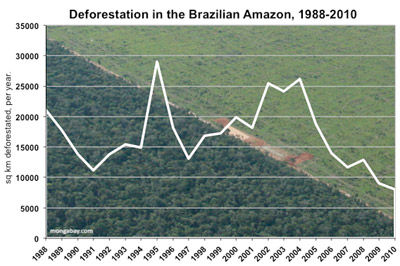
Carlos Alberto de Mattos Scaramuzza, WWF-Brazil's director for conservation, says the reform bill currently being evaluated by Brazil's Senate could have unexpected economic implications for Brazilian ranchers and farmers. Scaramuzza says a bill that grant amnesty for illegal deforesters and sanctions expanded destruction of the Amazon rainforest would make Brazilian agricultural products less attractive in foreign markets.
"The tendency in the world market is to expand the space for sustainable products, and consumers are increasingly averse to acquiring anything whose production involves the destruction or degradation of Nature", said Scaramuzza.
The Brazilian agricultural sector has experienced market backlash their products before. In 2006 soy crushers were hit by the threat of a boycott by McDonalds due to the fast food chain's concern over being associated with deforestation. In 2009 the Brazilian cattle industry has hit by a Greenpeace campaign that targeted major consumer products brands that source leather from Brazil. In both cases, affected producers moved to adopt stronger safeguards to eliminate deforestation from their production cycle.
Scaramuzza says that the bill, if passed in its current form next month, could also undermine the nascent market for ecosystem services. Brazil, with its ample forests and water resources, is poised to become a giant in the market, which some analysts believe could be worth tens of billions of dollars a year by mid-decade.
 "The project completely ignores the possibility of remuneration for the provision of environmental services, thereby slamming the door on an interesting opportunity to diversify income," he said, adding that reforestation of degraded forest areas — as required under the current Forest Code — would both "protect natural resources" and "open up the possibility of new income stemming from the provision of environmental services related to combating climate change and maintaining water supplies for cities and rural areas alike."
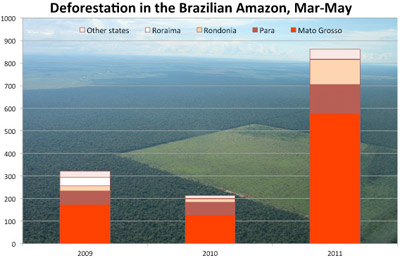 Scaramuzza adds that the bill could hurt Brazilian agriculture by degrading the very services upon which farming and ranching depend. For example, the proposed bill would allow clearing of forests on hillsides and mountaintops, while reducing the buffer zone along waterways. Deforestation in these areas would exacerbate soil erosion and reduce the availability of clean water. Erosion could further worsen flooding and reducing power generation from hydroelectric plants, according to Scaramuzza.
"The losses in question transform the issue of approving the Forest Code reform bill into another tremendous loss of an opportunity to guarantee that Brazilian production will be founded on more sustainable bases," he said. "If... our products are to be associated to deforestation and exacerbation of global warming, we will eventually lose access to [international markets]."
"The House of Representatives is looking at the rear-view mirror, at the past instead of the future. We should be looking to the promising green markets and to achieving a low carbon economy."
WWF is among the groups lobbying for a reappraisal of the bill's text. A broad coalition of environmentalists, scientists, and rural land rights groups have called for a delay in the Forest Code vote to allow more time to conduct a thorough review of its potential implications on the Brazilian economy and environment.