This week's NaturalNews Talk Hour presents "Amazon John" Easterling, Founder of Amazon Herb Company as we discuss "Secrets from the Amazon Rainforest" and Richard Cicchetti, talking about "Healing Herbs, Powerful Solutions". This is a rare opportunity to learn about the beauty and power of medicinal herbs. Our show starts Thursday evening at 6pm Pacific / 9pm Eastern, and registration is FREE. Simply enter your email address in the registration form on the right column of this page and you'll receive call-in details for the broadcast.
The NaturalNews Talk Hour is a "behind the scenes", up close and personal look at the most important issues of our time. Discover what the mainstream media hasn't told you about the secrets of optimal health, freedom and the pursuit of happiness.
Jonathan Landsman, host of NaturalNews Talk Hour, says, "The first part of this show will take you on a mystical journey through the Amazon Rainforest. Together, we will connect with one of the most powerful places on earth. By the end of this program, you will have a new found LOVE and appreciation for the plant kingdom and life itself."
With participation by the Health Ranger, the NaturalNews Talk Hour features top-notch guests like Drs. Julian Whitaker, Bernie Siegel, T. Colin Campbell plus many other notable experts on healthy living.
Reader feedback about the talk hour has been extremely positive. One listener sent us this testimonial about the show:
"First off, Mike Adams and the NaturalNews website has forever changed my life. The independent point of view is a critical part of people awakening to what is "really" going on and how it affects their life on a daily basis. Now with the NaturalNews Talk Hour and the incredible guest list they are hosting, with their extensive knowledge and personal experiences, the information they can pass on to us is the "road-map" for personal health and healing. Words cannot express my sincerest thanks to the entire team for all that you do." -Andy M.
The NaturalNews Talk Hour is sponsored by the NaturalNews MOXXOR Team. MOXXOR is a NEW class of omegas and antioxidants blended together into a powerful supplement. Improve your mobility, brain function and emotional well-being. To order MOXXOR – email: naturalnewsteam@optonline.net
Each show will continue to feature many of the top natural health experts in the world. To receive each week's unique call-in number, simply register by entering your email address in the form on the right.
A painstaking, multidecade study of 33,000 individual trees may finally have uncovered the roots of biodiversity.
That biodiversity’s origin needs uncovering is surprising because the word seems to be everywhere. But scientists still don’t quite understand why one place has more species than another, or fewer.
The traditional explanation — every organism has its niche, competing not with other species but its own — sounds nice, but has holes. According to the tree study, that’s because ecologists haven’t looked for the right niches.
“We take this very complex, high-dimensional thing called the environment, and average out all the variation that organisms really require,” said Jim Clark, a Duke University biologist and author of the study, published Feb. 25 in Science. “Biodiversity is very much a niche response, but it’s just not evident at the species level.”
The central tenet of biodiversity science is that animals compete against their own kind, not against other species. Computer models of inter-species competition soon collapse, with rich diversity inevitably replaced by a few dominant species.
In the real world, that’s not what happens. Species seem to be sharing. So ecologists have developed a theory of niches: Every species has a particular specialty, a set of conditions for which it’s best suited. Some plants do well in shade, others in rocky soil, and so on.
This is true. However, it still doesn’t seem to explain biodiversity. Some ecosystems that are very poor in resources, and consequently don’t seem to have many niches, can still have a high species diversity.
“When you have thousands of species, it’s difficult to come up with ways to partition a limited set of resources or conditions,” said John Silander, a University of Connecticut ecologist who studies South Africa’s Cape Floristic region, a rocky scrubland with as much biodiversity as the Amazon rainforest. “People looking at niche differences always seem to come up short.”
Clark may have found the answer. He has spent the last 18 years studying trees in the southeastern United States and has assembled 22,000 detailed individual accounts, spanning 11 forests and three regions. For each tree, Clark has recorded its precise, on-the-ground (and in-the-ground and above-the-ground) exposure to moisture and nutrients and light, its response, and its proximity to other plants.
Ecologists usually aggregate this information, turning it into average. By going tree-by-tree, Clark found that there are, in fact, enough niches to go around. They’re filled when competition in a species drives individuals to fill them. Biodiversity — or, from another perspective, configurations of organisms that don’t need to compete against each other — is the result of this fierce race for resources.
The niches could only be seen at a fine-grained level, not in the coarse analyses typically used by ecologists. “We take environmental variation and project it down to a very small set of indices. Light becomes average light per year. Moisture becomes average moisture per year. It’s not just light and water and nitrogen — it’s variations of each of those things, in different dimensions,” said Clark.
“The approach he’s taken is marvelous. Nobody has looked at biodiversity in this fashion,” said Silander, who was not involved in the study. “He has the data needed to address the different hypotheses.”
Silander said the approach will likely be extended beyond the world of trees. Understanding the essential dynamics of biodiversity could improve ecosystem management, in applications from conservation to farming.
“It’s hard to find a place on Earth that doesn’t have some level of management going on,” said Silander. “We have to understand how species interact.”
“Ecologists spent a lot of time in the 20th century trying to find ways to reduce the complexity of natural systems so that we could understand them,” said Miles Silman, a Wake Forest University ecologist who was not involved in the study. “Clark has shown that the complexity that we were trying to reduce is very likely essential to understanding” biodiversity.
Channel 4 presenter Steve Jones is to follow in the footsteps of Blue Peter presenter Helen Skelton and head to the Amazon rainforest in Peru.
Jones will head to the endangered rainforest with his two brothers Jonathan and Chris and the expedition will be filmed for a one-hour programme to be broadcast on Sky in April.
The documentary is part of a week-long look at rainforests by the TV channel and TV actor Ross Kemp - best known as Grant Mitchell in Eastenders - will be travelling to the Amazon rainforest in Brazil and Ecuador.
Both shows will try and show first hand the huge number of issues impacting rainforests all around the world, from deforestation to the work of the global food industry and the mineral sector.
Blue Peter presenter Helen Skelton recently headed to the Amazon to canoe down a length of the Amazon river as part of a challenge for Sports Relief.
Sky 1 has ordered factual shows fronted by Ross Kemp and Steve Jones that will air around World Earth Day and boost awareness of the broadcaster’s Rainforest Rescue charity campaign.
Former T4 presenter Jones will travel through the Amazon with his two brothers in the 1 x 60-minute Great Amazon Adventure (working title), produced by Ginger Productions. It will air on 19 April.
Ginger’s exec producer Ed Stobart said: “We went to great pains to reflect living in the Amazon as it really is.”
Sky 1 and Ginger both said they were keen to work with Jones again on docs due to his appeal to both male and female viewers.
The show will go out the day before the first part of Kemp’s 2 x 60-minute film, produced by Tiger Aspect, which focuses on issues affecting the region, such as deforestation and economic pressure.
Ross Kemp In The Amazon (working title) is executive produced by Clive Tulloh.
Sky is hoping the docs will drum up donations from viewers for its three-year push with the WWF to save 1 billion Brazilian trees.
Celia Taylor, factual commissioning editor for Sky 1, ordered the productions to draw audiences in, rather than lecture them on environmental issues.
“We hope Ross Kemp and Steve Jones can make the issues more populist,” said Taylor. “The aim is to bring attention to our Rainforest Rescue project, but it’s about raising awareness, not a charity-thon.”
If the U.S. adopts a cap-and-trade program, companies facing carbon controls could meet part of their obligations by preserving Earth's largest tropical forest.
By Margot Roosevelt
February 21, 2010
An hour outside Manaus, the Amazon's biggest city, the blackened remains of a virgin forest smolder. Chain saws whine. And Jonas Mendes tosses logs, one after another, into his kiln.
"I know it's wrong to cut down the trees," said Mendes, 48, sweat streaming down his neck and torso. "But I have no other way to make a living."
Under a lean-to, his teenage son hacks charcoal into pieces with a machete. His wife fills 110-pound plastic bags that sell for $4 each.
If the Obama administration succeeds in its pledge to curb climate change, billions could flow from the U.S. to help forest dwellers such as Mendes change their ways.
Governors of the Brazilian Amazon's nine states are pushing the U.S. and other industrial nations to invest in projects under rules known as REDD -- or Reducing Emissions from Deforestation and Degradation -- that are being designed through the auspices of the United Nations.
Under pending legislation to cap greenhouse gases, the U.S. government would auction emission allowances, funneling as much as $3 billion from the annual proceeds into rain forest protection. U.S. companies facing carbon controls could meet part of their obligations by investing as much as $13 billion a year by 2020 to preserve forests.
And several Amazon governors have signed agreements with California Gov. Arnold Schwarzenegger to measure the carbon in their forests with the goal of selling carbon credits in California’s cap-and-trade market, set to begin in 2012. The program would allow California businesses to use the credits to meet their emission caps, and thus funnel several hundred million dollars a year into tropical forest protection.
The reason? Slash-and-burn deforestation accounts for about 15% of humanity's carbon dioxide emissions. Despite activists' efforts, forests have been disappearing at the rate of about 34 million acres a year for the last two decades. Globally, Indonesia and Brazil are the third- and fourth-largest emitters respectively of greenhouse gases, after China and the U.S., because of their breakneck pace of forest destruction.
Saving the Amazon, Earth's largest tropical jungle, can be a cheaper and faster way to avoid greenhouse gas emissions than replacing coal-fired power plants with renewable energy or switching to electric cars -- although all such measures are considered necessary by climate experts.
President Obama acknowledged as much last fall.
"It is probably the most cost-effective way for us to address the issue of climate change, having . . . mechanisms in place to avoid further deforestation," he said.
Despite the failure to adopt a long-term climate treaty in Copenhagen last year, the U.S., along with Australia, Britain, France, Japan and Norway, promised $3.5 billion in fast-start funds to help preserve tropical forests.
Forest livelihood
But if nations across Latin America, Africa and Asia are to guard their trees, they must first alleviate the poverty of 1.2 billion people who depend on forests for their livelihoods. Many of these developing nations, struggling economically, bristle at preaching from wealthier countries.
"Let no gringo ask an Amazonian to die of hunger under a tree," Brazilian President Luiz Inacio Lula da Silva warned recently.
"We want to preserve," he added. "But they should pay."
Beginning in the 1960s, politicians in Brazil pushed to populate the rain forest and to clear tracts for cattle, soybeans and timber. Across the Amazon, homesteaders were promised title to their plots if they cut down trees to make the land "productive."
But the policy known as Land Without People for People Without Land has backfired. Rain forest soil is unsuited to small-scale agriculture. Malaria is rampant. Jaguars devour livestock. Many settlers never got title because of bureaucratic snafus and thus have little incentive to protect the forest. Many, like Mendes, survive mainly by felling their trees for charcoal.
Taruma Mirim, where he ekes out a living, is one of 2,500 Amazon settlements created by Brazil's Institute for Colonization and Agrarian Reform. Behind the tin-roofed shack where Mendes lives with his wife and four children, he drags logs to his kilns with the help of a half-starved cow.
Mendes has an infected eye, aggravated by fumes.
"The doctor told me I should keep away from smoke, but I have no choice," he said.
Wooden huts without running water line the road. Mangy dogs and chickens roam among jaca and cupuacu, local fruit trees.
Since 1991, the family has cut down a third of the trees on its 60-acre plot in the state of Amazonas. Some neighbors have razed their land entirely, only to abandon it and move on to repeat the cycle of destruction.
"It was a bad model," said Mariano Cenamo, head of the nonprofit Institute for Conservation and Sustainable Development of Amazonas. "After a few years of trying to survive, settlers start selling off."
Cattle ranchers, spreading herds thinly on depleted land, or big soybean growers who can afford chemical fertilizers then move in.
'Arc of fire'
Today, the Amazon basin, which also covers parts of eight other nations, harbors 45% of Earth's remaining rain forest. In the last 35 years, about 17% of it has been razed. In Brazil, the "arc of fire," as it is known, is more than twice the size of California.
But consciousness of the Amazon's worth as a standing forest, rather than as a cut forest, is mounting. The Amazon stores between 80 billion and 130 billion metric tons of carbon in its leaves and trunks, which, if burned, would emit about 50 times more carbon dioxide than the United States' annual output.
As a result, Brazil is beginning to enact tough measures. It has beefed up its space agency, which now tracks destruction by satellite in real time so police can be speedily dispatched to halt illegal logging. In the last four years, the government has created 193,000 square miles of forest reserves. The land reform agency has stopped building settlements in virgin forest, and today, by law, only 20% of an individual's land may be deforested.
"We are working hard on the topic of climate change," said Environment Minister Carlos Minc, noting that the government recently signed pacts with the soybean, timber and mining industries to prevent sales from newly deforested areas. Loans to illegal land grabbers are being blocked.
New figures show that since 2004, the extent of burning in the Brazilian Amazon has dropped to 2,705 square miles a year from a peak of 10,588 square miles annually.
But how much of the drop is due to government policy and how much to fluctuating prices of beef and soy, the main drivers of deforestation, is unclear. Even at today's levels, more forest land is razed in Brazil than anywhere in the world except Indonesia.
Brazil is the world's largest soybean exporter and the second-largest meat exporter, after Australia -- and it wants to stay on top. Vast new acreage is expected to be cleared for sugar cane to expand Brazil's effort to replace gasoline with biofuel.
The government boasts that it has doubled the number of rangers to 1,400, targeting areas such as the state of Para, where confrontations have turned violent. But in Taruma Mirim, settlers dismiss the fiscais, as they call government inspectors, with scorn.
"They see us stoking the kiln," said Gilmar Santana, 29, pausing by the road with a chain saw on his shoulder. "They say don't do that, but we say we must. Then they go away."
Today, many of the reserves that cover 43% of the Brazilian Amazon remain paper-only decrees. Government agents issued $1.6.billion in fines for illegal logging last year, but collected less than 1% of the money.
A recent Greenpeace report, "Slaughtering the Amazon," traced beef and leather from illegally deforested land as it surreptitiously made its way into global supply chains of such firms as Nike, IKEA, Kraft Foods and Wal-Mart.
In response, the government promised to implement a program to track cattle with electronic tags and seize "illegally raised" animals.
Center of conflict
From his office in a modern building in Manaus, Denis Minev, secretary of planning and development for Amazonas, sits at the center of the conflict.
"I'm considered the devil," he said with a wry smile. He considers conservation a priority but also favors controversial highways through parts of the forest.
At 32, he is one of Brazil's hip young technocrats, with an undergraduate degree from Stanford University, an MBA from the University of Pennsylvania's Wharton School and a stint at investment bank Goldman Sachs Group Inc. under his belt.
Minev and other Amazonas officials have successfully enforced price supports for such forest products as Brazil nuts and rubber, incentives to keep trees standing. A national effort to clear up titles to land will also make it easier for farmers and ranchers to get loans to boost productivity of existing plots, thereby lessening the need to raze virgin forest.
"Previously the forest was seen as a barrier to development," Minev said. "But there has been a major shift in vision."
Minev has squired U.S. legislators such as Rep. Edward J. Markey (D-Mass), coauthor of the House climate bill, around the jungle in hopes that Congress will adopt a cap-and-trade program. Funds from the U.S. could then be used to police conservation areas, improve land fertility to reduce demand for deforestation and help forest dwellers find better ways to make a living than by making charcoal.
In Taruma Mirim, settlers have heard that help could be on the way.
"We want to preserve the forest," said Mendes, pausing from his sweaty work. "If the money from abroad reaches us, it could change the situation."
The walls of his home are bare except for a clock with a painted scene of Noah's Ark.
Brazil's government has granted an environmental licence for the construction of a controversial hydro-electric dam in the Amazon rainforest.
Environmental groups say the Belo Monte dam will cause devastation in a large area of the rainforest and threaten the survival of indigenous groups.
However, the government says whoever is awarded the project will have to pay $800m to protect the environment.
The initial approval was a key step before investors could submit bids.
Resignations
The proposal to build a hydro-electric dam on the Xingu river, a tributary of the Amazon in the northern state of Para, has long been a source of controversy.
The initial project was abandoned in the 1990s amid widespread protests both in Brazil and around the world.
The government says the scheme has been modified to take account of fears that it would threaten the way of life of the indigenous peoples who live in the area.
Brazilian Environment Minister Carlos Minc revealed that those who win the bidding process to build and operate Belo Monte will have to pay millions of dollars to protect the environment and meet 40 other conditions.
However, critics say diverting the flow of the Xingu river will still lead to devastation in a large area of the rainforest and damage fish stocks.
They say the lives of up to 40,000 people could be affected as 500 sq km of land would be flooded.
When it is completed, Belo Monte would be third largest hydro-electric dam in the world, after the Three Gorges in China and Itaipu, which is jointly run by Brazil and Paraguay. It is expected to provide electricity to 23 million Brazilian homes.
With Brazil's economy continuing to show signs of growth, ministers say hydro-electric plants are a vital way to ensure power supplies over the next decade - and at least 70 dams are said to be planned for the Amazon region.
Critics say the Belo Monte plant will be hugely inefficient, generating less than 10% of its capacity during the three to four months of the low-water season.
The project has even caused division and resignations within the government's own environment agency Ibama, which, after much delay, has now given its initial approval.
Having passed this critical test the dam is now much closer to becoming a reality, but the controversy surrounding it is also unlikely to go away.
Cutting sugar cane in a farm plantation of the Cosan group
Royal Dutch Shell is plunging into Brazil’s sugar cane ethanol industry in a $12 billion (£7.5 billion) venture with Cosan, the market leader, which has been accused by the Brazilian Government of “slave labour” practices.
The oil giant is buying a half-share in an ethanol production machine that will double in output to four billion litres a year by 2014. By combining Cosan’s ethanol factories with its own vast network of service stations in Brazil and retail and refining assets in North America and Europe, Shell hopes to create a river of ethanol flowing from Brazilian plantations to forecourts around the world.
Shell is also buying into an emerging controversy over the conditions in which biofuels are produced in poor countries. Cosan was put on a Brazilian Labour Ministry blacklist in December after an investigation in 2007 found that a canecutting contractor employed by Cosan was mistreating workers, employing minors and failing to supply drinking water at the workplace.
In January, Cosan secured a temporary injunction removing it from the blacklist, but the Brazilian Attorney-General’s office said that it would contest the injunction and a final ruling may take months. Wal-Mart in Brazil has resumed buying sugar from Cosan after suspending business dealings over the blacklisting.
Shell said yesterday that Cosan was a leader in improving labour conditions and had taken action swiftly when it became aware of the issues regarding the contractor. “We looked in depth at the case,” a spokesman said.
Moreover, the oil giant’s interest delivered a demonstrable vote of confidence in Cosan, whose shares rose by more than 8 per cent in São Paulo yesterday — this after falls in recent weeks almost certainly caused by the slave labour allegations.
Ethanol accounts for about half of Brazil’s road fuel demand, with more than 90 per cent of cars being equipped with flex-fuel technology, capable of adapting to changing mixes of petrol and ethanol. Meanwhile, governments worldwide are tightening environmental regulation and Brazil’s ethanol industry has become a magnet for foreign energy companies seeking a quick and inexpensive solution to their search for green fuel.
In October Louis Dreyfus, a leading agribusiness, agreed to buy Santelisa Vale, Brazil’s No 2 sugar cane ethanol producer, and in December Bunge, a competitor to Dreyfus, paid $452 million for Moema, another sugar cane company. In 2008 BP took the plunge into plantations, investing $560 million in an ethanol joint venture involving Santelisa.
The Brazilian Government sees ethanol as a potential export earner. Petrobras, the state oil company, is planning to invest billions of dollars in pipelines, terminals and ships capable of transporting the fuel to overseas markets.
Shell already deals in six billion litres of ethanol every year, most of it as an additive for its US petrol retailing business. The oil giant will contribute its Brazilian retailing division, comprising 2,740 service stations, and its aviation fuel business, to the joint venture. It will pay $1.6 billion in cash and shareholdings in Iogen and Codexis, two technology companies engaged in the search for biofuel technologies that synthesise fuel from plant matter.
The joint venture will have a quarter-share of Brazil’s expanding retail road fuels market and a position in the electricity market, in which Cosan has seven co-generation plants generating power by burning sugar cane waste.
A Shell spokesman said that its Brazilian move would capture more value in a growing market and provide a platform for new biofuels. The company said that rainforest would not be affected as sugar cane is grown on farmland 2,000km from the Amazon.
A report which suggested that as much as 40 per cent of the endangered Amazon rainforest could be destroyed by climate change may have been based on unreliable evidence, it has been revealed.
In 2007, the United Nation's Intergovernmental Panel on Climate Change (IPCC) released a report showing that large areas of the Amazon could be wiped out.
According to the study, a change in the rainfall level in the rainforest could see trees swept away and "savanna grassland" established in its place.
However, it has been revealed that the report was based on information given to the UN by environmental group the WWF, which was from a report carried out by the WWF in 2000.
The IPCC hit the headlines recently when doubts were raised over a report that it released on global warming in relation to the melting of ice glaciers in the Himalayan mountains. The panel retracted a previous statement which warned that the glaciers could have totally melted by 2035.
BRASILIA, Feb 1 (Reuters) - Brazil granted an environmental license on Monday for the construction of a controversial hydroelectric dam in the heart of the Amazon rainforest.
The $17 billion project on the Xingu River in the northern state of Para will help the fast-growing Latin American country cope with soaring demand for electricity but has raised concern about its impact on the environment and native Indians.
Environment Minister Carlos Minc said 97 square miles/500 sq km of land would be flooded by the Belo Monte dam, a fraction of the 1,900 square miles/5,000 sq km, in the original plans that involved four hydroelectric dams. It was scaled down for ecological reasons.
Around half the area, or 48 square miles, are already flooded naturally for part of the year during the rainy season.
"The environmental impact exists but it has been weighed up, calculated and reduced," Minc said.
The 11,000-megawatt Belo Monte dam is part of Brazil's largest concerted development plan for the Amazon since the country's military government cut highways through the rainforest to settle the vast region during its two-decade reign starting in 1964.
Dams, roads, gas pipelines, and power grids worth more than $30 billion are being built to tap the region's vast raw materials, and transport its agricultural products in coming years.
The license lists 40 requirements that must be fulfilled by the company that wins the bid to construct the dam -- before it can begin building. It includes more studies, construction of local infrastructure and maintenance of the local environment.
The winning bidder would have to pay 1.5 billion reais ($803 million), the estimated cost of fulfilling these demands through public and private entities. It includes the cost of rehousing an estimated 12,000 people who would be relocated.
"Not one Indian on indigenous land will be displaced," he said. Others living in one town outside protected lands would be resettled and compensated, he added.
Environmental groups say the Belo Monte project, which will also create a waterway to transport agricultural commodities grown in the Amazon, would damage the sensitive ecosystem and threaten some fish species.
Minc said measures would be taken to prevent the extinction of some species and protect the livelihoods of those who make a living by fishing, both for food and for the rare ornamental fish that live in the river.
Minc said it was unlikely more dams would be added to the project in the future, but he did not rule it out.
Among the utilities wanting to build and operate the dam are Brazil's state-run Eletrobras. ($=1.866 reais) (Reporting by Rodrigo Viga Gaier and Maria Carolina Marcello; Writing by Peter Murphy; Editing by Doina Chiacu)
DOOMSDAY warnings that the Amazon rainforest is threatened by climate change were yesterday said to be based on an unsubstantiated claim.
A startling report by the United Nation’s climate watchdog in 2007 said that global warming could wipe out 40 per cent of the Amazon jungle.
The Intergovernmental Panel on climate change said that even a slight change in rainfall could lead to savanna grassland replacing swathes of the rainforest.
But yesterday, it emerged that the claims were based on a 2000 report by environmental activists WWF about the Brazilian Amazon.
But the IPCC extended the WWF claim about Brazil to cover the whole of the Amazon.
There were also claims that the IPCC had based its report on reductions of mountain ice in the Andes, Alps and Africa on a student dissertation and an article in a climbing magazine.
Earlier this month, the IPCC – whose reports have shaped world reaction to the threat of climate change – retracted a claim that the Himalayas’ glaciers will have melted by 2035.
It was also accused of claiming that climate change was linked to natural disasters such as hurricanes despite warnings that the research did not support this.
Details emerged as Gordon Brown hailed the commitment of the most polluting nations, including Britain, to cut greenhouse gas emissions under the Copenhagen Accord as a “turning point”.
But climate change sceptic Jim McConalogue, of the European Foundation, said: “How can the Government justify spending billions of pounds of taxpayers’ money on an unfounded climate change policy, which does not stand up to any public or expert scrutiny?
“The cracks are only just now appearing but the Government must abandon their climate change policy.” The IPCC yesterday stood by its Amazon research – and its central claim that man is changing the climate. It said its authors are allowed to refer to reports, such as the WWF study, which have not been reviewed by other experts.
Climate secretary Ed Miliband vowed to fight the “siren voices” who deny global warming is real or caused by humans.
He admitted the IPCC’s glacier study was a “bad mistake”. But he said: “The truth is it doesn’t undermine decades of climate research and the overwhelming majority of scientists say that.
I think science is improved when criticised and improved when opened up. What I think is irresponsible is to suggest that one fact that was wrong about a glacier undermines the overall picture on climate change.” WWF said it is launching an internal inquiry into the study.
A spokesman said: “WWF cannot answer for the use of the 2000 report by other institutions.”
Some of the 260 ancient earthworks located in the Amazon basin by archeologist Denise Schaan and her colleagues, which are challenging traditional assumptions about the region's history. (Courtesy of Denise Schaan)
One of the many Hollywood films that will hit theatres this year is "The Lost City of Z," in which a group of explorers set out to find a colleague who vanished in the Amazon rainforest.
Based on a true story, the movie stars Brad Pitt as Percy Fawcett, a world-famous British explorer who disappeared in 1925, during an expedition to find the mythical city of El Dorado, which Fawcett codenamed "Z" to keep his plans secret.
The premise of the movie, and its name, are taken from a book by David Grann, who retraced Fawcett's route through the Amazon to investigate what happened to him.
Along the way, Grann learned of a group of archeologists who are unearthing evidence that, just as Fawcett believed, there were indeed large communities thriving in the Brazilian rainforest before Europeans arrived.
As the evidence mounts, it's challenging conventional wisdom of the Amazon as a place so inhospitable it could only support small, nomadic tribes.
Instead it seems that large, complex societies may have tamed parts of the Amazon centuries before Spanish explorers sailed across the Atlantic. As that idea gains momentum, it's also gaining more attention beyond archaeological circles.
"There is now becoming, not just in the scientific and academic work but in the public world, a sense of the breadth of these discoveries," Grann told CTV.ca from New York. "They're transforming our view of what the Americas looked like before Columbus."
"It's finally kind of breaking through."
Turning point
Last month, a major archeological find was published in the British journal Antiquity. Using Google Earth and other satellite imagery, researchers found 260 geometrical shapes dug into a now-deforested 250-kilometre stretch of the upper Amazon basin.
"We know they're spread over this wide region and they display very similar construction techniques," said Denise Schaan, an archeologist from Brazil's University of Para who co-authored the study. "So if it was not a single people building them, they had a kind of culture or religion that was spread over that territory."
"We want to know who built these structures and for what reason," Schaan added, speculating that they could have been fortified villages or ceremonial centres.
Some of the earthworks may date as far back as AD 200, a millennium before the Incan empire was founded. As many as 60,000 people lived in or near the "perfect circles, rectangles and composite figures" carved into the ground, the researchers reported. And many were linked by bridges or "avenue-like" roads.
What's more, Schaan and her colleagues suspect there could be 10-times as many earthworks in surrounding areas, where the jungle is still standing.
The people who inhabited the sites disappeared around the same time that Spanish conquistadors ventured into South America, suggesting that diseases from Europe may have wiped them out.
A number of earlier discoveries suggest the Amazon was by no means virgin rainforest before the Age of Discovery began.
Archaeologists came across a series of 127 granite blocks on a Brazilian hilltop in 2006. Some of the blocks appear to be arranged astrologically, and may have been placed there as long as 2,000 years ago. The site has become know as the Stonehenge of the Amazon.
In 1996, American archaeologist Anna C. Roosevelt, a great-granddaughter of Theodore Roosevelt, found a series of 11,000-year-old wall paintings in a Brazilian cave. The paintings are so old they're challenging long-held assumptions about when the Americas were first settled and by whom.
More to come?
Technology may be one of the things driving these cascading discoveries. Grann says a lot of the archeologists who are investigating the Amazon's pre-Columbian settlements are using high-tech tools such as satellite imaging and ground-penetrating radar.
Excavating ancient ruins is still important, but it's now being aided by space-age tools.
And the trend isn't limited to the Amazon. Growing numbers of archeologists around the world are using satellite imagery, according to Sarah Parcak, a professor of archaeology at the University of Alabama at Birmingham.
Multispectral satellites, which can provide images in a range of light including infrared, were first launched in 1972. Parcak said her fellow archaeologists are realizing just how useful the devices may be for their research.
"They give us this ability to see beyond what we normally see," Parcak said, adding that she has discovered hundreds of ancient sites in Egypt using satellite images. "They allow you to differentiate between ancient and modern pretty easily."
During Grann's trip into the Amazon to find Fawcett, he met with an American archeologist named Michael Heckenberger, who had been living for years with an aboriginal tribe near to where the British explorer disappeared in 1925.
Heckenberger has used satellite images to help identify nearly two-dozen ancient settlements in the southern Amazon. He believes the tribe he was staying with is made up of their descendants.
Time will tell whether the movie adaptation of Fawcett's Amazonian quests will touch on the ancient societies that eluded the explorer, and are now being discovered.
But a world away from Hollywood, archaeologists appear to be on the cusp of rewriting the Americas' ancient history.
London, Jan. 31 (ANI): In another blow to United Nations climate watchdog's credibility, it has emerged that its claim that global warming might wipe out 40 percent of the Amazon rainforest was based on an unsubstantiated claim by green campaigners
In its 2007 benchmark report, the Intergovernmental Panel on Climate Change (IPCC) had said that even a slight change in rainfall could see swathes of the rainforest rapidly replaced by savanna grassland.
"Up to 40% of the Amazonian forests could react drastically to even a slight reduction in precipitation; this means that the tropical vegetation, hydrology and climate system in South America could change very rapidly to another steady state. It is more probable that forests will be replaced by ecosystems that have more resistance to multiple stresses caused by temperature increase, droughts and fires, such as tropical savannas," the report said.
The source for its claim was a report from WWF, an environmental pressure group, which itself had little scientific evidence to back its claim. The group had based their "research" on a study published in Nature, which did not assess rainfall but in fact looked at the impact on the forest of human activity such as logging and burning, The Times reports.
This is the third time in as many weeks that serious doubts have been raised over the IPCC's conclusions on climate change.
Recently, it had emerged that its warning about ice disappearing from the world's mountain tops was based on a student's thesis and an article published in a mountaineering magazine.
Earlier, the IPCC had to issue a humiliating apology over its inaccurate claim that global warming will melt most of the Himalayan glaciers by 2035 was based on a "speculative" article published in New Scientist.
After the surfacing of the fact that IPCC has been using unsubstantiated claims and sources for its warnings, sceptics have cast doubt over the validity of the IPCC and have called for the panel to be disbanded.
Scientists fear the controversies will be used by climate change sceptics to sway public opinion to ignore global warming - even though the fundamental science, that greenhouse gases can heat the world, remains strong. (ANI)
Officials were forced earlier this month to retract inaccurate claims in the IPCC's report about the melting of Himalayan glaciersPhoto: GETTY
The revelation will cause fresh embarrassment for the Intergovernmental Panel on Climate Change (IPCC), which had to issue a humiliating apology earlier this month over inaccurate statements about global warming.
The IPCC's remit is to provide an authoritative assessment of scientific evidence on climate change.
In its most recent report, it stated that observed reductions in mountain ice in the Andes, Alps and Africa was being caused by global warming, citing two papers as the source of the information.
However, it can be revealed that one of the sources quoted was a feature article published in a popular magazine for climbers which was based on anecdotal evidence from mountaineers about the changes they were witnessing on the mountainsides around them.
The other was a dissertation written by a geography student, studying for the equivalent of a master's degree, at the University of Berne in Switzerland that quoted interviews with mountain guides in the Alps.
The revelations, uncovered by The Sunday Telegraph, have raised fresh questions about the quality of the information contained in the report, which was published in 2007.
It comes after officials for the panel were forced earlier this month to retract inaccurate claims in the IPCC's report about the melting of Himalayan glaciers.
Sceptics have seized upon the mistakes to cast doubt over the validity of the IPCC and have called for the panel to be disbanded.
This week scientists from around the world leapt to the defence of the IPCC, insisting that despite the errors, which they describe as minor, the majority of the science presented in the IPCC report is sound and its conclusions are unaffected.
But some researchers have expressed exasperation at the IPCC's use of unsubstantiated claims and sources outside of the scientific literature.
Professor Richard Tol, one of the report's authors who is based at the Economic and Social Research Institute in Dublin, Ireland, said: "These are essentially a collection of anecdotes.
"Why did they do this? It is quite astounding. Although there have probably been no policy decisions made on the basis of this, it is illustrative of how sloppy Working Group Two (the panel of experts within the IPCC responsible for drawing up this section of the report) has been.
"There is no way current climbers and mountain guides can give anecdotal evidence back to the 1900s, so what they claim is complete nonsense."
The IPCC report, which is published every six years, is used by government's worldwide to inform policy decisions that affect billions of people.
The claims about disappearing mountain ice were contained within a table entitled "Selected observed effects due to changes in the cryosphere produced by warming".
It states that reductions in mountain ice have been observed from the loss of ice climbs in the Andes, Alps and in Africa between 1900 and 2000.
The report also states that the section is intended to "assess studies that have been published since the TAR (Third Assessment Report) of observed changes and their effects".
But neither the dissertation or the magazine article cited as sources for this information were ever subject to the rigorous scientific review process that research published in scientific journals must undergo.
The magazine article, which was written by Mark Bowen, a climber and author of two books on climate change, appeared in Climbing magazine in 2002. It quoted anecdotal evidence from climbers of retreating glaciers and the loss of ice from climbs since the 1970s.
Mr Bowen said: "I am surprised that they have cited an article from a climbing magazine, but there is no reason why anecdotal evidence from climbers should be disregarded as they are spending a great deal of time in places that other people rarely go and so notice the changes."
The dissertation paper, written by professional mountain guide and climate change campaigner Dario-Andri Schworer while he was studying for a geography degree, quotes observations from interviews with around 80 mountain guides in the Bernina region of the Swiss Alps.
Experts claim that loss of ice climbs are a poor indicator of a reduction in mountain ice as climbers can knock ice down and damage ice falls with their axes and crampons.
The IPCC has faced growing criticism over the sources it used in its last report after it emerged the panel had used unsubstantiated figures on glacial melting in the Himalayas that were contained within a World Wildlife Fund (WWF) report.
It can be revealed that the IPCC report made use of 16 non-peer reviewed WWF reports.
One claim, which stated that coral reefs near mangrove forests contained up to 25 times more fish numbers than those without mangroves nearby, quoted a feature article on the WWF website.
In fact the data contained within the WWF article originated from a paper published in 2004 in the respected journal Nature.
In another example a WWF paper on forest fires was used to illustrate the impact of reduced rainfall in the Amazon rainforest, but the data was from another Nature paper published in 1999.
When The Sunday Telegraph contacted the lead scientists behind the two papers in Nature, they expressed surprise that their research was not cited directly but said the IPCC had accurately represented their work.
The chair of the IPCC Rajendra Pachauri has faced mounting pressure and calls for his resignation amid the growing controversy over the error on glacier melting and use of unreliable sources of information.
A survey of 400 authors and contributors to the IPCC report showed, however, that the majority still support Mr Pachauri and the panel's vice chairs. They also insisted the overall findings of the report are robust despite the minor errors.
But many expressed concern at the use of non-peer reviewed information in the reports and called for a tightening of the guidelines on how information can be used.
The Met Office, which has seven researchers who contributed to the report including Professor Martin Parry who was co-chair of the working group responsible for the part of the report that contained the glacier errors, said: "The IPCC should continue to ensure that its review process is as robust and transparent as possible, that it draws only from the peer-reviewed literature, and that uncertainties in the science and projections are clearly expressed."
Roger Sedjo, a senior research fellow at the US research organisation Resources for the Future who also contributed to the IPCC's latest report, added: "The IPCC is, unfortunately, a highly political organisation with most of the secretariat bordering on climate advocacy.
"It needs to develop a more balanced and indeed scientifically sceptical behaviour pattern. The organisation tend to select the most negative studies ignoring more positive alternatives."
The IPCC failed to respond to questions about the inclusion of unreliable sources in its report but it has insisted over the past week that despite minor errors, the findings of the report are still robust and consistent with the underlying science.
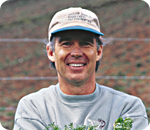 This week's NaturalNews Talk Hour presents "Amazon John" Easterling, Founder of Amazon Herb Company as we discuss "Secrets from the Amazon Rainforest" and Richard Cicchetti, talking about "Healing Herbs, Powerful Solutions". This is a rare opportunity to learn about the beauty and power of medicinal herbs. Our show starts Thursday evening at 6pm Pacific / 9pm Eastern, and registration is FREE. Simply enter your email address in the registration form on the right column of this page and you'll receive call-in details for the broadcast.


